+90 534 226 60 59
  Mon - Fri: 9:00-18:00; Sat: 9:00-17:30; Sunday: Closed

Dental veneers and dental crowns are similar but distinct treatments. The difference between crowns and veneers may seem small, but it has a significant effect on the treated tooth.
Both procedures can be used to improve smile aesthetics and dental function. However, they differ in scale and indications, so choosing veneers vs crowns is not a simple decision.
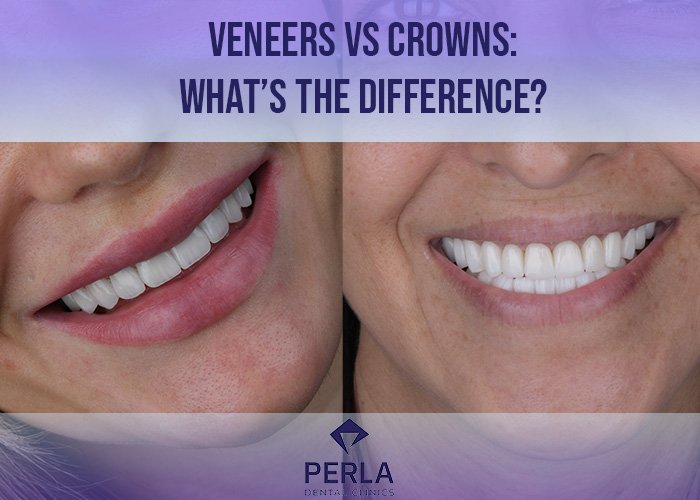
Table of Contents
Quick Comparison: Veneers vs Crowns at a Glance
Here is a quick comparison of crowns vs veneers to help you understand the basic differences between the procedures.
| Key Factor | Veneers | Crowns |
|---|---|---|
| Coverage | Cover only the front surface of the treated tooth | Completely cover the tooth above the gum line |
| Tooth preparation | Only the treated area is ground down by about half a millimetre | Up to two millimetres of tooth enamel is ground down from the entire surface |
| Indication | Primarily aesthetic issues: deep stains, small gaps, chipping, and cracks | Structural issues: deep cracks, root canal treatment, or as an alternative for large fillings |
| Average longevity | 10-15 years for porcelain veneers; 5-7 for composite veneers | 15-20 years for porcelain crowns; average longevity differs for other types |
| Cost range in Turkey | £125-£450 per tooth; usually not available under insurance | £120-£300 per tooth; may be available under insurance |
What Are Veneers?
To better understand the differences between veneer and crown procedures, let’s start by answering the question, “What is a veneer?” A dental veneer is a restoration placed on the front of a tooth.
Tooth veneers are made from a range of materials, but porcelain and composite resin are the most common. Unlike crowns, veneers cover only the front part of the treated tooth.
Since they require less tooth preparation, veneers help conserve more of the tooth’s structure. Dental veneers can effectively conceal small gaps, chips, cracks, and deep stains. Dentists can also use them to correct minor tooth shape defects.
When indicated, veneers are preferable to crowns for treating anterior teeth: the incisors and canines. These teeth are more visible, and veneers often offer additional aesthetic benefits over crowns.
To summarise, veneers are:
- Plates made from dental porcelain or composite resin.
- Cover only the front of the tooth.
- Used for aesthetic treatment of minor defects.
- Preserve more of the natural tooth structure.
- Preferred for healthy front teeth.
Veneer Procedure: What Happens to Your Teeth?
Much like the treatments themselves, veneer prep vs crown prep has both similarities and differences. The defining feature of veneer treatment preparation is that it is less invasive than crowns.
When filing teeth down for veneers, the dentist will remove less than a millimetre of enamel from the front of the teeth. This is required to create space for the veneer.
Some types of thin veneers are considered no-prep. They can be placed without grinding down the teeth.
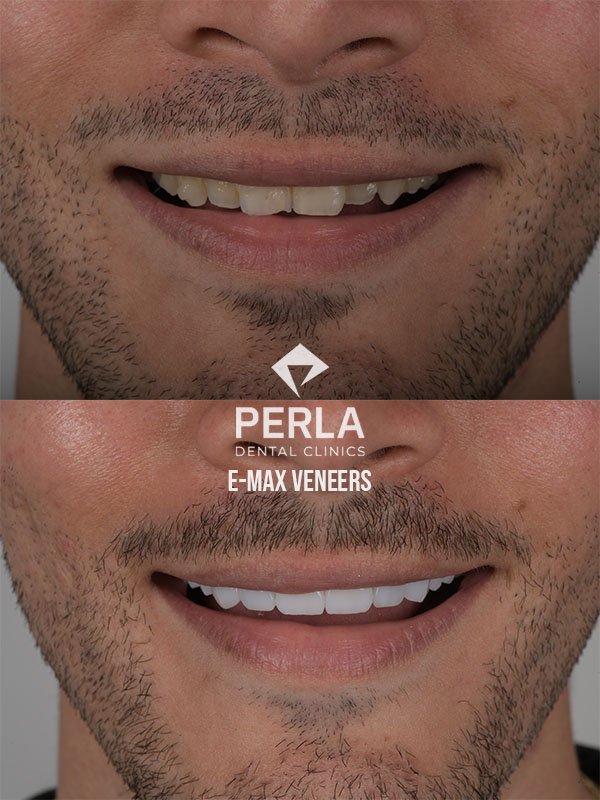
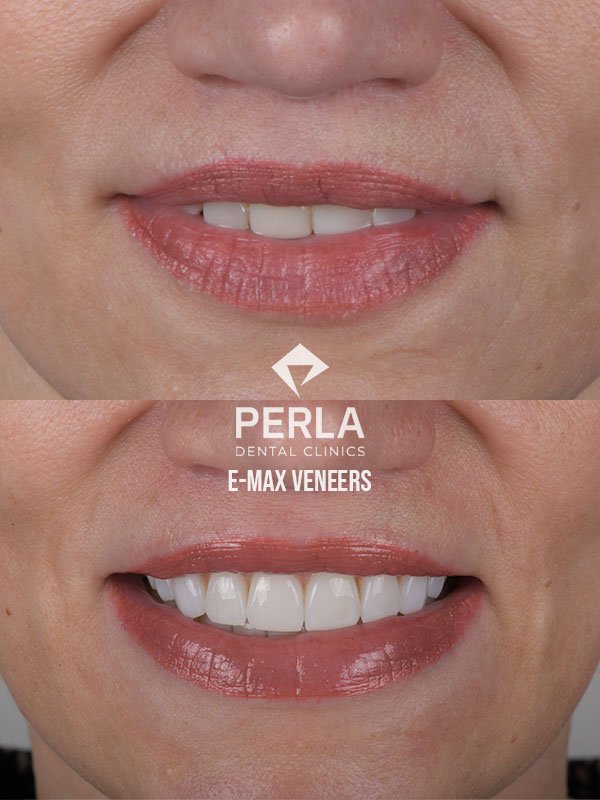
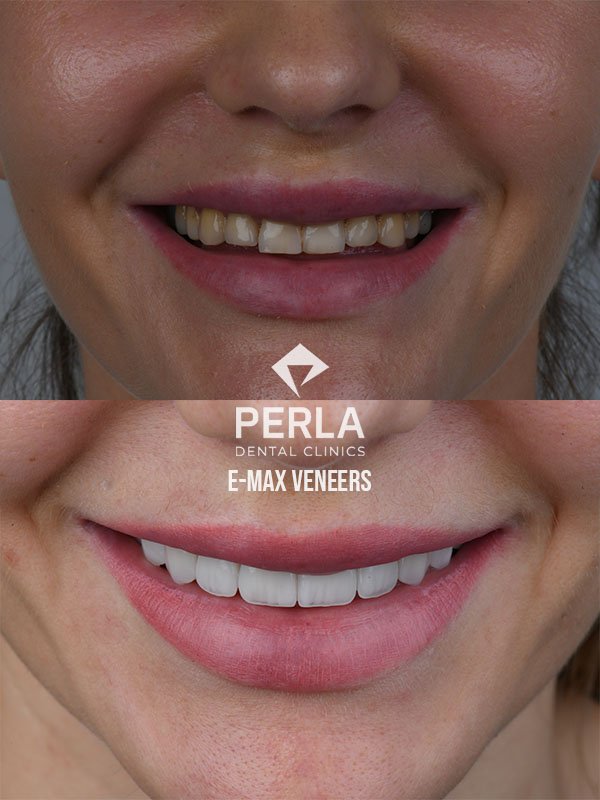
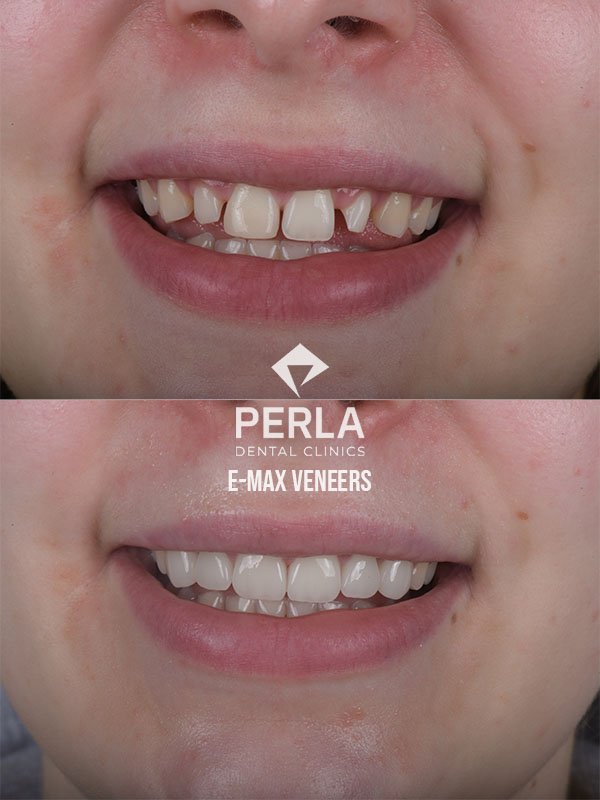
The timeline for the tooth veneer procedure is as follows:
- Initial consultation: the dentist will recommend the most suitable type of treatment for your case.
- Dental examination: the dentist will examine the teeth and make tooth impressions.
- Tooth preparation: the dentist removes the required amount of tooth enamel and places temporary veneers.
- Permanent veneer placement: after your permanent veneers are ready, the dentistplaces them instead of the temporary ones.. The veneers are bonded to the teeth after fitting using a special cement.
Pros and Cons of Veneers
While widely praised as one of the best permanent dental aesthetic treatments, veneer placement is not a one-stop solution. Knowing the pros and cons of veneers will help you better understand why your dentist may recommend this procedure.
Veneers benefits
- Higher aesthetic value in the long term. Veneers do not risk exposing the transition between the tooth and restoration should the gums recede.
- Minimal alteration to the natural enamel layer. Veneer placement leaves most of the tooth unaltered. There is no need to shave off a lot of healthy enamel.
- Many different uses. Placing veneers can help change the colour and shape of your teeth. They are also used to close small gaps and conceal wear and cracks.
Veneers downsides
- Irreversible procedure. While veneers preserve most of the tooth structure, the removed enamel should always remain covered.
- Less protection against decay. Uncovered areas of the tooth remain susceptible to decay, much like untreated teeth.
- Variable longevity. Composite veneers rarely last more than ten years. Porcelain veneers are more durable, but may still need replacing after several decades.
What Are Dental Crowns?
Now, let’s take a look at what tooth crowns are. When you compare dental crowns with veneers, you can see that a crown resembles a cap rather than a plate.
Thanks to their cap-like shape, dental crowns can cover the entire tooth above the gum line. This helps to restore and preserve the tooth.
Dental caps are well-suited for restorative and aesthetic procedures. They can be placed on severely damaged teeth to restore them, fill large cavities, or conceal the access cavity left after a root canal treatment.
Crowns are often used to treat molars and premolars (back teeth). They need to withstand higher chewing pressure, a task at which the durable crown excels.
Although they are not used as frequently, crowns are an option for treating front teeth.
Crown Procedure: How Is a Crown Done?
Crowns can be placed on any tooth with at least some structure remaining. The procedure for placing front tooth crowns is the same as for the rear teeth.
While you can put a crown on a front tooth, it is recommended only if the tooth is damaged. Crowns last for many years, and your gums may recede later in life. This may expose the margin between the crown and the tooth. Additionally, it is usually not possible to place a veneer on a tooth that has been prepared for a crown.
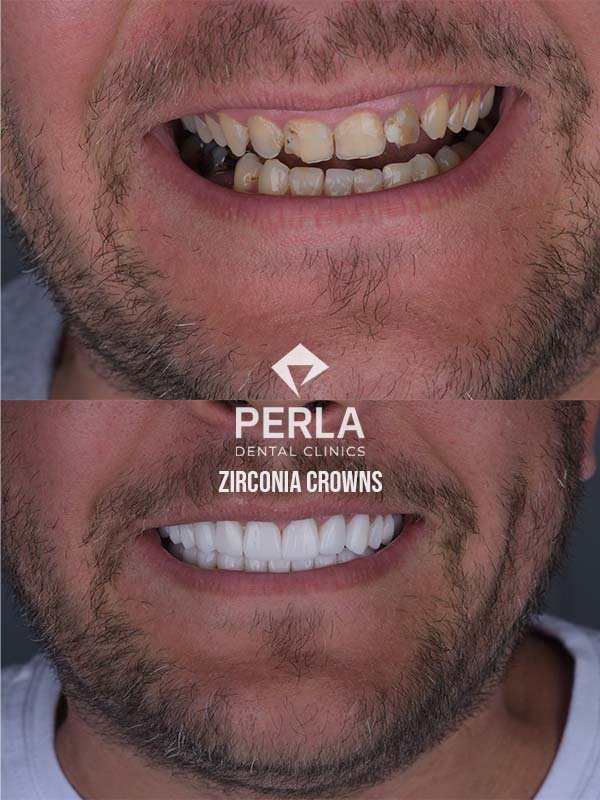
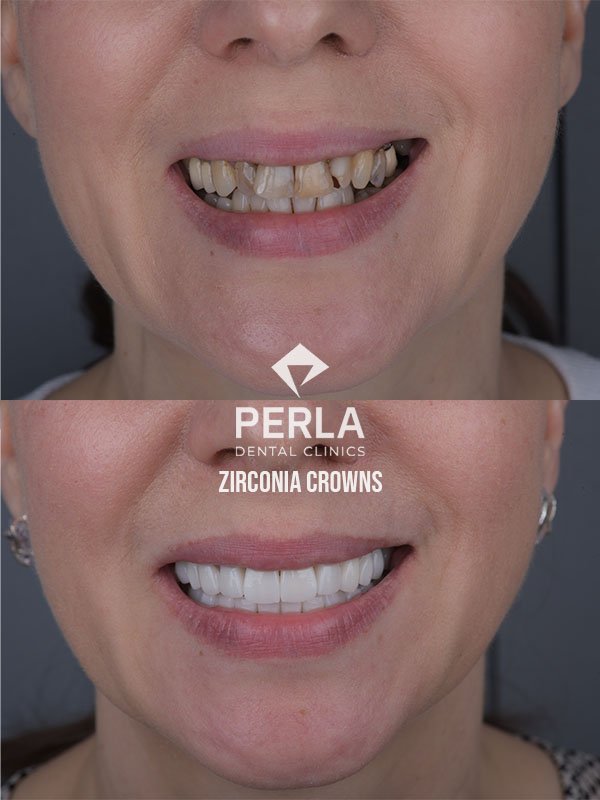
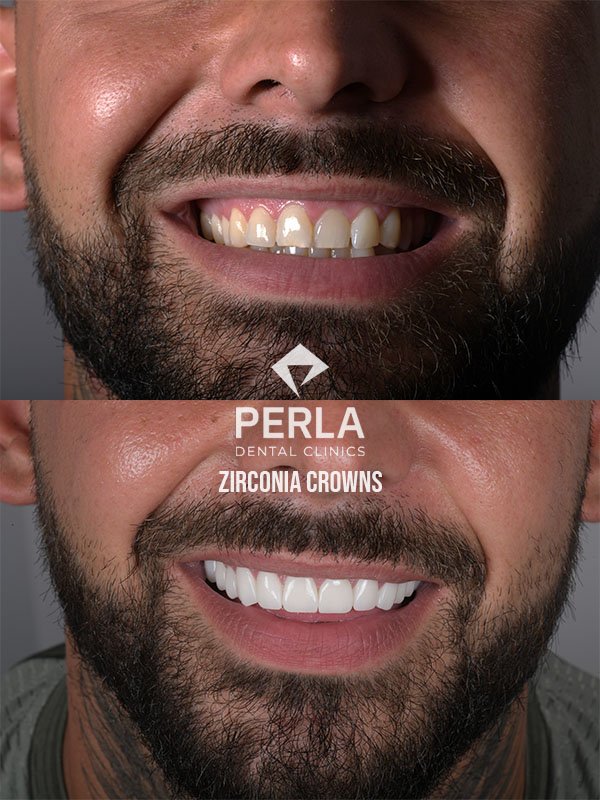
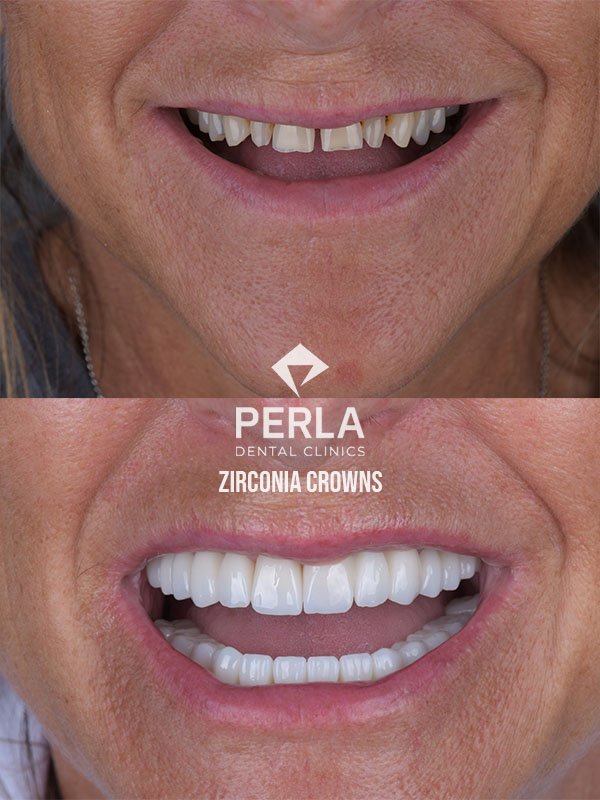
The procedure for placing crowns has the following steps:
- Initial consultation: The dentist will help you choose a crown that fits your needs.
- Dental examination: The dentist will create a dental impression using a mould or with the help of a digital scan.
- Tooth preparation: The treated tooth’s enamel is ground down to make room for the crown. The dentist will remove up to two millimetres of enamel from all surfaces of the tooth. If your tooth is very damaged, it will be built up before placing a temporary crown.
- Permanent crown placement: Once the permanent crowns are ready, they are placed instead of the temporary ones. The final crowns are fitted to ensure they do not negatively affect your bite and are cemented in place. This completes the dental cap treatment.
Pros and Cons of Crowns
Modern dental crowns combine aesthetic restoration with robust structural integrity, which explains their widespread use. The pros and cons of crowns are distinct from those of veneers.
This does not mean crowns are bad for treating teeth that may accommodate veneers. However, you should only choose a dental restoration after weighing its benefits and drawbacks.
Crown benefits
- Crowns can effectively restore very damaged teeth. Unlike veneers, which can’t reinforce the tooth structure, crowns can completely cover missing enamel and cavities.
- A crown can last for many years. There is no need to worry whether crowns will resemble natural teeth. Modern porcelain crowns can resemble natural enamel.
- Crowns cover all surfaces of the tooth. This protects it from further decay and structural damage.
Crown downsides
- Teeth prepared for crowns retain less of their original structure compared to dental veneers.
- The treated tooth may be more sensitive to extreme temperatures for a period after the procedure.
- Crowns may require replacement after the end of their service life.
Key Differences Between Crowns and Veneers
Comparing dental crowns vs veneers shows that while they are performed similarly, they serve distinct purposes. The key differences between crowns and veneers lie in their durability, tooth preparation methods, longevity, and coverage.
Coverage and Tooth Preparation
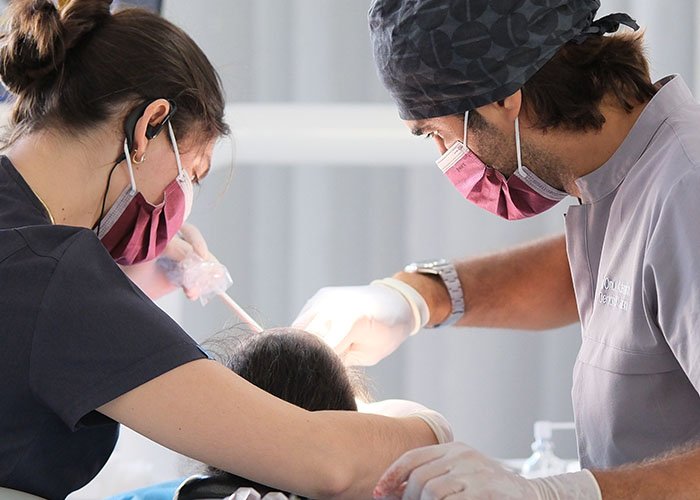
One convenient way to distinguish between a veneer and a crown is to check how much of the tooth they cover. While crowns do cover the whole tooth, veneers do not. As such, crowns help prevent decay and provide more structural support to the restored tooth.
Veneer prep vs crown prep are quite different. For veneers, only the front part of the tooth is altered. Some composite and thin porcelain veneers can also be placed without altering the enamel.
Crowns require more space, so the prepared tooth’s enamel is shaved from all sides. The removed material is then replaced with a crown, a less conservative option than veneers.
Strength, Function, and Indications
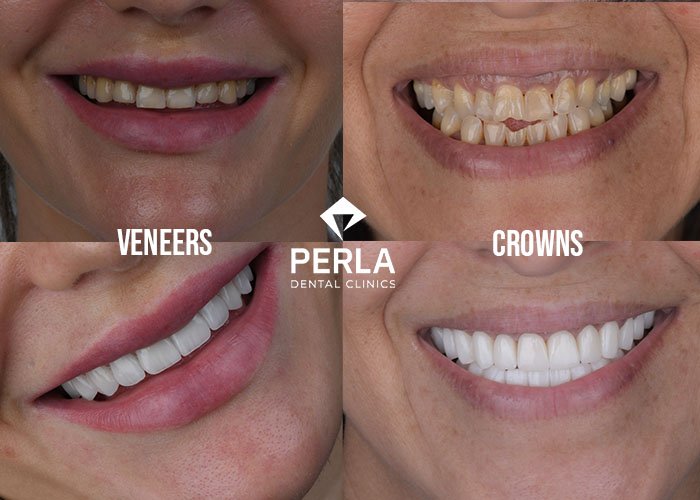
The functional difference is most notable when choosing veneers vs crowns for front teeth. If you want to alter your smile and your teeth are healthy, your dentist will recommend veneers.
The front teeth are the most visible, so treating them with less-invasive veneers is enough to improve smile aesthetics. Crowns offer greater strength than veneers and are ideal for restoring dental function.
Posterior teeth are often under more strain and are less visible. They benefit from crowns more. Crowns offer increased strength compared to veneers and are perfect for restoring dental function.
In some cases, the tooth is too damaged to support any dental restoration. Your dentist may recommend an implant or a bridge as an alternative to dental crowns.
Aesthetics and Natural Smile
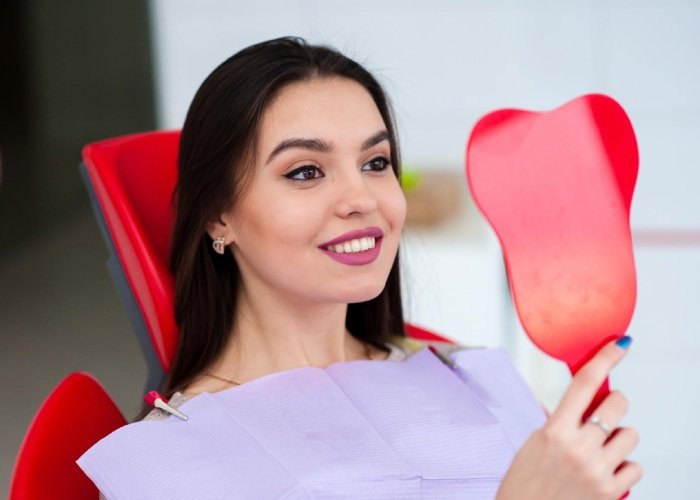
When determining the aesthetic value of tooth veneers vs crowns, it is more useful to consider each patient’s case on its own merits. Much of the final result depends not only on the type of restoration, but also on the dentist’s skill, good colour matching, and proper fitting.
When comparing porcelain veneers to crowns made from the same material, aesthetic value is determined by how well they fit the patient’s smile.
Since veneers are less invasive and preserve more of the tooth, they are the preferred cosmetic option for healthy anterior teeth. However, a well-made porcelain crown is likely to look better if the tooth is significantly damaged.
A frequent concern among patients is whether veneers look like horse teeth, i.e., disproportionately large. The final appearance of veneers depends on the quality of the treatment. When prepared by a skilled dental staff, veneers produce a cohesive, aesthetic smile.
Longevity, Maintenance, and Repairs
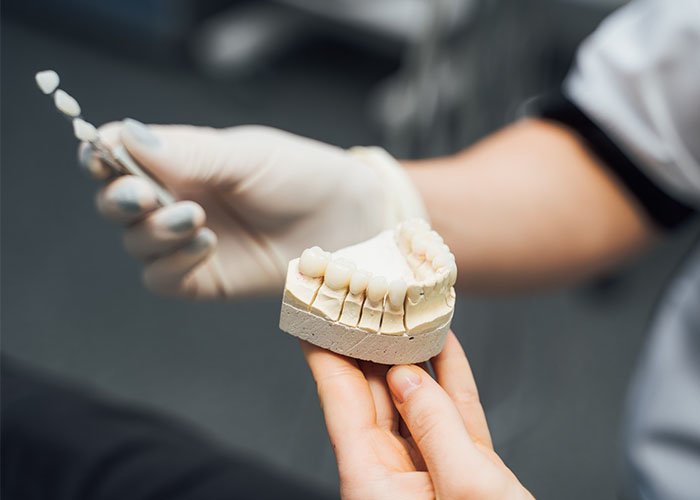
The average service life of veneers and crowns on your teeth depends on several factors. Materials, oral health, and hygiene all play a role in determining the restoration’s longevity.
Veneers’ service life ranges from 5-7 years for composite veneers, to 10-15 years for porcelain. Dental veneer replacement is simpler than crown replacement since veneers are smaller and preserve more of the natural tooth.
A crown’s service life is 10-20 years. Metal-fused-to-porcelain crowns are more durable than full-ceramic crowns in most cases. Replacing a crown is usually more complex than replacing a veneer. If a crown sustains some minor damage, it can be repaired with resin.
Following the dentist’s recommendations is essential to maintain the service life of the crown or veneer. You should follow a proper oral hygiene routine and have regular dental checkups. If you have bruxism or tend to clench your teeth at night, you may need to wear a night guard. It will protect the veneers and crowns from excess pressure.
Veneers vs Crowns for Front Teeth
The choice of veneers vs crowns for front teeth depends on your oral health and needs. While veneers are more often used for anterior teeth, there are many cases where a porcelain crown might be a better choice.
Porcelain crowns can look just as natural as porcelain veneers. Both treatments are often used to restore different teeth in the same patient.
Veneers are placed on front teeth when a more gentle approach is preferable. Crowns offer better results when aesthetics are as important as restoration.
Placing veneers on front teeth is suitable for:
- Closing gaps between teeth
- Filling small cracks
- Restoring chipped teeth
- Concealing deep staining
Placing crowns on front teeth is suitable for:
- Better support after cleaning large cavities
- Covering significant cracks
- Root canal concealment
- Treating heavily misshapen teeth
Cost of Crowns vs Veneers in Turkey
The cost of crowns vs veneers varies from treatment to treatment. Many factors influence how much it will cost to treat your teeth with either restoration.
| Pricing Category | Veneer | Crown |
|---|---|---|
| Per-tooth price (front teeth) | £125-£450 | £120-£300 |
| Complex Case | £2800-£7200 (Full set veneers) | £3200-£7000 (Hollywood smile crowns) |
| Factors influencing price | Material, number of teeth treated, complexity, clinic location | Material, tooth location, complexity, clinic location |
Clinic location influences both veneer and crown cost. Practices in large cities have more overhead and are more expensive. Some countries, such as Turkey, offer veneers and crowns at more affordable prices.
Veneers and crowns can be made from a range of materials, such as conventional porcelain, zirconia, and E-max. These have a large influence on the treatment’s price.
The cost of crowns or veneers is usually higher if the treated tooth requires additional work, such as a root canal treatment. The cost of veneers depends on their type, with composite veneers less expensive than porcelain. The cost of crowns has a similar tendency, with metal crowns usually more affordable than full-porcelain ones.
Composite veneers are less expensive than crowns. However, aesthetic porcelain veneers, such as E-max, can be more expensive than most dental crowns.
Additionally, a cosmetic treatment involving only several anterior teeth will be much more affordable than a full smile restoration.
It is important to remember that a dentist’s skill and the clinic’s equipment greatly influence treatment quality. Suspiciously cheap veneers and crowns may indicate a deficiency in either.
How to Decide: Veneer or Crown for Your Tooth?
Determining which is better for you, veneers or crowns, should only be done after a consultation with a dentist. These are irreversible treatments that have specific indications. Deciding on either should not be done in a hurry.
Each patient’s case is unique, and you may benefit more from a restoration that you have not considered. You can ask your dentist several questions to get a better idea of whether veneers or crowns are better for your teeth:
- Do my teeth have large cracks or large fillings?
- Do I have a root canal?
- How many of my teeth have sufficient healthy tissue for a veneer/crown?
- Based on this, would I benefit more from crowns or veneers?
Your dentist may indicate one or the other based on the following indications:
When a veneer is likely better:
- Your teeth are mostly healthy.
- You want to treat the anterior teeth.
- Your concerns are mostly aesthetic.
- You do not want to shave off too much enamel.
When a crown is likely better:
- You have a damaged tooth that hurts occasionally.
- You have had a deep cavity that has rendered your tooth structurally unstable.
- You have a cavity that has spread to more than half of the tooth.
- You had root canal therapy.
One way to ask an expert for advice is to book a consultation at our clinic to find out whether you need a veneer or a crown.
Risks and Downsides of Veneers and Crowns
While veneers and crowns are very effective treatments, they are not without risks. Reducing the downsides of veneers and crowns is possible, but as with other treatments, they are never 100% risk-free.
Dental veneer risks and cons include the possibility of shaving off too much enamel, tooth sensitivity, and potentialcrack formation.
Dental crowns’ risks and drawbacks include the need for invasive tooth preparation, a visible line between the crown and the gum if the gum recedes, and potential cracking under pressure.
You can reduce the risks of placing crowns or veneers by:
- Choosing a reputable, high-quality dental clinic.
- Not rushing into treatment without a dental consultation
- Focusing on preserving the healthy tooth structure.
- Choosing a suitable type of veneer or crown for your individual case.
Care and Maintenance for Veneers and Crowns
Proper care and maintenance are a must if you have a dental restoration placed. There is no tooth whitening for veneers and crowns, so the best way to ensure they look their best is to have good oral hygiene.
Remember to schedule regular dental visits to detect and address any dental issues before they affect your restored teeth. While your crowns and veneers help protect teeth, decay can spread from unprotected areas.
You may need to wear a night guard while sleeping if you have bruxism or if it is recommended by your dentist. This will help prevent damage to your veneers.
If your veneers or crowns change colour with time, it may be possible to restore some of their former look with professional cleaning and polishing. However, the only way to make them look new again would likely be replacement.
Here is some more advice on how to care for veneers and crowns:
- Regularly brush and floss your teeth.
- Avoid eating very hard foods.
- Do not bite pens, open bottles, or packageswith your teeth.
- A soft toothbrush and a non-abrasive toothpaste are the best for veneers and crowns.

Medically reviewed by:
Dr. Onur Ademhan
Oral and Maxillofacial Surgeon
Founder and CEO of Perla Dental Clinics. Graduated from Ankara University Faculty of Dentistry and specialized in Oral and Maxillofacial Surgery at Gazi University.
FAQ: Veneers vs Crowns
What Is the Main Difference Between a Crown and a Veneer?
Crowns are not the same as veneers. Veneers are used mostly for cosmetic treatments and cover the tooth only partially. Crowns are better for restorative needs and fully cover the tooth.
Are Veneers or Crowns Better for Front Teeth?
Veneers are generally preferred for healthy front teeth. However, porcelain crowns can be an aesthetic alternative if the tooth is damaged or structurally compromised.
Do Veneers Cover the Whole Tooth?
No, a veneer covers only the anterior part of the tooth.
Can You Put a Veneer on a Tooth That Already Has a Crown?
You cannot do so in practice. Veneers do not bond well to artificial materials, and removing parts of a crown to accommodate a veneer is generally not possible.
Are Veneers Bad for Your Teeth?
Dental veneers are a popular and safe restoration. They leave most of the tooth intact and do not cause any further damage to the tooth.
Are Crowns Bad for Your Teeth?
Crowns are often used to restore severely damaged teeth. When used as intended, crowns are perfectly safe.
What Are the Alternatives If I Don’t Want a Crown or Veneer?
Depending on your needs, the dentist may recommend alternatives such as braces or aligners for crooked teeth or implants for damaged teeth.
Are Crowns Cheaper Than Veneers, Or the Other Way Round?
Veneers vs crowns cost depends on their material. In general, top-of-the-line veneers are more expensive than crowns. However, composite veneers are cheaper.
Ready to Find Out If You Need Veneers or a Crown?
The best way to determine if you can benefit from a veneer or a crown is to consult a dentist. Our clinic’s experts are ready to answer all of your questions online.
Contact us to learn our dentist’s professional opinion on the best restoration for your case and receive a professional treatment plan and a quote.