+90 534 226 60 59
  Mon - Fri: 9:00-18:00; Sat: 9:00-17:30; Sunday: Closed

Amalgam fillings, known as ‘silver’ or ‘grey’ fillings, are a cost-effective and durable restoration for carious or damaged teeth. They are made from a mix of mercury and other metals. This article explains their use, composition, and advantages.
Some patients are hesitant to use these fillings due to their mercury content and visual dissimilarity to natural enamel. Scientific reviews state that amalgam fillings are safe for the general population. They are permitted for use in the UK, the USA, and Turkey.
If you would prefer to learn more about tooth-coloured alternatives, please visit our dental fillings page.
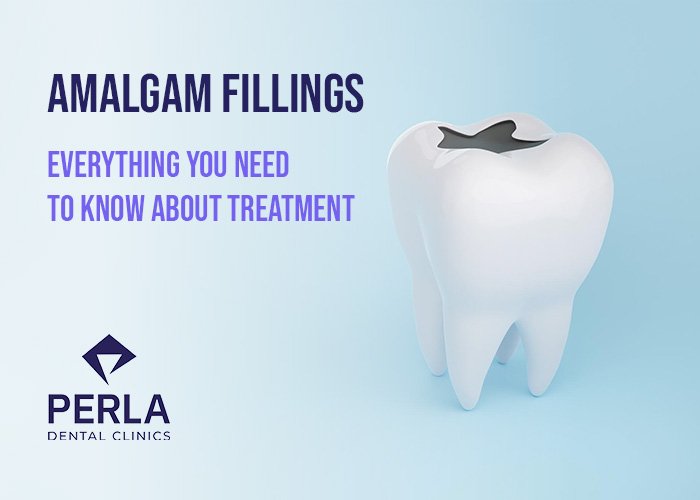
Table of Contents
What is an Amalgam Filling?
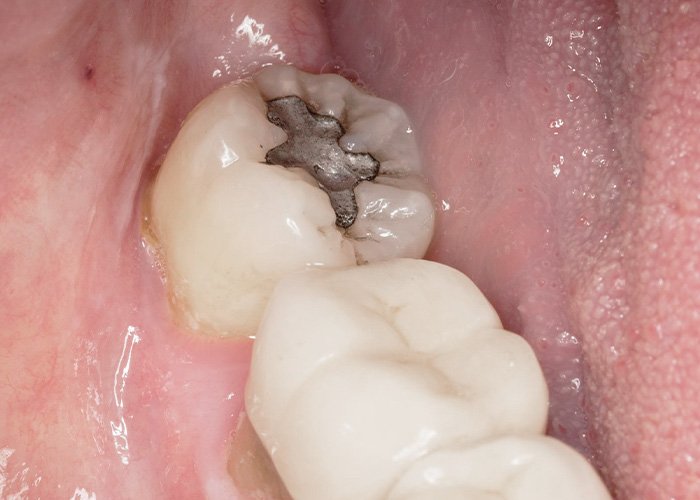
Amalgam fillings are a type of dental restoration placed in a tooth cavity to restore the tooth’s surface and prevent bacteria from reentering it. They are made from dental amalgam, which is a combination of metals (alloy) that sets at room temperature.
Composition of Amalgam
Dental amalgam is a mixture of metals and mercury. Mercury can constitute up to 50% of the material, with the remainder being copper, tin, and silver. Indium, zinc, and palladium may be present in smaller quantities.
Why Mercury Is Used in Dental Amalgam
The use of mercury is necessary to produce a metal mix that is pliable for some time, but sets into a very durable dental mix once shaped in the tooth. There are no alternative methods for producing a metal-based filling that can be placed directly into the tooth so efficiently.
Are Amalgam Fillings Safe?
American and international literature reviews have not found scientific evidence linking amalgam fillings to health concerns. The ADA (American Dental Association) states that amalgam fillings are safe for most patients. The small amount of mercury vapour released by a filling (up to 0.4 µg/day) is significantly lower than the minimum tolerable intake for mercury established by both the WHO (2 µg per kg per day) and the US EPA (0.1 µg per kg per day).
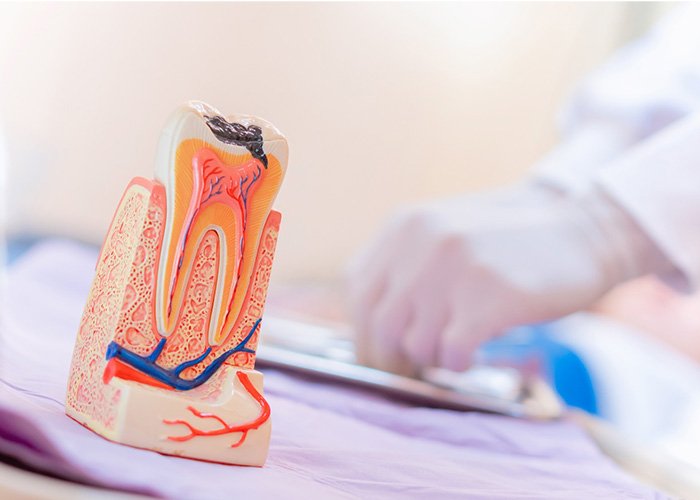
Indications and Contraindications for Amalgam Dental Fillings
The use of grey fillings has declined considerably in recent years, but dentists can still use them for a range of cases, particularly molars (back teeth).
When Dentists Prefer Amalgam
Dentists prefer amalgam fillings for large cavities in molar teeth. These teeth experience high-pressure loads during chewing, which grey fillings can withstand. Additionally, they can be placed in wet environments, which simplifies the procedure.
Who Should Avoid Amalgam Fillings
Grey fillings are not suitable for:
- People with metal allergies
- Pregnant women
- Breastfeeding women
- Children
- People with kidney diseases
- People with specific neurological conditions.
What are Alternatives to Amalgam Fillings?
The most popular aesthetic alternatives to grey fillings are tooth-coloured composite or porcelain. Gold fillings are a mercury-free alternative for when durability is a priority.
| Key Factor | Amalgam | Composite | Porcelain | Gold |
|---|---|---|---|---|
| Durability | High | Medium | High | Highest |
| Lifespan | 10-15 years | 5-10 years | 10-20 years | 15-20+ years |
| Appearance | Grey, silvery | White, opaque | White, translucent, similar to enamel | Metallic yellow |
| Placement | Tolerates moisture | Requires a dry surface | Indirect placement | Layered or indirect placement |
| Cost | Cheapest | Affordable | High | Highest |
Advantages and Disadvantages of Amalgam Fillings
The advantages of grey fillings are:
- Low price
- High durability
- Can fill cavities too large for other materials
- Long-lasting results
- No release of fluoride
However, there are also some drawbacks:
- Not suitable for people with metal allergies
- Visually different from natural tooth structure
- May cause temperature sensitivity
Amalgam Filling Procedure: Step-by-Step
The procedure for dental amalgam fillings consists of two main stages: tooth preparation and placement of the filling.
Preparation and Anaesthesia
After applying local anaesthesia, the dentist prepares the tooth by removing damaged material and decay underneath it, and creates a cavity shape suitable for retaining the metal mix.
Filling Placement
After the tooth is prepared, the dentist mixes the mercury-metal mix in a special tool called the amalgamator. The mix is prepared in a sealed capsule with pre-measured components, so that no liquid mercury is handled at any time.
The resulting filling material is a plastic mass that the dentist moulds into the cavity. It is then shaped to match the rest of the tooth. The mixture hardens rapidly, and the treatment is then completed.
Treatment Duration
The treatment takes about thirty minutes to an hour per tooth. While the metal mix hardens fast, it needs 24 hours to reach its maximum durability.
Possible Side Effects After Amalgam Fillings
Side effects are largely temporary and do not pose any health risks to general and oral health:
- Gum tenderness
- Thermal sensitivity
- Changes in how food tastes
These symptoms should resolve shortly after treatment.
Aftercare and Dental Care Tips
To keep your treated teeth safe and healthy, follow these tips:
- Avoid hard or sticky foods and chewing on the side where the treated tooth is for 24 hours after the procedure.
- Keep your regular dental care routine: brush and floss regularly.
- Use a soft-bristle toothbrush for the treated tooth.
- Visit your dentist for regular check-ups.
How Long Do Amalgam Fillings Last?
This type of dental filling can last ten to fifteen years. The actual service life depends on which tooth is treated, the size of the cavity, and the patient’s dental health.
Cost of Amalgam Fillings
The price of grey fillings in Turkey ranges from £20 to £80. Their most popular alternative, composite fillings, ranges from £40 to £100.

Medically reviewed by:
Dr. Onur Ademhan
Oral and Maxillofacial Surgeon
Founder and CEO of Perla Dental Clinics. Graduated from Ankara University Faculty of Dentistry and specialized in Oral and Maxillofacial Surgery at Gazi University.
FAQ About Amalgam Fillings
Why Is Amalgam Still Used Today?
The properties of the material allow it to be placed chairside, making grey fillings the fastest and most affordable of all metal-based dental fillings.
Do Amalgam Fillings Contain Mercury?
Yes, the final mix contains from 40% to 50% mercury by weight. It is bonded to other metals in the mix, so it is considered safe for most patients.
Have Amalgam Fillings in Turkey Been Approved?
Grey fillings can be placed in Turkey, using the same materials and techniques as in the USA and the UK. The treatment is available upon request from the patient.
Which Countries Ban Amalgam Fillings?
Under the Minamata Convention and recommendations of the World Health Organisation, mercury is expected to be phased out of dentistry, with the EU-wide ban already in effect from 2025.
Can Amalgam Fillings Be Replaced?
Grey fillings can be replaced, but unless there is a fault with existing fillings, it is not recommended. Replacement requires the dentist to further prepare the tooth, removing additional healthy structure.
Are Amalgam Fillings Safe for Children?
To minimise lifetime cumulative mercury exposure, many countries ban or limit the use of grey fillings for children as a precaution. In the UK, the limit includes all people under 15, unless the treatment is deemed strictly necessary.