+90 534 226 60 59
  Mon - Fri: 9:00-18:00; Sat: 9:00-17:30; Sunday: Closed

Full mouth reconstruction allows patients to comprehensively address dental and oral health issues, including missing or damaged teeth, bite misalignment, and TMJ disorders. The treatment uses a range of restorations, such as dental implants, crowns, and bridges, and can include gum and bone grafts, as well as orthodontic and endodontic procedures.
The price of full mouth reconstruction in Turkey depends on the treatments included, with dental crowns and bridges typically costing less than implants, allowing patients to save 50%-70% compared to the UK and the US.
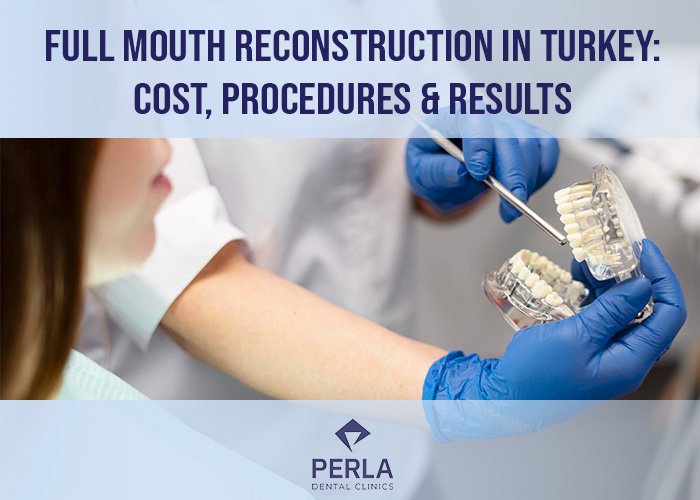
Table of Contents
What Is Full Mouth Reconstruction?
Full mouth reconstruction (or rehabilitation) is a range of treatments used to restore or replace the patient’s teeth in both dental arches. This includes treatments that target the teeth and the soft and hard tissues.
Dental implants, crowns, bridges, gum procedures, bone grafts, and orthodontic and endodontic treatments can all be used in conjunction to address systemic and complex dental issues and restore the patient’s dental function, bite occlusion, and smile aesthetics.
Who Needs Full Mouth Reconstruction?
Full mouth rehabilitation is required when treating dental issues individually is ineffective or impossible. It is used when restoring dental health requires treating multiple underlying causes, or when the extent of damage is too great to be effectively addressed with only a single approach.
Main Conditions
The main conditions where full mouth rehabilitation is appropriate are:
Excessive, pathological tooth wear
Mechanical attrition or chemical erosion, such as from bruxism or chronic acid reflux, which causes irreversible loss of enamel and other dental hard tissues, leading to impaired dental function and aesthetics.
Disorders that affect tooth structure
Several congenital and hereditary disorders make untreated teeth more susceptible to wear or fracture and can cause aesthetic concerns.
Occlusal collapse and issues with bite alignment
Long-term tooth loss or prolonged loss of posterior teeth leads to loss of the vertical dimension of occlusion and changes facial proportions, requiring comprehensive treatment to restore the patient’s bite.
Extensive tooth loss
Extensive caries, trauma, or other causes can leave the patient with multiple non-restorable or missing teeth. A full mouth approach is used to replace hopeless and missing teeth and salvage other teeth, restoring chewing function and occlusion.
Past restoration failures
Failures of dental restorations and prostheses can be a sign of functional issues that require a more comprehensive treatment.
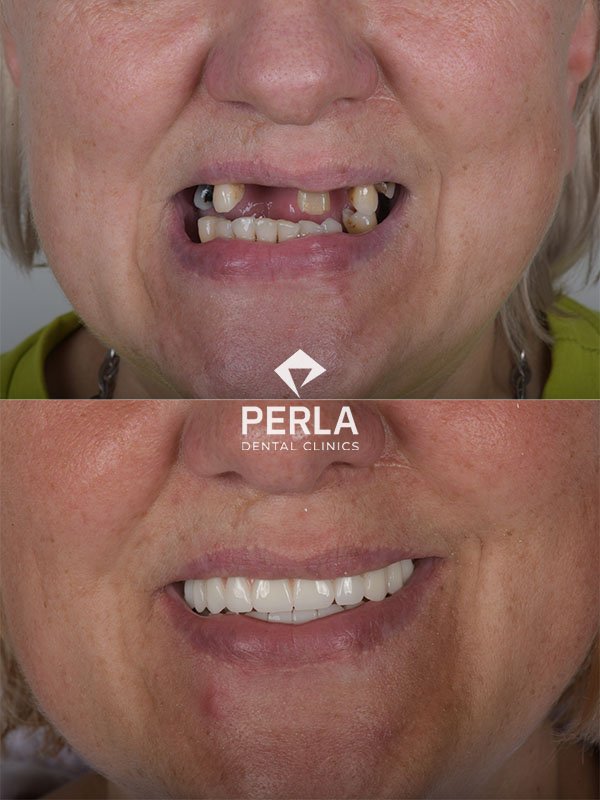
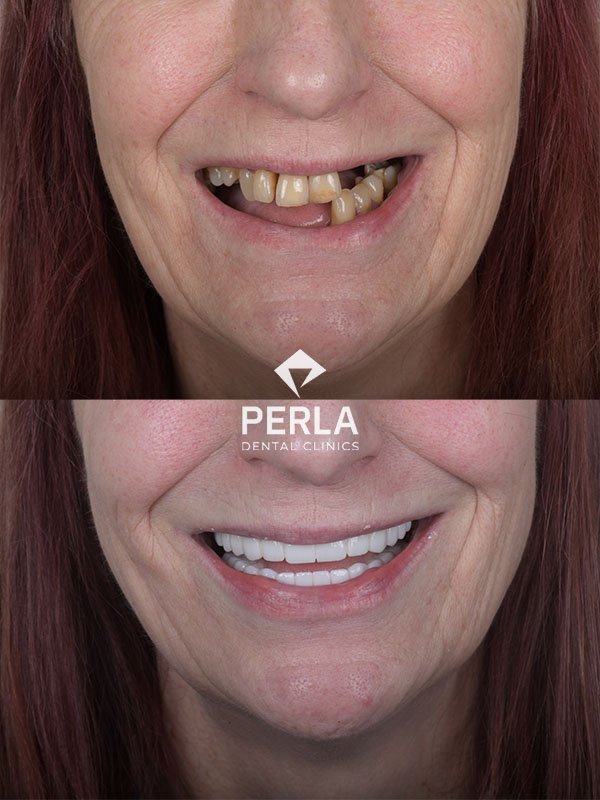
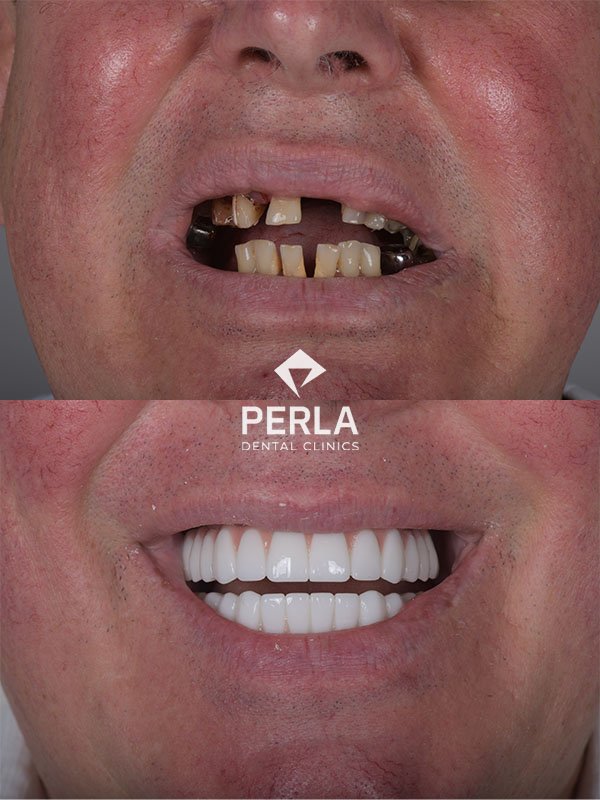
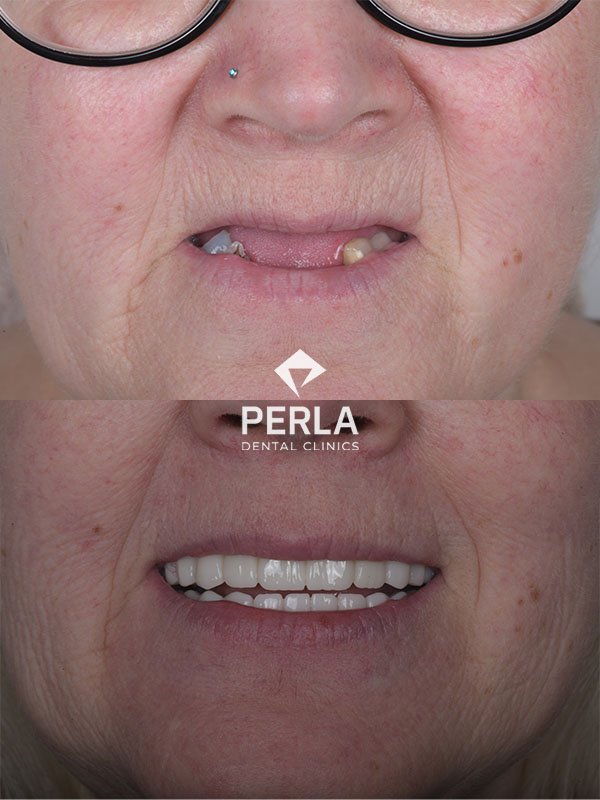
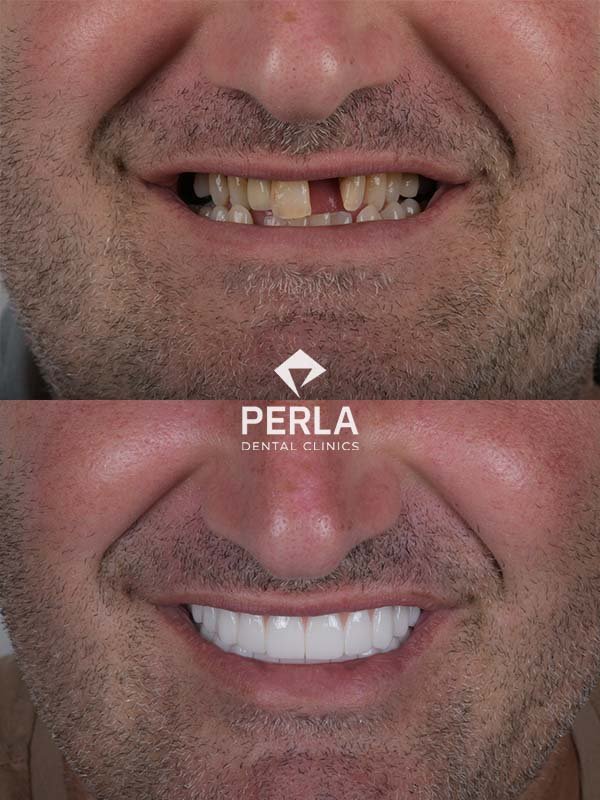
Before/After Results
The before-and-after results demonstrate how the full mouth approach can restore functional dental health and create a new smile in patients with various oral health conditions.
When Are Implants Alone Not Enough?
While dental implants can help restore missing teeth in full mouth procedures, they can’t address all dental problems. If a patient has malocclusion or gum disease, they are treated first with orthodontic procedures, such as braces or Invisalign, and periodontal treatments.
In cases where the patient’s tooth structure is compromised due to congenital disorders or tooth wear, replacing teeth with implants may be excessive. In such cases, the salvageable teeth can be restored with dental crowns or other more conservative restorations.
Full Mouth Reconstruction Cost in Turkey
The cost of full mouth reconstruction in Turkey depends on the treatments required for the patient’s case. For example, a full dental implant procedure in Turkey has an average cost of £4.800-£10.000, but it can require additional procedures, which will influence the total treatment cost.
What Affects the Cost
The cost of full mouth dental reconstruction depends on which treatments are used, how many teeth are completely replaced and how many are treated with crowns, and what materials are used. Procedures such as bone grafts or orthodontic treatments may be required before the patient is eligible for implant treatment, which adds to the total cost.
Turkey vs UK / USA Prices
Turkey offers affordable and high-quality dental treatments, which make it a popular destination for dental tourism. Patients can expect the treatment to cost up to 70% lower than in the UK and the USA. However, because the procedures used for full mouth rehabilitation can vary widely in cost, precise quotes for the complete treatment depend largely on the patient’s case.
| Country | Average Cost | Savings in Turkey |
|---|---|---|
| Turkey | £4.800-£10.000 | |
| UK | £12.000-£24.000 | 55-60% |
| USA | $24.000-$48.000 | 50-75% |
The prices are current as of 2026.
Contact us today to get a personalised treatment plan and cost estimate for your full mouth reconstruction.
Is It Safe to Get Full Mouth Dental Implants in Turkey?
Yes, full mouth implants in Turkey are safe when performed in an accredited clinic that uses modern dental technology and has experienced dental specialists.
Perla Dental Clinic in Turkey is licensed to provide dental services to international patients. Our dental team in Antalya includes oral surgeons, aesthetic dentists, orthodontists, prosthodontists and endodontic specialists, allowing us to meet the inherently multidisciplinary challenges of full mouth implants and rehabilitation.
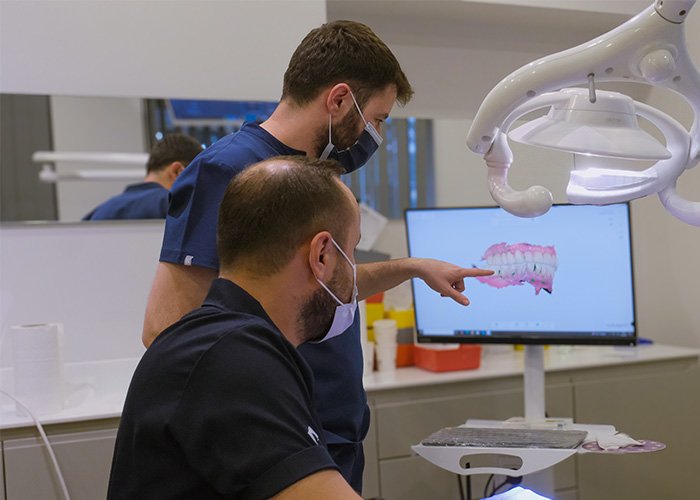
Our patients’ safety and comfort are further supported by our use of advanced sterilisation protocols, CAD/CAM systems for quick and precise dental prosthetic manufacturing, and 3d digital scanners for precise dental impressions.
How to Decide If Full Mouth Reconstruction Is Right for You?
Full mouth treatments can be right for you if you have multiple severely damaged or missing teeth, severe gum disease, worn enamel, or experience chronic jaw or facial pain or find it difficult to chew or speak.
The treatment in Turkey is especially effective if you have several of these issues, as it aims to relieve them comprehensively.
Key Factors Doctors Evaluate
Doctors use full mouth reconstruction when one or several of the following goals need to be achieved to restore the patient’s dental health:
- Re-establishing the correct bite.
- Restore vertical facial dimensions.
- Relieve pain caused by TMJ disorders.
- Restore the patient’s ability to speak comfortably.
- Ensure long-term stability of dental prostheses.
Alternative Treatment Options
There are several alternative treatments for some types of full mouth rehabilitation when the patient’s case is not severe. They include removable prostheses, such as traditional dentures, dental bridges, veneers and composite bonding. These treatments can address mild to moderate cases without requiring dental surgery and are more affordable than a more advanced dental reconstruction.
What Procedures Are Included in Full Mouth Reconstruction?
Full mouth reconstruction includes procedures aimed at restoring missing or damaged teeth and preparing the mouth for these restorations. These can include tooth implants, crowns, bridges, periodontal treatments, bone grafting, orthodontics, and TMJ procedures.
Implants, Crowns and Bridges
Dental implants are used to replace missing teeth. They are titanium or zirconia screw-like fixtures that replace tooth roots and support fixed or removable dental prostheses. In comprehensive treatments, they can support a full set of prosthetic teeth or bridges.
Crowns cover damaged or misshapen teeth to restore their structure and function. They are made from porcelain, zirconia, glass-ceramic (Emax), or metal, often fused to an outer porcelain layer.
Bridges replace missing teeth, but unlike implants, they use neighbouring teeth for support and do not replace the tooth roots. They are made from materials used for crowns. One bridge can replace one or several teeth.
Gum Treatment and Bone Grafting
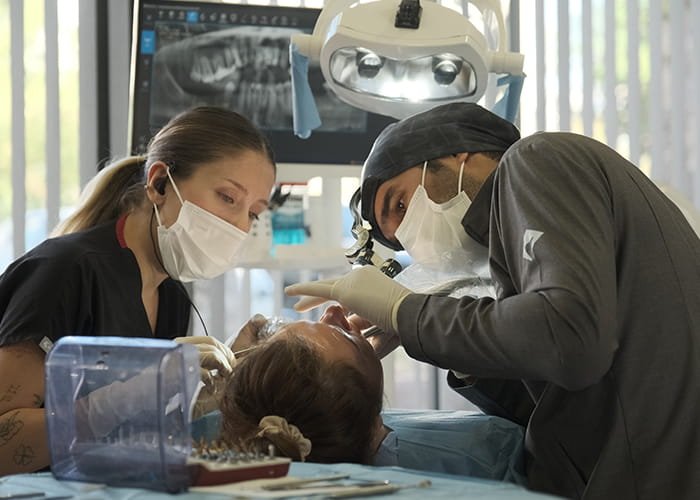
Often in full mouth reconstruction, a patient will require one or more preparatory treatments to ensure that the dental restoration is stable and has an appropriate service life. Periodontal (gum) treatments and bone grafts are by far the most common.
Gum treatments, such as scaling, laser-assisted periodontal therapy, root planing, and gum grafting, are used to treat periodontal disease and restore receding gums.
Bone grafting is used to improve jawbone density and restore the necessary dimensions lost to bone resorption. This procedure is often needed for patients who require implants but have been missing their teeth for some time.
Full Mouth Reconstruction Procedure Step-by-Step
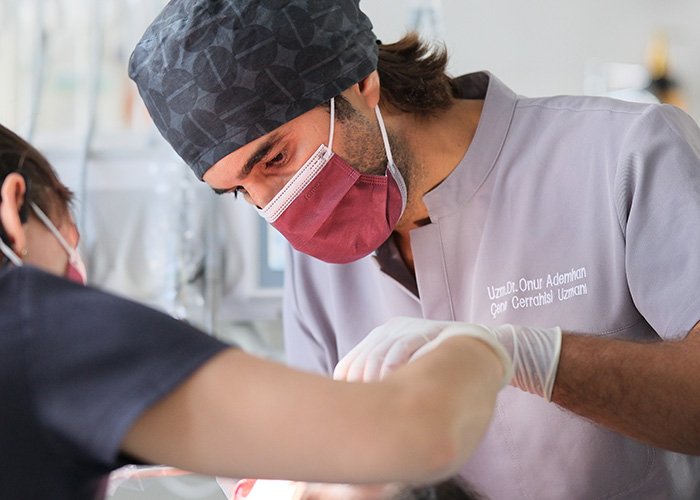
Full mouth reconstruction treatments consist of three main stages: preparatory procedures, dental surgery, and final restoration placement. These stages are separated by recovery periods that vary in duration depending on the procedure’s complexity and invasiveness.
Consultation & Planning
Consultation and planning are required to determine which challenges to address and create a personal treatment plan. A full dental exam evaluates many aspects contributing to oral health: facial muscle tone, TMJ function, smile line, structural tooth integrity, occlusion, gum health, and more. We use modern 3d scanning technology and digital smile design for more precise and predictable diagnosis and planning.
Preparatory Procedures
Common preparatory procedures can include orthodontics, gum treatments, and bone grafts. If the patient requires implants, tooth extractions can also be required. These procedures help correct malocclusion, restore gum health, and provide adequate support for implants and other restorations used in full mouth rehabilitation.
Surgical Phase
The surgical phase refers to the placement of dental implants. Dental implants are placed into the jaw after the dental surgeon prepares the implantation site by making the necessary gum incisions. Once implants are placed, the gums are sutured. Jawbone access can also be provided using special dental punches.
Temporary Restoration
Dental implants can’t support permanent full-load crowns and bridges immediately. They require several months of recovery before reaching their full secondary stability. Dentists use temporary restorations to avoid leaving the patient without teeth. The dentist will attach intermediate parts called abutments to the implants and connect temporary crowns to them. These temporary crowns will serve the patient until the implants fuse with the jawbone (osseointegration), and can be replaced by final prostheses made of durable materials.
Final Restoration
Permanent crowns and bridges are manufactured using new dental scans after recovery to account for changes in jaw dimensions. Their shape and colour are adjusted using modern smile design techniques to create a harmonious smile that suits the patient’s face profile and allows for easy eating and speaking.
Recovery and Treatment Timeline
The full mouth rehabilitation treatment timeline is highly variable because a broad range of procedures can be used. It is likely to require several visits to Turkey, which are separated by recovery periods of 3 to 6 months.
| Stage | Duration | What Happens |
|---|---|---|
| Preparatory Procedures | Up to 6 months | Most preparatory procedures are brief. However, bone grafts require an extensive recovery period of several months. |
| Surgical Phase | ≈1 week | Implant placement takes several hours per session, but can require multiple appointments and follow-ups. |
| Recovery & Osseointegration | 3-6 months | The duration of the recovery period depends on the condition of the jawbone and type of implant. |
| Final Restoration Placement | ≈1 week | Final restoration fabrication, adjustment, and placement require several appointments. |
Risks and Complications of Full Mouth Implants
Full mouth implants have high survival rate but complications may occur. Most of these are temporary and are successfully resolved without posing risks to the implant or the patient’s general or oral health.
Implant complications include:
- Bruising and swelling: Can be treated with anti-inflammatory medication, ice packs, and rest.
- Perimplantitis: Similar to periodontal disease. Requires scaling or removal of infected tissue.
- Titanium allergic reaction: Can be avoided by using non-metallic implants.
- Osseointegration failure: This requires removing or replacing the implant. Very rare.
How to Minimise Complications
Most complications occur during recovery, so it is especially important to follow the dentist’s recommendations during this period. The first weeks after implant surgery are especially important for treatment success. Make sure to:
- Avoid straining the implants: eat liquid or soft foods during initial recovery, and avoid chewing very hard foods or items at all times.
- Maintain good oral hygiene: Make sure that both your implants and gums are healthy and clean. Gum health has an important role in supporting the implants.
- Schedule regular dental visits: Visit your dentist for check-ups and professional cleaning. It will help maintain the restorations’ structural integrity and aesthetic qualities.

Medically reviewed by:
Dr. Onur Ademhan
Oral and Maxillofacial Surgeon
Founder and CEO of Perla Dental Clinics. Graduated from Ankara University Faculty of Dentistry and specialized in Oral and Maxillofacial Surgery at Gazi University.
Frequently Asked Questions About Full Mouth Reconstruction
What Is Included in Full Mouth Reconstruction?
Full mouth reconstruction can include restorations such as dental implants, bridges, and crowns. Orthodontic and endodontic procedures, as well as bone grafts and gum treatments, can also be used.
The exact procedures used vary between patients. They depend on the underlying dental issues and the steps required to resolve them.
How Is Full Mouth Reconstruction Different from Dental Implants?
Dental implants are used to replace damaged or missing teeth. Full mouth reconstruction is a more comprehensive approach that combines several treatments to address dental problems affecting the patient’s overall dental health.
Full mouth reconstruction often uses dental implants to replace hopeless teeth, but implants are used alongside additional procedures to improve bite alignment or gum health.
How Long Does Full Mouth Restoration Take?
It may take from several months to a year. Some procedures, such as orthodontic treatments, dental implants and bone grafts, require separate and extensive recovery periods. As such, the actual treatment duration depends heavily on the patient’s case.
How Much Do Full Mouth Implants Cost in Turkey?
Full mouth dental implants in Turkey price range from £4.800 to £10.000. Costs can differ between implant brands and materials, and clinic locations in Turkey. In most cases, treatment requires 6 to 8 dental implants per arch. Aesthetic solutions made from materials like Emax are generally more expensive.
Is a Full Mouth Dental Implant Procedure Painful?
The procedure is performed under anaesthesia. The patient can only feel the pressure and vibrations from the dental tools. The patient will experience some swelling, bruising, and pain during the initial recovery. They can be managed with medication and rest and are mild to moderate in most cases.
Who Is a Good Candidate for Full Dental Implants?
A good candidate for dental implants for full mouth reconstruction is someone with multiple non-restorable teeth. This can be due to tooth loss from cavities or trauma, or due to remaining teeth that are too damaged to support other dental prostheses.
Full dental implants replace a full arch of teeth in both jaws, so the patient should have sufficient jawbone density and dimensions to support the restorations. Bone grafts and sinus lifts can be required if these parameters are insufficient.
What Are the Risks of Full Mouth Reconstruction?
While complications can occur, most of them are temporary and can be quickly treated. Risks include bleeding, swelling, bruising, perimplantitis, and secondary cavities. Many of the symptoms can be avoided by following the dentist’s recommendations.
How Long Do Full Mouth Dental Restorations Last?
The service life of full mouth restorations depends on their type. Implants can last more than 20 years. Crowns and bridges can serve for 10-15 years. The actual service life can also vary depending on the restoration’s materials and the patient’s personal case.
Why Do People Choose Turkey for Full Mouth Reconstruction?
Turkey can offer more affordable prices, attractive dental implants package deals, and high standards of dental care. Accredited clinics, such as Perla Dental, use modern tools and comprehensive treatment planning to make the full mouth restoration process faster and more comfortable.
What Is the Recovery Time After Full Mouth Reconstruction?
Total recovery time can last 6 to 12 months. The full treatment consists of multiple procedures, and some are performed only after the patient recovers from the previous one. A typical case may require a bone graft or orthodontic treatment, followed by a 6-month recovery, then dental implant surgery and an additional 3-6 months of recovery.