+90 534 226 60 59
  Mon - Fri: 9:00-18:00; Sat: 9:00-17:30; Sunday: Closed

Mini dental implants are single-piece titanium screws that replace missing tooth roots and can retain an overdenture or a fixed single crown. They can be used in cases where a traditional implant can’t fit or would require a bone graft or other type of tissue augmentation. If you are considering mini dental implants, our article will help you determine whether this is a suitable treatment.
You can find more information about different types of dental implants on our treatment page.
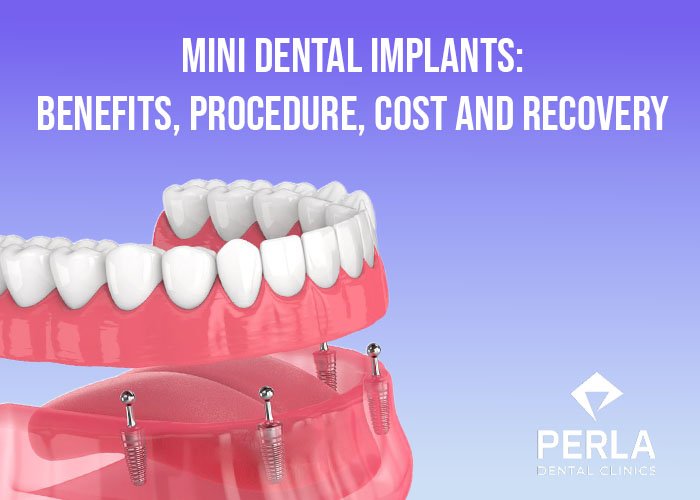
Table of Contents
What Are Mini Dental Implants?
Mini dental implants (MDIs) are reduced-diameter implants that can provide a minimally invasive solution for restoring missing teeth. The diameter of mini dental implants is typically less than 3 mm.
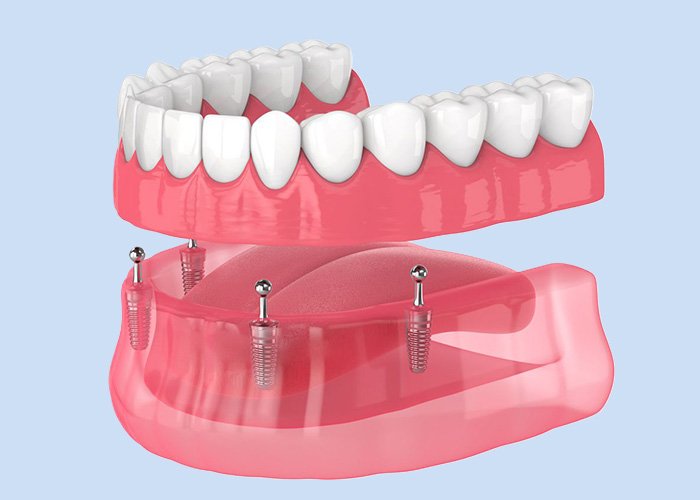
Mini implants consist of a one-piece screw placed into the jawbone to support a dental prosthesis, typically an overdenture (for several teeth) or a single replacement tooth. They are made of titanium alloy. Because of their small size, they can be used in cases where the jaw’s density or width is not suitable for traditional implants.
MDI surgery is considered less invasive than traditional implants because it is a ‘flapless’ procedure, meaning the implants can be placed through the gums without making any additional incisions.
The head of a screw can be ball-shaped to support an overdenture or square for fixed restorations for a single tooth.
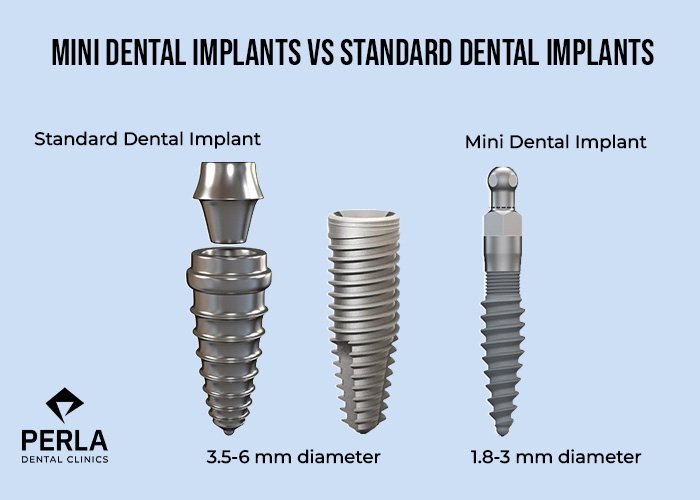
Mini Dental Implants vs Standard Dental Implants
The primary difference between mini and standard dental implants lies in their diameter: mini implants are usually 1.8 to 3.0 mm in diameter, while other types are 3.5 mm or larger. This allows them to be placed in cases where a traditional implant cannot fit or lacks sufficient stability.
Unlike traditional implants, most of which use two-piece designs, mini dental implants are solid single-piece screws. They lack a separate abutment, a piece connecting a dental prosthesis, such as a crown, to the implant screw. Placement of mini implants requires careful planning, as their angle cannot be corrected easily.
Because of their small size, healing and recovery are relatively fast after receiving an MDI. They can be immediately loaded, meaning the patient gets an overdenture or another prosthesis immediately or shortly after placing the MDI. Placement surgery is also simpler.
| Key Factor | Mini Dental Implants | Standard Dental Implants |
|---|---|---|
| Diameter | 1.8-3.0 mm | 3.5-6.0 mm |
| Form factor | Single-piece screw | Usually two-piece |
| Typical use case | Retaining overdentures | Supporting fixed prostheses (crowns, bridges) |
| Placement procedure | Flapless, minimally invasive surgery | Typical implant surgery; May require separate incisions and stitches |
| Jawbone requirements | Require less bone volume, particularly width | Jawbone volume and density are critical for success |
| Recovery | Typically shorter recovery, can often support a prosthesis immediately after placement | Several months of recovery; Cannot support a prosthesis immediately, unless the jaw condition is ideal |
| Cost | Lower average cost | Higher average cost |
What Are Mini Dental Implants Used For?
Mini dental implants are most commonly used to retain overdentures, in which case several implants are placed in the jawbone. It is also possible to use one MDI per tooth, particularly when the bone is thin and bone grafting would otherwise be required.
An MDI can be used when a patient cannot have or wants to avoid any bone or soft-tissue grafts before the procedure, since it is less demanding on the jawbone. This makes the treatment faster to perform, as there is no separate recovery time after a bone graft.
An MDI-retained overdenture replaces several missing teeth. Using an MDI to replace a single missing tooth is only possible for natural teeth that do not experience heavy loads, such as molars, due to the MDI’s relatively lower stability.
Benefits of Mini Dental Implants
Advantages of mini dental implants include lower costs and less invasive placement and recovery.
- Quick, less-invasive procedure: Mini implants are smaller than other restorations and can be placed without opening a flap in the soft tissues, reducing surgery time and minimising post-op complications.
- Fast recovery: MDI surgery does not need stitches, and the entry point for the implant is quite small, leading to a fast healing time.
- Can be placed in a narrow bone: They do not need as much space as conventional alternatives, and are suitable for restoring smaller teeth or in cases where the available bone width is reduced.
- Can be used without tissue augmentation: there is often no need for bone grafting when placing an MDI, where a traditional implant would require one.
- Affordable cost: Mini implants provide a more cost-effective solution for many patients.
Disadvantages of Mini Dental Implants
While mini implants present many advantages, their narrow shape leaves them with less secondary stability, and data on long-term survival is still inconclusive.
- Single-piece design only: Mini implants do not have a separate abutment connector piece, so they may be more challenging to place for some patients.
- Highly sensitive to applied forces: Mini implants are more delicate and cannot support heavy chewing forces. As a result, they are not recommended as a single-tooth restoration for molars, unless multiple screws are used per tooth.
- Potentially shorter service life: While conventional implant screws can last a lifetime, an MDI is more often viewed as a transitional restoration, estimated to serve for 5-10 years.
Who Is a Good Candidate for Mini Dental Implants?
MDI treatment is a good option for patients who cannot receive a traditional implant, want an implant-retained alternative to traditional dentures, or prefer a more affordable restoration for lost teeth. They are good for people who are already wearing dentures and want them to be more stable.
Good Candidates
Patients with:
- Missing teeth;
- Narrow or small jaws;
- Small interdental spaces;
- Need for less invasive procedure;
- Bone loss (especially width);
- Budget considerations.
May Not Be Suitable
Patients with:
- Blood clotting disorders;
- Diseases that interfere with healing;
- Uncontrolled diabetes;
- Insufficient bone dimensions;
- Inadequate gum surface coverage;
- Untreated periodontal conditions;
- Bruxism (teeth grinding).
Mini Dental Implant Procedure: Step-by-Step
Mini implant treatment is brief and consists of three main stages: treatment planning, implant placement, and recovery. In some cases, the treatment can be done in a single visit, making it more suitable for patients who need a quick tooth replacement.
Consultation & Planning
A pre-treatment consultation is required to discuss potential treatment outcomes and to obtain the patient’s dental scans using X-ray and CT. This allows the dentist to evaluate the patient’s condition, determine the best locations for implant posts, and determine whether any pre-op augmentation is required for the procedure.
Implant Placement
Mini implants are inserted under local anaesthesia. In most cases, the implant can be inserted without making any incisions. The surgery lasts less than an hour for most patients. The dental prosthesis may be placed immediately after the surgery is complete.
Healing and Aftercare
The recovery period after surgery is shorter than for conventional dental implants. The patient can expect some swelling in the first few days and should eat soft foods to avoid disturbing the restorations. Initial recovery takes only several weeks for an MDI, while traditional dental implants require several months of recovery and additional dental care.
Recovery, Lifespan and Success Rate
Soft tissue recovery takes three to four weeks. With a 95% success rate under optimal conditions, and up to 90% survival rate after 5 years, most patients can expect their MDI to last 6-10 years or longer.
Soft tissue recovery takes up to 4 weeks after surgery, while complete osseointegration requires several months. To prolong the restoration’s service life, the patient should avoid too hard or sticky foods and keep good oral hygiene.
How Much Do Mini Dental Implants Cost?
The price of mini dental implants is more affordable than that of full-size implants. While precise costs vary, Turkey offers the most cost-effective MDI treatments due to high competition between clinics and lower living costs.
The prices for full-arch restorations are higher and depend on the number of implants required and the patient’s particular requirements and oral health.
| Implant type | Price in Turkey | Price in the UK | Price in the USA |
|---|---|---|---|
| Single mini dental implant | £190-£500 | £500-£1500 | $700-$1700 |
| Mini implant-supported denture | £1800-£5000 | £3000-£8000 | $3500-$1000+ |
Contact our clinic to find out which type of dental implants is the best fit for your needs.
FAQ About Mini Dental Implants
Are Mini Dental Implants Painful?
They are placed under local anaesthesia and use a less invasive procedure, so they are not painful. Mini implants are also easier to recover from.
How Much Bone Is Needed for Mini Dental Implants?
These implants require a bone width of 3 to 5 mm for placement. The minimum requirements depend on the patient’s case, but they are less sensitive to bone dimensions than conventional implants. Low bone density, however, can negatively impact primary stability.
Can Mini Dental Implants Replace Molars?
They are not recommended for replacing molars in most cases, but it is possible when using multiple implants for one tooth. The stability of the restoration would be lower than when a conventional implant is used.
Are Mini Dental Implants Safe?
They are safe and present a lower chance of surgical complications than alternatives. An MDI places less trauma on the tissues during placement or removal, should the implant fail.
How Long Does the Mini Dental Implant Procedure Take?
The procedure lasts 30 to 90 minutes or slightly longer if multiple teeth need to be replaced.
How Long Can Mini Dental Implants Serve For?
They are expected to last at least 6-10 years. Using them as a permanent restoration is less common than as a transitional one, but it is possible.
Are Mini Dental Implants as Good as Standard Dental Implants?
They are a good alternative to standard implants for specific cases, such as retaining removable prostheses or restoring narrow teeth. However, they are less durable, may have a shorter lifespan than conventional implants, and are less suitable for small-span dental bridges.

Medically reviewed by:
Dr. Onur Ademhan
Oral and Maxillofacial Surgeon
Founder and CEO of Perla Dental Clinics. Graduated from Ankara University Faculty of Dentistry and specialized in Oral and Maxillofacial Surgery at Gazi University.