+90 534 226 60 59
  Mon - Fri: 9:00-18:00; Sat: 9:00-17:30; Sunday: Closed

Dental crowns are used to repair damaged teeth and replace outer layer of the tooth. Many types of dental crowns are available today, differing in durability, appearance, and longevity.
This overview will help you better understand when a particular type of dental crown can be used. Knowing the differences between them will help you choose the most suitable one for your needs.
Table of Contents
What Are the Main Types of Dental Crowns?
The most common way to define types of dental crowns is by their material. The types below are the most common dental crowns in Turkey and other countries.
Metal Crowns
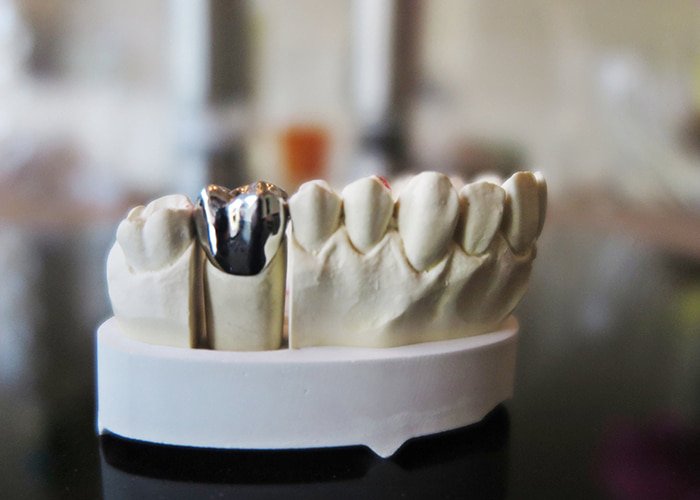
Traditional metal crowns are made from various dental alloys. This type includes gold, titanium, and cobalt-chromium crowns. Metal crowns are strong, even when very thin. They can be placed with minimal reduction to the tooth’s natural structure. They are also fracture-resistant and therefore suitable for patients who clench or grind their teeth.
Metal crowns do not resemble tooth enamel. Therefore, they are not used on front teeth unless specifically requested.
In rare cases, patients may be sensitive to metal dental restorations. Metals also conduct heat and cold better than natural enamel, making them less suitable for patients with very sensitive teeth.
Advantages:
- Exceptional durability
- Preserve natural tooth structure
Disadvantages:
- High cost for gold-containing alloys
- Do not look natural
- May cause sensitivity or an allergic reaction
Porcelain Crowns
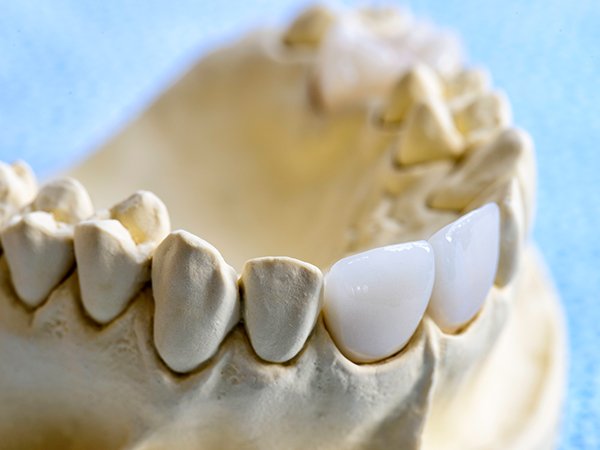
Porcelain dental crown materials, such as lithium disilicate, offer exceptional aesthetic value. Porcelain crowns are the most translucent and look very similar to natural enamel. They are commonly used for front teeth.
Dental porcelains are harder than enamel, but less resistant to persistent stresses, closely resembling natural enamel. To avoid fractures, many types of porcelain crowns are made thicker and require more tooth preparation.
Advantages:
- Exceptional aesthetic value
- Biocompatible and inert
- Poor temperature conductivity helps prevent sensitivity
Disadvantages:
- Relatively high cost
- Comparatively lower durability
Zirconia Crowns
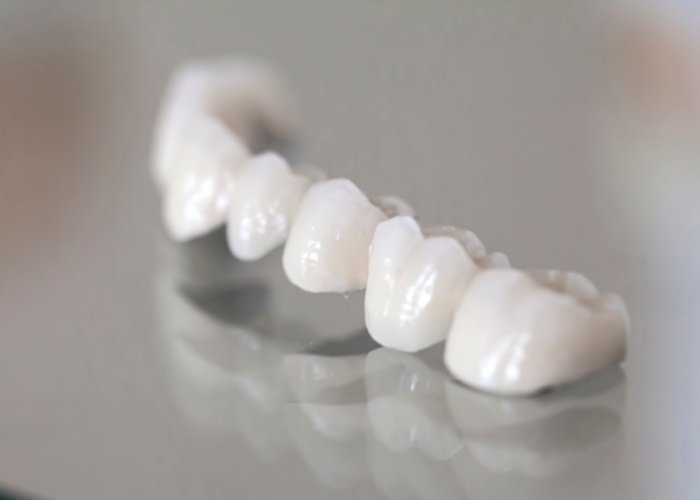
Zirconia is one of the most durable dental ceramics. While it is not as translucent as other dental porcelains, it is much stronger and less prone to fracture. All-zirconia crowns are often used for posterior teeth. Unlike metal crowns, they are tooth-coloured, yet can still withstand the high pressure of chewing.
Layered zirconia crowns have a zirconia core and use another type of porcelain on top to enhance aesthetics. They are commonly used for front teeth when both structural integrity and aesthetics are extremely important.
Advantages:
- High strength with good aesthetics
- Requires less tooth preparation than porcelain
Disadvantages:
- More expensive than other options
- Can be difficult to adjust or remove due to their hardness
Porcelain-Fused-to-Metal (PFM) Crowns
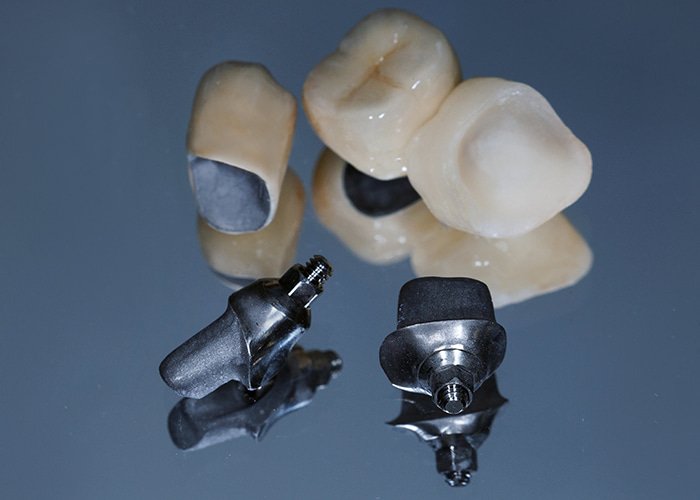
PFM crowns use a metal core covered with a layer of dental porcelain. Once considered the “gold standard” for combining aesthetics and durability, they have lost some of their popularity to zirconia-based restorations, but they are still very common.
PFM crowns have some of the advantages of both metal and porcelain. They are most popular for restoring posterior teeth, where they help counter the aesthetic drawbacks of full-metal crowns while retaining most of their durability.
The outer porcelain layer, however, is less sturdy and can chip off with prolonged use. The edge of the metal core can also show under the porcelain if the patient’s gums recede.
Advantages:
- Durable and relatively natural-looking
- Cost-effective
- Long and proven history of use
Disadvantages:
- The porcelain layer can chip off the metal base
- The metal edge may be visible under the porcelain
- Require more tooth preparation than other crown types
Composite Crowns
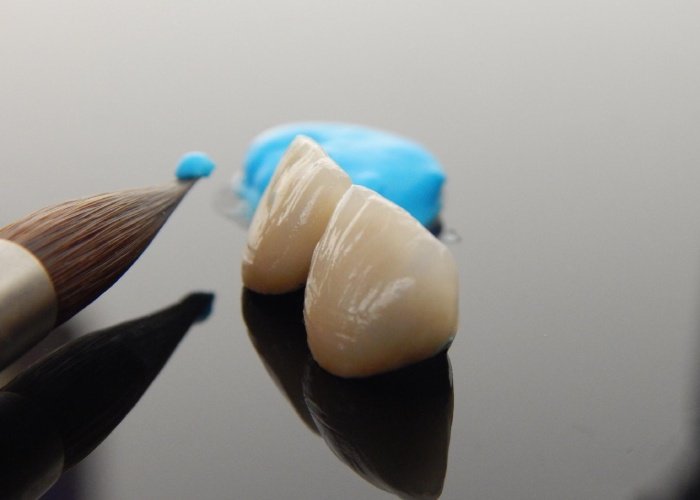
These crowns are made from composite resins. The material is commonly used for fillings, but can also be used for temporary or semi-permanent crowns. It is the least durable material for crowns, although it is inexpensive and biocompatible.
These crowns are used when the patient expects to replace them with another type of crown in the near future. Most commonly, they are used as temporary crowns placed before a more permanent restoration is fabricated in a dental laboratory.
Advantages:
- Low cost
- Suitable for temporary restorations
Disadvantages:
- Low durability
- Prone to staining
- Low resistance to bacterial plaque formation
How Do Different Types of Dental Crowns Compare?
We can compare dental crowns using several criteria. When choosing the best dental crown material for your case, some factors will be more important to you than others.
Aesthetics
| Metal | Porcelain | Zirconia | PFM | Composite |
|---|---|---|---|---|
| Do not look like natural teeth | Highest | High to very high | Moderate | Moderate to high |
When comparing the aesthetic value of zirconia and porcelain crowns, porcelain is generally considered as more aesthetically pleasing. However, modern high-translucency zirconia can offer comparable results.
PFM crowns have metal cores that must be concealed with an opaque porcelain layer. This makes the crown look less natural than full-porcelain or zirconia restorations.
Composite resins resemble enamel, but are more prone to staining, which can reduce their aesthetic appearance over time.
Durability
| Metal | Porcelain | Zirconia | PFM | Composite |
|---|---|---|---|---|
| Highest | Moderate | High to very high | High to very high | Low |
In terms of durability, metal crowns are the least likely to fracture or chip. While they can be damaged, the ductility of metal means the crown will deform rather than break.
Zirconia is also very durable. However, in layered zirconia crowns, the outer porcelain layer is more prone to chipping than the crown’s core. The same applies to PFM crowns.
Tooth Preparation
| Metal | Porcelain | Zirconia | PFM | Composite |
|---|---|---|---|---|
| Least reduction | Moderate reduction | Low reduction | High reduction | Low reduction |
When placing a crown, the dentist needs to remove some of the enamel to make space for the restoration. This is called reduction. The less reduction is required, the more of the natural structure remains in place.
Biocompatibility
| Metal | Porcelain | Zirconia | PFM | Composite |
|---|---|---|---|---|
| Good | High | High | Good | Moderate to good |
Modern materials used for dental crowns are highly biocompatible. Only metal and PFM crowns require special consideration for the small percentage of patients who are allergic to certain metals. These allergies can be tested for if required.
Composite resins are prone to accumulating bacterial plaque, which can negatively influence gum health.
Which Type of Dental Crown Is Best for Which Tooth?
When choosing crown material, it is very important to consider the position of the tooth. The chewing forces experienced by front (anterior) and back (posterior) teeth are not the same, therefore they require different crowns.
Crowns for Front Teeth
Aesthetics are the most important consideration in the restoration of teeth that are visible when speaking or smiling. Therefore, porcelain and layered zirconia are considered the most suitable crowns for front teeth.
Front teeth are not used for chewing; accordingly, exceptional fracture resistance is not a requirement for crown longevity when treating front teeth. However, patients with bruxism (teeth grinding) benefit more from PFM and all-zirconia crowns, even for front teeth.
Crowns for Back Teeth
The best crowns for molars are those that can withstand high chewing forces and look sufficiently natural. All-zirconia and PFM molar crowns meet both restorative and aesthetic needs.
All-metal crowns can be used if you are not concerned with natural aesthetics and want the most durable restoration possible.
Crowns After a Root Canal Treatment
If you have had root canal treatment, the treated tooth will need to be reinforced with a crown or inlay. If a crown is necessary, the dentist will rebuild the tooth’s core with artificial material.
After a root canal, rear teeth benefit more from PFM and zirconia crowns, while front teeth can be treated with porcelain crowns.
How Safe Are Dental Crowns? Risks, Sensitivities, and Long-Term Issues
Dental crown risks are mostly related to the chance of crown failure or sensitivity to metals used in the alloy. As far as general health is concerned, crowns are safe. Localised adverse reactions, such as gum irritation, are possible due to a poor fit or damage to the crown.
Allergic Reactions
Metal crown alloys can contain nickel or other metals that some patients are sensitive to. A non-metal crown, such as porcelain or zirconia, is recommended for such cases. A small percentage of patients can also experience allergic reactions to components of dental cement used to attach the crown to the tooth.
Decay Under the Crowns
Remember that while crowns themselves don’t decay, they can’t stop cavities from forming if bacteria reach under the crown margin. Good oral hygiene plays a key role in preventing cavities.
Teeth Sensitivity
Your teeth can become more sensitive to temperature after getting a crown. This is particularly true of metal crowns. This side effect is often only temporary, but if you already have sensitive teeth, it is better to choose a porcelain crown.
Improperly Fitted Crowns
Crowns that are not fitted carefully can negatively impact your bite or cause the opposing and neighbouring teeth to wear down more quickly. A follow-up appointment after crown placement can help ensure proper fit and prevent problems with dental crowns.
How Long Do Dental Crowns Last and How to Care for Them?
The lifespan of a dental crown depends on the material used, its position in the mouth, and your overall oral health.
Crown Longevity
| Metal | Porcelain | Zirconia | PFM | Composite |
|---|---|---|---|---|
| 20+ years | 10-15 years | 15-20+ years | 10-20 years | 3-7 years |
Crowns can have a shorter lifespan if you are prone to grinding or clenching your teeth or have a very strong bite.
These average crown lifespans presume that the patient maintains good oral hygiene and follows the dentist’s recommendations. This helps prevent cavities from forming under the crown edges, which is the main cause of crown failure.
Fortunately, caring for dental crowns is generally very similar to caring for healthy natural teeth, but some additional precautions need to be taken to avoid damaging the restorations.
Dental Crown Care Recommendations
- Brush your teeth carefully twice a day
- Floss your teeth daily
- Consider wearing a night guard if you have bruxism
- Avoid hard and very sticky foods
- Visit your dentist regularly
Dental Crowns in Turkey vs UK and USA: What’s the Difference?
Dental crowns in Turkey are popular among dental tourists. Patients travel to other countries when they cannot get a suitable appointment locally or to find lower prices.
Quality and Technology
The quality of crowns made in reputable clinics in Turkey, the UK, and the USA is comparable.
Clinics in Turkey are increasingly using CAD/CAM processes for crown production and generally manufacture crowns “in-house”. This computer-aided process allows a crown to be produced within 1-2 days, or sometimes even during a single clinic visit.
In the UK, CAD/CAM processes are usually considered a premium feature and are more common in high-end private care. Most clinics use an external dental lab for manufacturing crowns, which takes longer.
Cost
In terms of price, Turkish dentistry is more affordable than in either the USA or the UK. This is because living and labour costs, as well as rent and clinic overheads, are lower.
Generally, you can expect to pay the least for the same crown in Turkey, followed by the UK, and then the USA. The actual costs of dental crowns in Turkey vary between clinics and materials.
| Country | Price per crown | Technology | Treatment duration | Package deals |
|---|---|---|---|---|
| Turkey | £120-£300 | CAD/CAM, digital teeth impressions | Fast (one to several days) | Extra services, such as accommodation, are common |
| UK | £500-£1.200 | Mixed use of conventional and digital approaches | Slow (several weeks) | Extra services are only rarely included |
| USA | $800-$1.700 | Largely digital teeth impressions | Moderate (one to several weeks) | Extra services are very rare |
How to Choose a Safe Clinic Abroad
If you are considering dental tourism in Turkey, pay attention to patient reviews and choose reputable, well-established clinics. This will help ensure the treatment is safe and suitable for your needs.
EXCELLENT Based on 2409 reviews
 Posted on Google
 yavuz buyukgebizTeşekkürler onur hocam eldar hocama tüm doktorlara cok Cook memnunuzPosted on Google
 Ayşe SoyturkAli hocama tesekkue ederim dislerim çok güzel oldu çok memnunumPosted on Google
 Elif IlaslanCok memnunum ramazan hocana tesekkürler asistanı cok yardımcı olduPosted on Google
 Gunes SanliturkÇok temiz bir yer. Personel çok ilgili. Halkla ilişkiler harika. Doktorlar desen hem çok güler yüzlü hem de işinin ehli. Güven veriyorlar. Tebrikler ve teşekkürlerPosted on Google
 Mustafa ManavÇok güzel ve temiz bir klinik. Çalışanlar güler yüzlü ve doktorlar deneyimli.Posted on Google
 Sara SamarfardI had my first visit with dr mehmet can and seda my experience was very good and really satisfied with team special thanks to mahi , she is really nice and friendly and very knowledgeable about treatment and care for patients I highly recommend to everyone, and definitely will back again soon, thanks again omid and mahi ❤️🥰Posted on Google
 KOC tipsI cannot recommend Perla Dental Clinic enough. From my very first visit to Antalya, Mahi and Zoe made everything so easy and stress-free for me. Everything that was agreed beforehand was exactly as promised, and the whole experience has been amazing. The treatment went incredibly well, and I was kept informed every step of the way, always knowing exactly what was happening and what to expect. I had 11 implants, including 2 zygomatic implants, and the level of professionalism, care, and attention I received has been outstanding. I am just about to leave after my first visit and honestly could not be happier with how everything has gone so far. Thank you to the whole team at Perla Dental Clinic, and especially Mahi and Zoe, for making such a big treatment feel so smooth and reassuringPosted on Google
 Teslime ÇınarOnur hocama geldim muayane oldum çok memnunum
How to Choose the Right Type of Dental Crown for You
How should you choose a dental crown that meets your needs? Start by considering the type of tooth that needs to be treated. Choose more durable crowns for molars, and more aesthetic options for the incisors and canines.
Consider your budget and whether aesthetics or functional restoration is more important for your needs. For example, the aesthetic differences between a PFM and a zirconia crown may be less important when restoring a molar.
The dentist can help you choose a crown during a consultation. Here are some questions that can help you and the doctor narrow down the best type for your case:
- Could I be allergic to any of the materials used for the crown?
- How much of the natural material needs to be removed?
- Which material do you recommend for my case?
- Will the material match the colour of my other teeth?
- How will the crown’s material affect my other teeth?

Frequently Asked Questions About Types of Dental Crowns
What Are the Most Common Types of Dental Crowns?
In modern dentistry, porcelain, zirconia, and porcelain-fused-to-metal (PFM) crowns are the most common. All-metal crowns were once ubiquitous; they are much rarer now.
What Is the Most Natural-Looking Type of Dental Crown?
Most patients consider all-porcelain crowns to look the best. Modern high-translucency zirconia is also very similar to natural enamel.
What is the Strongest Dental Crown?
All-metal crowns are the most durable, since they cannot crack due to the metal’s ductility. Zirconia is the hardest ceramic material commonly used for crowns.
Are Metal-Free Dental Crowns Safe?
Modern metal-free crowns are much more durable than they once were. When properly placed on the tooth, they are safe and resistant to damage.
How Long Do Dental Crowns Usually Last?
Most dental crowns last at least ten years. With good care, zirconia and metal crowns can last for decades.
Which Crowns Are Best After a Root Canal Treatment?
The most commonly used crowns after root canal treatment are zirconia and PFM crowns. You can also get porcelain crowns for front teeth, but when deciding, durability should be prioritized to prevent the tooth from cracking under pressure.
Can I Get Dental Crowns in Turkey Safely?
If you choose a reputable clinic, dental crowns in Turkey are as safe as those provided in your own country. Browse patient reviews and other information about the clinic and its dentists, including credentials, before-and-after photos, and videos of completed work, to make an informed choice.
What Factors Influence the Choice of Dental Crown Material?
The location of the tooth, your budget, your aesthetic expectations, and the required durability are all factors that influence the choice of material for your dental crown.