+90 534 226 60 59
  Mon - Fri: 9:00-18:00; Sat: 9:00-17:30; Sunday: Closed

Composite bonding on crooked teeth uses tooth-coloured resin material to visually adjust the shape of your teeth and make them appear straighter without physically moving them. This provides an immediate result, allowing patients to enhance their smile without requiring orthodontic treatment. Here you will find answers about how composite bonding is performed for misaligned teeth and how it compares to other procedures.
You can find more general information about composite bonding and other cosmetic dental treatments in Turkey on our Smile Makeover page.
Table of Contents
What Is Composite Bonding?
Composite bonding is a treatment that aims to repair damaged or misaligned teeth. By applying a dental composite material, dentists can fill in chips and cracks or change the apparent shape and appearance of your teeth.
The dental composite used in the bonding procedure consists of ceramic particles within a polymer matrix. As a result, the material’s properties are intermediate between those of porcelain and resin. High-quality composite resin looks natural and is quite durable. It can be shaped directly on the tooth and hardened under a curing light, making the procedure quicker than restorations made in a dental laboratory.
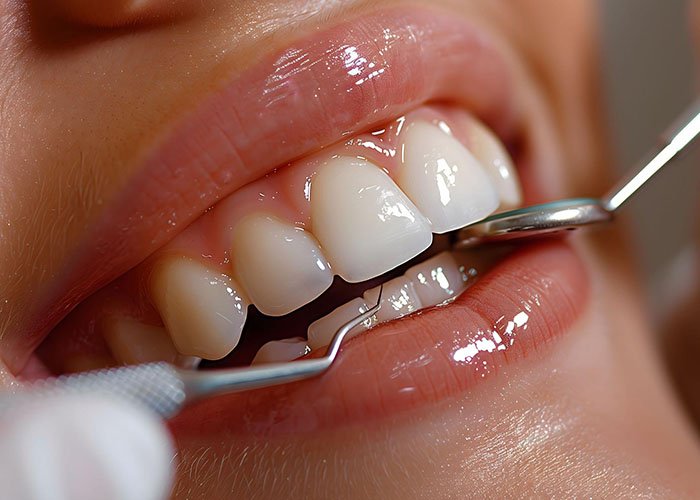
How Does It Work on Crooked Teeth?
Composite bonding can be used to make teeth look straighter without changing the underlying tooth’s physical shape. By applying a composite material in different areas of the teeth, the dentist can build up an additional natural-looking layer that will reshape minor imperfections.
By changing the apparent tooth size, closing the gaps between teeth, smoothing the overlaps, and covering other shape imperfections, it is possible to correct slightly crooked teeth and create a more balanced smile.
Can Composite Bonding Fix Crooked Teeth?
Composite bonding can change the appearance of a tooth, but it does not improve dental function when used for misshapen teeth. The goal of the treatment is an aesthetic change. As such, it is suitable mostly for minor imperfections.
The other important point is that bonding is an additive procedure, and the visual effect is achieved by adding more material to the tooth. It may not be suitable if the tooth requires a reduction instead.
Types of Crooked Teeth That Can Be Treated
The imperfections that can be treated with composite bonding should be minor, which include:
- Slight crowding and overlaps: By visually straightening the teeth, it is possible to make them look more orderly.
- Small gaps: Changing the visible shape of the teeth allows for the quick closing of gaps.
- Uneven spacing: By balancing the shape of individual teeth, the dentist can make them look more regular and balanced.
- Slight rotation: Composite bonding can be used for mild rotation, providing a quick aesthetic outcome.
- Irregular tooth edges: Composite bonding is an excellent solution when additional material is required to make uneven teeth look level.
When Orthodontics May Be Required Instead
While bonding treatment is effective for smaller cosmetic issues, if the teeth are misshapen enough to cause functional issues, orthodontic treatments like braces are required. Orthodontic treatments change the actual position of the treated dentition, not only its appearance.
This includes cases such as:
- Bite problems: As a primarily cosmetic treatment, composite bonding cannot resolve underbites and overbites.
- Severe crowding or overlapping: If the crowding and overlaps are severe, adding new material to the tooth won’t be effective.
- Large rotation: Rotations of more than a few degrees would make the tooth very bulky after a bonding
Composite Bonding Procedure Step-by-Step
Composite bonding treatments consist of several steps and start with a consultation. The dentist then prepares the target teeth, applies the composite, shapes and cures it, usually layer by layer, and finally polishes it. The treatment can often be done without anaesthesia and is considered minimally invasive.
Consultation and Smile Assessment
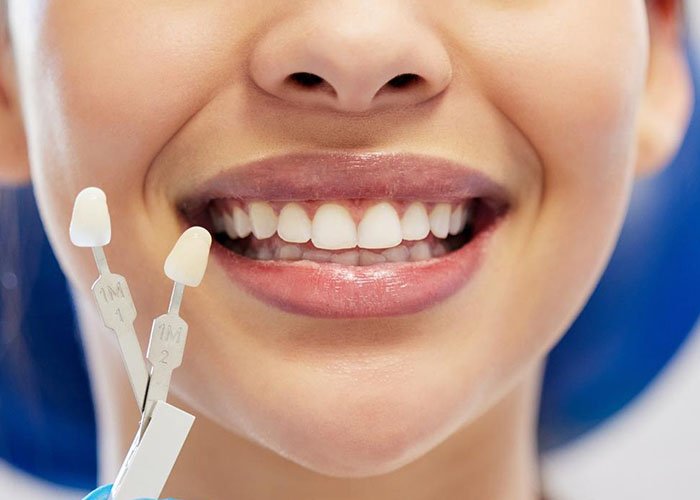
The composite bonding process begins with a consultation to evaluate the patient’s dental condition and develop a treatment plan. This will help determine which teeth should be treated to create a more balanced smile and estimate the possible results of the procedure. The dentist will use shade matching and digital smile design to choose a suitable resin colour and visualise the final results.
Tooth Preparation
Tooth preparation involves using a special conditioning agent to etch the tooth surface. This results in a rougher surface texture, allowing the resin material to adhere better to the tooth’s surface in the next step and providing more durable, secure results. In some cases, tooth preparation may be required before etching, such as smoothing or bevelling a sharp edge.
Composite Application
After preparation is complete, the dentist uses a bonding agent to improve composite adhesion. Then the doctor will apply composite resin to the tooth. The colour of the resin is chosen during the consultation to blend with the uncovered parts of the treated tooth and neighbouring dentition, so that the smile looks natural after treatment.
Shaping and Polishing
The material is sculpted to conceal the imperfections of the tooth’s shape. The shaping process allows the final tooth shape to be highly personalised to benefit the patient’s specific case. Once shaped, the material is cured under a curing light to solidify it. This is repeated for each layer of the restoration. After curing the bonding, the doctor will perform a bite check to ensure the new tooth shape does not interfere with normal dental function. If everything is good, the bonding is polished for a seamless, natural look.
Benefits of Composite Bonding for Crooked Teeth
The advantages of composite bonding make it a preferred treatment when quick, cosmetic results are required, rather than physical repositioning or reshaping of the teeth.
The procedure is:
- Quick: The results of dental bonding are immediate. There is no need to wait months for the dentition and jaws to move into the correct positions.
- Minimally invasive: The treatment targets only the tooth surface. No extensive preparation is required, and most patients can get the procedure without anaesthesia.
- Affordable: Composite bonding is more affordable than many other cosmetic and functional procedures, including dental veneers and braces.
Limitations and Risks of Composite Bonding
While composite bonding can fix crooked teeth visually, it cannot address underlying functional issues, if present, and has several limitations compared to restorations made from more durable materials.
These limitations include:
- Less resistance to staining: Composite materials are more prone to staining than natural enamel and dental porcelain due to their porosity.
- Lower durability than porcelain: Resins can’t withstand high pressures and are prone to cracking or chipping when under such loads.
- Possible marginal leakage: Over time, the material can weaken, allowing a small gap to form between the resin and the tooth, which can serve as a pocket for bacteria and lead to decay.
- Comparatively shorter service life: Bonding has a more limited service life than ceramic restorations. It requires periodic repolishing to preserve aesthetic value and promote dental
Composite Bonding vs Other Treatments for Crooked Teeth
The most popular alternatives to composite bonding are dental veneers, braces, and aligners. While veneers are among cosmetic dental treatments, braces and aligners address underlying alignment issues by physically moving the dentition.
| Feature | Bonding | Braces | Aligners | Veneers |
|---|---|---|---|---|
| Treatment Time | One or several appointments | 12-36 months | 6-18 months | Several appointments over 1-3 weeks |
| Tooth Movement | None, only targets the tooth surface | High. Can correct significant bite issues | Moderate. Can correct some alignment issues | None, only targets the tooth surface |
| Invasiveness | Minimal, only surface treatment | Moderate, requires placing brackets | Low, requisites wearing a clear tray | Low, requires some enamel removal |
| Cost | Lowest | High | Moderate-High | Moderate |
Composite Bonding vs Braces
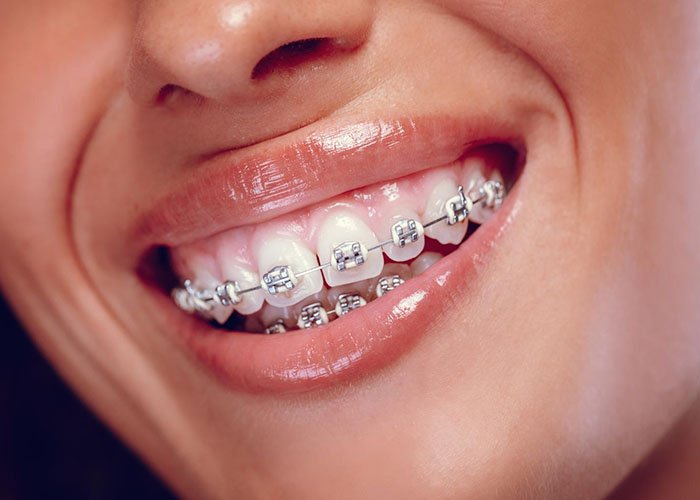
Braces can physically move and rotate teeth and change jaw structure. The procedure involves wearing brackets that promote the required changes to the dental structures. The treatment may take several years to have a full effect.
It is preferred in cases of severe misalignment or when the shape of the teeth presents functional problems. Composite bonding, on the other hand, provides immediate aesthetic results and is good when the patient’s concerns are primarily aesthetic.
Composite Bonding vs Clear Aligners
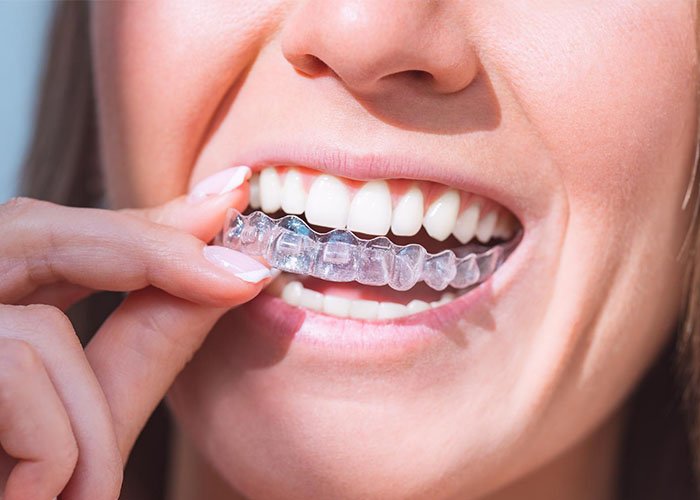
Clear aligners are less conspicuous than braces and can be used for moderate alignment issues. The treatment involves the patient wearing clear plastic trays that promote bone remodelling. As such, the change is both functional and aesthetic.
Aligner treatment is usually faster than braces, 6-18 months, since aligners are used for milder cases of misalignment or crowding. Teeth bonding can, in some cases, be performed after wearing aligners to address cosmetic issues once the functional ones are resolved.
Composite Bonding vs Veneers
Dental veneers are bonded to the front of the treated dentition to improve the appearance of the smile. Most of their varieties are made from dental porcelain. Ceramic and composite veneers can be used to correct many of the same issues as composite bonding.
Porcelain veneers are stronger and more stain-resistant than composite restorations. However, they require permanent preparation of the target teeth by removing some dental enamel to make space for the veneer. They also tend to be more expensive.
How Long Does Composite Bonding Last on Crooked Teeth?
Composite bonding typically lasts 7 years. The survival rate of composite bonding is 90.7% after three years, 89.3% after seven years, and decreases to 75.6% after ten years. While the actual lifespan depends on many factors, including the patient’s oral hygiene, the restorations require repolishing and regular touch-ups for optimal results.
Cost of Composite Bonding
The cost of composite bonding depends on the number of treated teeth and how far they are from the desired shape. The more misshapen the tooth is, the more resin and time are required to adjust it, increasing the cost.
The cost of the treatment is also dependent on the country. Dental tourism in Turkey makes the treatment much more affordable, especially if many teeth require adjustment.
| Region | Cost per Tooth |
|---|---|
| UK | £250-£500 |
| EU | €100-€500 |
| USA | $300-$800 |
| Turkey | £80-£250 |
How to Care for Bonded Teeth After Treatment
Composite-bonded teeth require simple adjustments to your normal oral care routine to prevent damaging or staining the resin material:
- Use soft toothbrushes.
- Rinse your teeth with alcohol-free mouthwash.
- Floss interdental spaces.
- Limit staining foods and drinks.
- Do not smoke to maximise restoration service life and aesthetics.
- Avoid directly biting into very hard foods with treated teeth.
- Consider night guards if you have bruxism.
Contact our dental clinic for a free consultation to determine whether composite bonding is suitable for your case and receive a personalised quote based on your current dental condition.
Frequently Asked Questions About Composite Bonding on Crooked Teeth
Can Composite Bonding Make Teeth Look Straight?
Composite bonding can visually straighten crooked teeth. It achieves this aesthetic effect by concealing areas of the teeth with resin material shaped to enhance your smile.
Is Bonding Better Than Braces for Crooked Teeth?
Composite bonding is a cosmetic procedure that does not physically move or straighten the teeth. If your tooth shape causes bite issues or you have an underbite or overbite, then braces are a more suitable treatment.
How Many Teeth Can Be Bonded at Once?
Most patients require bonding of six to ten teeth. This can require several clinic visits, as the cosmetic dentist needs 30-60 minutes per tooth. The procedure is most often used for front teeth, as there is usually no need to adjust teeth that are rarely visible, such as molars and wisdom teeth.
Does Composite Bonding Hurt?
Composite bonding is a non-invasive cosmetic procedure and can often be done without anaesthesia. The procedure targets only the surface of the teeth and does not typically require any tooth grinding.
Can Bonding Fix Overlapping Teeth?
Bonding can be used to improve the appearance of overlapping teeth, provided that the overlap is minor. Braces or aligners are required for more severe cases.
Can Bonding Be Removed Later?
Yes, it is possible to remove composite bonding if required, making it a potentially reversible procedure. The composite material can be polished off, revealing the natural teeth beneath.