+90 534 226 60 59
  Mon - Fri: 9:00-18:00; Sat: 9:00-17:30; Sunday: Closed

The dental implant healing cap is a temporary component attached to an implant fixture during the healing stage. This component, also called a healing abutment or a healing collar, helps gum tissue heal in a manner suitable for the final restoration. The healing abutment is replaced with a final implant abutment and crown or another restoration at the end of the dental implant treatment.
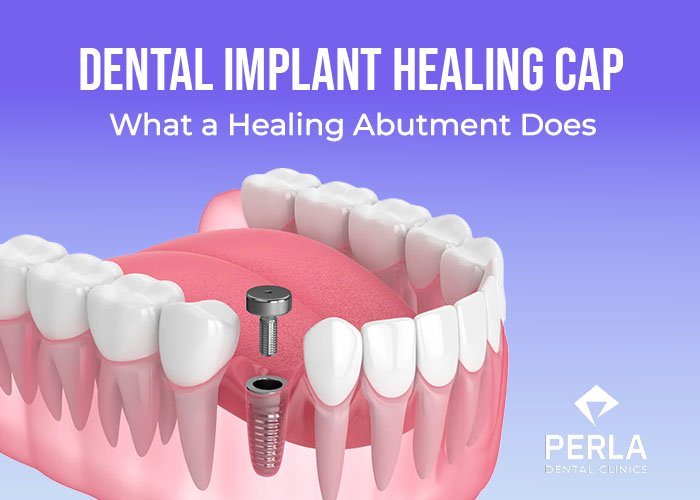
Table of Contents
What Is a Dental Implant Healing Cap?
A dental implant healing cap is a temporary part of an implant system. It may be placed for the period when the gum heals around the implant fixture. It can also be called a healing abutment, healing collar, or gingiva former.
A healing cap is not the same as a permanent implant abutment. A permanent abutment connects the final crown to the fixture, while a healing cap is temporary and is not covered by any other piece.
Is a Healing Cap the Same as a Healing Abutment?
The terms ‘healing cap’ and ‘healing abutment’ refer to the same component. Different dental practices may use different terms for this component. In all cases, the goal is to help shape the patient’s gums during healing so that they better match the final restoration.
What Does a Healing Cap Look or Feel Like?
A healing cap can look like a small metal or tooth-coloured component that protrudes through the gumline. The exact appearance of the healing cap depends on the implant system design and the treatment stage. It does not sit fully under the gums, like some other temporary components used for dental implants.
Why Is a Healing Abutment Used During Implant Healing?
A healing abutment is used to influence gum contour as the gums heal. This prepares the gums for the final restoration, which is usually a crown or a bridge.
The healing cap can also prevent the gum tissue from overgrowing and protect the implant site from debris.
A healing cap has multiple functions:
- protects access to the implant
- guides gum contour
- supports the next restoration step
- helps the dentist assess the healing stage
How It Helps Shape the Gum for the Crown
A healing cap allows the soft tissue to heal in a way that is better-suited for the final implant crown. Healing caps are chosen or customised to match the expected width of the final restoration. This can help make the gums form a symmetrical contour that suits and supports the restoration.
Healing Abutment vs Cover Screw vs Final Abutment
A healing abutment, a cover screw, and a final implant abutment are all different components. They serve different goals and can be placed at different stages of the implant treatment.
| Component | May be known as | Purpose |
|---|---|---|
| Healing abutment | Healing cap, healing collar | Shaping the soft tissues during healing |
| Cover screw | Implant closure screw | Sealing the implant hole from debris |
| Final implant abutment | Permanent implant abutment | Connecting the dental prosthesis to the implant fixture |
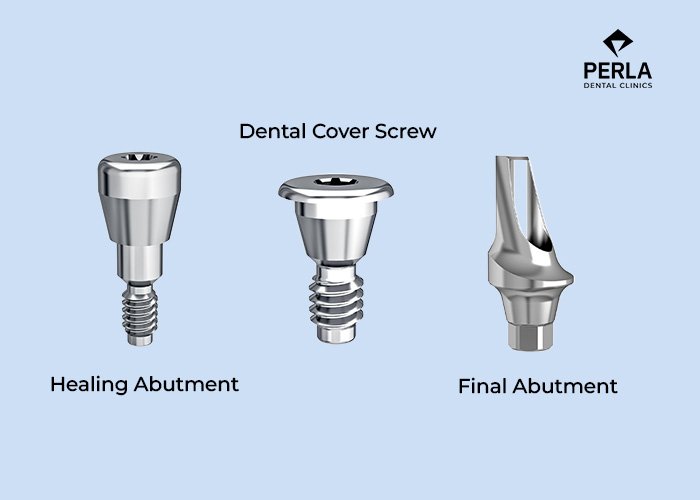
Cover Screw vs Healing Abutment
A dental implant cover screw is inserted into the implant fixture to protect it while it is under the gums. The gums are sutured closed after the cover screw is placed. By contrast, a healing abutment is used to shape the soft tissues, so it stays uncovered and remains visible externally.
Healing Abutment vs Final Abutment
The final abutment attaches the dental crown to the implant fixture. It is permanent and is not visible when covered by the crown. The healing abutment connects only to the implant fixture, is not designed to support another restoration, and is temporary.
What to Expect When a Healing Cap Is Placed
A healing cap can be placed during implant surgery or at a later appointment. The exact timing of healing abutment placement depends on the treatment plan. The healing cap is removed before placing a permanent implant abutment and restoration.
The general timeline for placing a healing cap is like this:
- Placement of an implant fixture
- A healing cap is used if indicated
- Monitoring gum healing
- Planning of the final abutment and crown stage
Does Placing the Abutment Hurt?
The exact procedure for placing a healing abutment is discussed as part of a treatment plan. Generally, it is performed under anaesthesia. As such, most people do not feel pain during the procedure.
How Long Does a Healing Cap Stay in Place?
How long a healing cap stays in place is determined by the treatment plan. Placement of a healing abutment can be done at different stages. The condition of the implant site and the rate of gum healing also influence the duration.
Eating, Cleaning and Common Healing-Cap Questions
The precise way to clean around your healing cap, as well as what foods may be eaten and how, should be clarified with the dentist.
Ask your dentist:
- What foods to avoid completely
- Whether you can chew soft foods on the side of the healing cap
- What gum changes around the implant should be reported
- How you should go about cleaning around healing abutment
Can I Chew on an Implant Healing Cap?
You should clarify what foods you should eat and whether you can chew them on the side of the healing cup with the dentist. These instructions can vary by case. Excluding foods that can damage your healing cap and being careful when eating other foods will help protect the implant. Generally, chewing on the side of the healing cap is not recommended.
Can Gum Grow Over a Healing Cap?
You should monitor gum changes closely and consult the dentist if they are unusual. This includes the cap getting covered or being difficult to clean. Do not attempt to manipulate your gums in any way to avoid damaging them or the implant.
What If a Healing Cap Feels Loose or Falls Out?
If your healing abutment feels loose or falls out, contact the dentist as soon as possible. Do not try to reattach or tighten the healing cap yourself.
Do not panic. A loose healing cap does not mean that the implant has failed. Addressing the issue promptly will help prevent dental health issues and protect the implant fixture.
Do:
- Call the dentist
- Collect the healing cap if it has come off
- Follow the dentist’s advice
Do not:
- Tighten the healing cap
- Attempt to attach it to the implant fixture
- Ignore pain, swelling, or other symptoms if they occur
- Rely on general online advice
Where This Fits in Your Implant Treatment Plan
Placing a healing cap is only one part of a wider dental implant procedure. The timing depends on your personal treatment plan and the implant.
Most dental implant treatment plans that use a healing cap time its placement after the implant fixtures, but before the final restoration stage. For international patients, there is no need for a separate visit just for healing caps when getting dental implants in Turkey.
Is the Healing Cap Included in My Implant Quote?
Your personal treatment plan should mention whether the healing cap is included. You can learn more about Perla Dental Clinics’ implant quotes and prices here. For our international patients, the first visit to Antalya typically lasts 3-5 days and includes implant placement along with the healing cap. The second visit, when the final crown is fitted, usually lasts 5-6 days. In most cases, the healing period between the two visits is approximately 3-6 months.
If you are planning to get dental implants in Turkey and want to learn more about all the treatment stages, contact Perla Dental Clinics for a transparent explanation and a personalised implant plan.
Where to read next
FAQs About Dental Implant Healing Caps
Are Healing Caps Used in Every Implant Procedure?
Healing caps are not used in every case. Whether they are used depends on the treatment plan. For example, some implant fixtures are fitted with temporary abutments and provisional crowns instead of healing caps. Ask the dentist for a definitive answer.
When Should I Contact a Dentist About a Healing Cap?
Contact the dentist if you experience any unusual or worrying symptoms. These can include abutment movement, excessive swelling, bleeding, and gum overgrowth. Do not attempt to resolve the issue by yourself without consulting a dentist.
Is Healing Cap the Final Tooth?
No, a healing cap is not the final restoration. A healing cap is temporary and cannot support the final crown. It is exchanged for a final restoration at the end of the implant treatment.
Can a Healing Cap Fall Out?
A healing cap is designed to be secure, but it can be damaged. Contact the dentist if you experience any movement or other unusual symptoms. Addressing any issues in time helps protect your oral health.

Medically reviewed by:
Dr. Onur Ademhan
Oral and Maxillofacial Surgeon
Founder and CEO of Perla Dental Clinics. Graduated from Ankara University Faculty of Dentistry and specialized in Oral and Maxillofacial Surgery at Gazi University.