+90 534 226 60 59
  Mon - Fri: 9:00-18:00; Sat: 9:00-17:30; Sunday: Closed

Upon learning that dental implant placement involves surgery, the first question many patients have is ‘Do dental implants hurt?’ For most patients, the only discomfort they experience is after surgery.
Our dental implant treatment in Turkey is performed under local anaesthesia. You will only feel some pressure and vibration during surgery.
In this article, we address the common concerns about dental implants and pain.
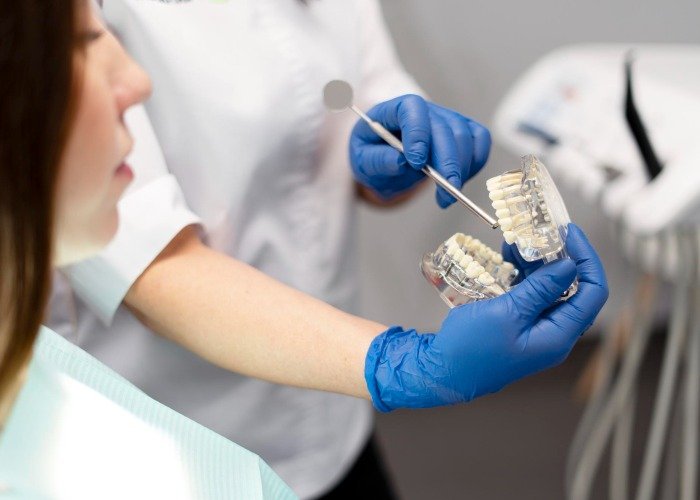
Table of Contents
Do Dental Implants Hurt During the Procedure?
As surgery is often associated with pain, wounds, and long recovery periods, it is only natural to ask, ‘Do dental implants hurt?’ However, most patients feel no pain and only slight discomfort during implant surgery.
The procedure is conducted under local anaesthetic or IV sedation. As such, the only sensation you feel is some pressure and vibration.
The fear that implants surgery will be painful is a more common source of stress than the treatment itself. Our dentists take extra care to explain the steps of the dental implant procedure and associated sensations to help mitigate this.
A quick overview of typical sensations during the procedure:
- You will feel some pressure, vibrations, and hear the sounds of the dental tools.
- You should not feel pain, toothache, or similar sensations apart from the moment of anaesthesia injection.
- The local anaesthetic numbs any pain in the surgical area. Optional IV sedation will not make you unconscious, but will put you into deep relaxation.
How Painful Are Dental Implants After Surgery?
You are likely to feel some mild to moderate pain after dental implant placement. It is usually most severe once the anaesthetic has worn off, but it is generally easy to manage.
The most common sensation is not pain in the implanted teeth as such, but soreness. Mild swelling and some bruising are also normal immediately after surgery.
The symptoms can be reduced with painkillers such as paracetamol or ibuprofen. Avoiding hard foods will also help to reduce discomfort.
The normal course of recovery is as follows:
Day 0 (during surgery)
No significant pain. Only some pressure and vibration are felt during the procedure.
Days 1-3
Peak discomfort. A feeling of soreness and swelling that can be managed with painkillers, ice packs, etc.
Days 4-7
Discomfort fades away. Swelling mostly subsides.
After 7 days
The implant site should look and feel normal.
This is the extent of how painful dental implants should be during initial recovery. Contact the dental clinic if you experience renewed or severe pain or notice an increase in swelling several days after surgery.
What Is the Worst Part of Getting a Dental Implant?
Many patients report that the worst part of dental implant treatment is not the surgery itself. Pre-surgery anxiety and fear of anaesthetic injections rank substantially higher.
Other negative experiences that patients mention more often than dental implants hurting include:
- Drilling noise and vibration during surgery
- Post-treatment swelling
- Surgery-related emotional stress
Comparison with other dental surgeries may lead patients to believe implants are painful to place. However, implant placement is often easier than other invasive procedures.
Proper communication between the patient and the dentist is important. Understanding the process and what sensations are normal for the procedure will help reduce anxiety and make the experience more manageable.
How Are Dental Implants Done Step-by-Step?
The process for placing dental implants consists of several steps. Each step is designed to make the procedure efficient, while minimising pain and risk.
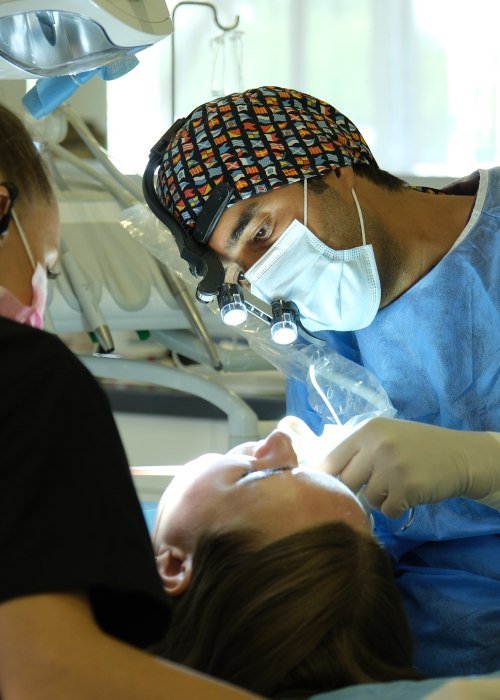
The typical dental implant procedure has the following steps:
- Dental assessment, scans, and treatment planning: This is a preparation for the treatment where no painful procedures are performed.
- Implant placement: Performed under anaesthesia. You may experience mild discomfort or very slight pain, depending on your case.
- Early healing: Usually, the most uncomfortable period. Mild to moderate ache, swelling, and bruising that can be managed with painkillers.
- Abutment stage: The procedure for placingan intermediate implant piece. It is placed between the implant and the crown. Performed under local anaesthesia. Mild discomfort.
- Final crown fitting: The final step. Typically, painless and does not usually require anaesthesia.
Most patients don’t feel pain during the tooth implant operation itself, which can last from one to three hours. Early recovery is the most uncomfortable, with mild to moderate pain.
How Long Does Pain Last After a Dental Implant?
It is normal to feel some pain after dental implant surgery, which is expected to reduce in intensity over 3-7 days. However, long-lasting pain or its sudden increase is a cause for concern.
A patient may feel mild to moderate pain after the anaesthetic loses its effect. The soreness and swelling are expected to peak in the first 3 days after surgery.
Tooth implant pain should subside after this period, reducing to a mild discomfort before disappearing completely. While some soreness is expected, there are times when dental implant pain is not normal. A sudden return or increase in pain can signify implant failure, infection, or other complications.
- Normal post-surgical pain pattern:
- No to mild pain during the procedure
- An increase in pain, swelling, and soreness after surgery
- A peak in pain in the 24-48 hours after surgery
- A decrease in pain over the next few days
- Minimal or no pain a week after surgery
- Signs to pay attention to if you have implant teeth pain:
- Pain that continues for more than a week
- Worsening pain after the typical peak
- Persistent or increasing swelling
Are Dental Implants Safe? Pain, Risks & Complications
When placed at a reputable clinic, dental implants result in complications very rarely. Severe pain post-treatment can be a sign of a dental implant problem or complication, such as infection or bone issues.
The most common implant-related complications include:
The most common implant-related complications include:
- Infection or peri-implantitis: Infection can cause inflammation, bone loss, and implant failure. Untreated, it can lead to other health issues.
- Sinus issues: If the maxillary sinuses are too close to the implant site, there is a risk of perforation or inflammation.
- Overloading: Improper aftercare and premature chewing of hard foods can cause mechanical implant failure.
Each of these complications can cause pain. It is unlike the mild to moderate pain that is normal for the initial healing period. Patients with implant complications describe a throbbing sensation and sharp pains.
Gum disease around dental implants, also called peri-implantitis, is the most common complication. It is similar to periodontitis, but affects the tissues surrounding the implant. Apart from pain, it can cause bleeding, a bad smell from the operated area, and other symptoms.
Some patients may require a sinus lift before implant placement. Sinus surgery helps to relocate the sinus cavities away from the operated area of the jaw. Recovery after a sinus lift is associated with higher levels of pain.
Implant complications can have serious consequences. Some patients even describe their surgery as ‘dental implants have ruined my life’.
Call the dentist immediately if you experience the following signs of common dental implant complications:
- Throbbing, severe pain that gets worse over time
- Severe, rapidly increasing swelling
- Fever
- Bad taste or smell coming from the implant
- Bleeding from the operated area that keeps recurring
- Implant movement
Following a proper implant placement and aftercare process is very important to mitigate risks. Our safety guide for dental implants in Turkey addresses the best ways to determine if a clinic is suitable for your needs.
What If You Are Scared of Pain? Anaesthesia, Sedation & Pain Control
It is perfectly normal to worry that dental implants may be painful. We use local anaesthesia, optional IV sedation, and pain control to help patients get the best dental treatment.
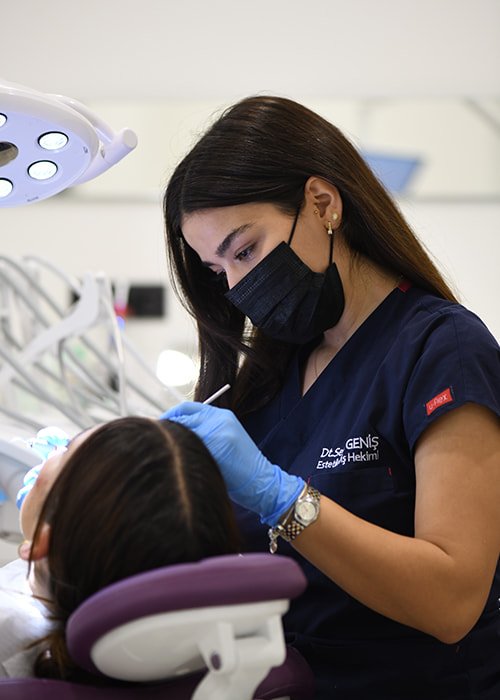
Measures that help control pain during and after implant surgery:
- Local anaesthesia
- IV sedation (optional)
- Painkillers plan
- Follow-up checks and consultations
How painful dental implant placement is depends on your individual sensitivity and health condition. We adapt the anaesthesia choice to minimise any possible discomfort.
In most cases, a local anaesthetic is all the patient will need. It numbs the surgical site so you may experience only pressure and minimal discomfort.
Dental implant placement under sedation is possible for patients who are very anxious or sensitive to pain. Sedation leaves the patient conscious, but very relaxed, with most patients barely remembering the surgery.
We create a personalised painkiller plan for managing post-surgery pain. Ibuprofen and paracetamol are the most common painkillers used after implant surgery. Starting them before pain manifests and taking them as prescribed will help keep pain at a manageable level.
We can accommodate special needs concerning dental implants and pain management. For example, patients who cannot take ibuprofen are prescribed acetaminophen or an alternative painkiller.
Do Dental Implants Hurt More Than Other Dental Treatments?
Many patients report that installing dental implant placement is no more painful than tooth extraction, and often much easier.
The level of pain and recovery period for dental implants and tooth extraction depends on the case. Here is a comparison of pain during and after the most common dental procedures.
Tooth filling: Fillings are placed under local anaesthesia and are usually painless. The patient can experience some tooth sensitivity for several days after placement of a large filling. Recovery takes several hours.
Root canal: Performed under local anaesthesia. Patients can experience mild or moderate pain during the procedure. Some soreness is expected during recovery, which lasts several days.
Simple tooth extraction: Patients can experience moderate pain during this procedure. Post-extraction symptoms include swelling, bruising, and moderate pain, which can last up to a week.
Surgical tooth extraction: Surgical extraction involves more invasive procedures to the gums and jawbone and is moderately to highly painful. Post-extraction pain is more severe than for other treatments. Recovery takes a week.
Dental implant placement: No to mild pain under local anaesthesia. Mild to moderate post-treatment pain that can be managed with painkillers. Recovery from pain typically takes up to five days.
Do Dental Implants in the UK Hurt More or Less? (Cost & Expectations)
While implant prices differ between countries, the cost of dental implants in the UK is not a reliable indicator of the pain level during or after surgery. The level of pain depends on expectations, the type of implant, and pain management, and can varies from clinic to clinic within each country.
The higher cost of dental implants does not mean the treatment is less painful. For example, extra procedures, like a sinus lift, dental implant placement more expensive, but are more painful and take longer to recover from.
Comparing patient experiences between the UK and other countries shows that individual clinics’ standards, level of preparation, and quality of dental care matter more than the choice of country. For example, while dental implant costs in Turkey are significantly lower than in the UK, patients report a similar levels of pain for the same types of implants.
FAQ: Pain & Dental Implants
Below are some quick answers to the most commonly asked questions about dental implant pain, safety and recovery.
Do Dental Implants Hurt During the Procedure?
Dental implants are placed after applying anaesthesia, so most patients do not feel any or much pain.
How Painful Are Dental Implants After Surgery?
Dental implants can be moderately painful after surgery. The pain is easy to manage with over-the-counter painkillers.
How Long Does Pain Last After a Dental Implant?
The pain after dental implant surgery should last only several days, usually from three to seven.
What Painkillers Can I Take After Getting a Dental Implant?
You can take ibuprofen and paracetamol to make dental implants hurt less during recovery. Alternatively, acetaminophen or other painkillers may be prescribed.
Is It Normal to Feel Severe Pain After a Dental Implant?
Severe, sudden pain can be a sign of an implant complication. Contact your dentist if you experience an increase in pain outside the planned implant recovery time.
Can Dental Implant Complications Cause Long-Term Pain?
Dental implants have a very high success rate. While long-term pain can result from a complication such as infection, it is usually addressable.
Are Dental Implants Safe, And How Often Do Complications Happen?
The safety of dental implants in Turkey is very high. They have a success rate of 95%. Complications are generally uncommon and are usually preventable by using modern treatment methods and maintaining good oral care.
Ready to Talk About Implants Without Fear?
Dental implants are a highly reliable treatment with more long-term benefits than the alternatives. While some pain is unavoidable, it can be minimised with clear planning, careful clinic selection, and good communication.
If you want to restore your teeth, but worry about dental implants and pain, do not hesitate to contact our clinic. Our experts can give you personalised advice based on your dental X-rays, photos, and brief medical history