+90 534 226 60 59
  Mon - Fri: 9:00-18:00; Sat: 9:00-17:30; Sunday: Closed

Gum graft surgery is a procedure that increases gum volume and covers exposed tooth roots caused by gum recession. There are several methods for performing a gum graft, and a periodontist selects the most suitable one depending on the patient’s specific case.
This article describes the main types of gum grafts, their indications, procedures, and costs in Turkey and other countries.
Table of Contents
What Is Gum Graft Surgery and When Is It Necessary?
Gum graft surgery is used to cover areas affected by gum recession. The procedure not only enhances the patient’s smile but also helps protect the teeth and prevents the most serious consequence of untreated progressive gum recession: tooth loss.
What Is a Gingival (Soft Tissue) Graft?
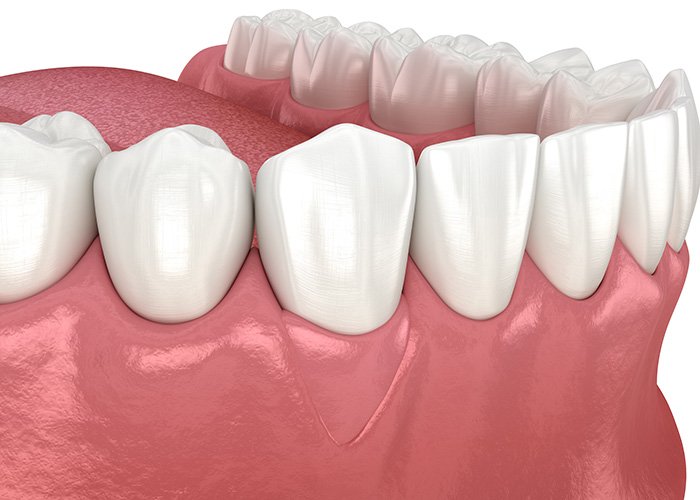
A gingival graft involves transferring soft tissue to the area of gum recession to cover the exposed areas of the tooth root and protect it from dental plaque, abrasion, and other damage.
The tissue can be harvested from the patient’s palate or pulled over from the areas surrounding the site of recession, if the gums there are healthy. Alternatively, donor tissue (allograft) can be used.
Gum Recession: Causes and Clinical Signs
Gum recession refers to a shift of the gum margin in a way that exposes some of the tooth’s root. It leaves the teeth less protected.
Several factors can be a cause of gum recession, such as:
- Physical trauma, including from forceful toothbrushing or picking at the gum margin.
- Periodontal disease and subsequent bone loss.
- Bacterial plaque at the gingival margin.
- Smoking.
Some patients have a thin periodontal phenotype and are more likely to develop gum recession.

Gum recession can initially manifest as heightened sensitivity to temperature or sweet and sour foods, gum inflammation or swelling, and eventually longer-looking or loose teeth.
When Do You Need a Gum Graft?
A soft tissue graft is necessary when other methods of restoring gingival attachment are expected to be ineffective.
If gum recession is not severe, it may be possible to address its causes by removing bacterial plaque via scaling and root planing. Alternatively, if the recession is caused by mechanical trauma from forceful toothbrushing or similar sources, behavioural changes may be advised. In this way, the recession is stopped from progressing before it displays clinical symptoms.
However, a progressive gum recession that causes symptoms such as tooth sensitivity or inflammation requires a gum graft, possibly performed alongside guided tissue regeneration methods to restore areas of bone loss.
Types of Gum Grafts and How They Differ
The type of gum graft is chosen based on the scale of gum recession, the amount of healthy gum tissue, and other factors.
| Type of gum graft | Source of donor tissue | Advantages | Best use case |
|---|---|---|---|
| Connective tissue graft | Taken under the flap made in the patient’s | More natural colour after recovery | Covering exposed roots in highly visible |
| Free gingival graft | Taken from the patient’s palate | Effectively strengthens areas of thin gingival tissue | Patients with naturally thin gums |
| Pedicle graft | Tissue adjacent to the area of gum recession | Single surgical site and faster recovery | Gum recession with healthy tissue in adjacent areas |
| Allograft | Human donor tissue | No need for a second surgical site | Severe cases where autografts are impractical |
Connective Tissue Graft (Subepithelial Graft)
А connective tissue graft uses only the subepithelial layer of tissue. It is usually taken from the palate. It leaves a less noticeable wound, which is covered by a flap of intact tissue.
This method can provide a more aesthetically pleasing result, since there is less chance of a colour mismatch between transplanted and original tissue.
This type of gum graft is suitable for cases where aesthetic results are important, such as when covering exposed roots.
Free Gingival Graft
Free gingival graft uses both the epithelial and connective layers of soft tissue. This method is used to significantly increase the amount of keratinised tissue and stop progressive gum recession.
The downside is that the colour of the transplanted tissue may not match the gums precisely.
This type of graft is preferred in cases where the gums are very thin or no connected gum tissue is left.
Pedicle (Lateral) Graft
Pedicle grafts are used when there is plenty of soft tissue adjacent to the site of recession. By making a flap on one side of the gum, the surgeon can pull some of the tissue over the site of recession without detaching it, eliminating the need for a second surgical site in the patient’s palate.
This method gives good aesthetic results and allows faster recovery. However, it can be performed only when there is enough gum material immediately adjacent to the site of recession.
Allograft vs Autograft: What Is the Difference?
An allograft gum graft uses tissues from other people, unlike an autograft, in which the patient’s own tissue is used. Allografts can be preferred when treating severe gum recession, and transplanting the patient’s own soft tissue is impractical.
Gum Graft Procedure: Step-by-Step Explanation
The gum grafting procedure consists of several steps. There are some differences in how the material is taken from the donor site, but the general steps are similar between methods.


What Happens Before Surgery?
A dental examination is required before gum graft surgery. In some cases, you may need an extra procedure to address the cause of gum recession, such as a bone graft or root scaling.
How the Graft Is Taken and Placed
The gum graft is taken under anaesthesia. The donor gum tissue is harvested from the secondary surgical site, usually the palate, and placed under the treated gum area. The gums are sutured after the tissue is transplanted.
In the pedicle graft procedure, the material is not taken from a different area of the mouth. It is pulled over from the gum area adjacent to the surgical site.
Anaesthesia and Pain Control
Gum grafts are conducted under local anaesthesia. The surgery itself is not painful. However, some pain is to be expected afterwards, and the intensity will vary depending on how the donor material was taken.
For example, a free gingival graft leaves an open wound that, during healing, can feel similar to a burn caused by hot food. A plastic retainer may be used to prevent the wound from coming into contact with the tongue and food during recovery.
Recovery from connective tissue grafts is less painful because a flap of epithelial tissue covers the donor area.
In all cases, pain can be managed using over-the-counter painkillers. For maximum effect, these should be taken as prescribed by the periodontologist.
How Long Does Gum Graft Surgery Take?
Gum graft surgery can take about an hour for a single tooth. The actual procedure duration depends on the patient’s case and the grafting method used.
Is Gum Graft Surgery Painful?
If you respond well to the anaesthesia used, the surgery itself can be mostly painless. We take extra care to ensure sufficient numbing if the surgery is expected to take longer.
Most of the pain experienced by patients occurs during the recovery period, rather than during surgery.
Gum Graft Recovery Timeline and Healing Stages
Gum graft recovery time is about two to four weeks for most patients, with the first week after surgery being the most important for proper recovery. The dental surgeon will impose restrictions on what foods you can eat during recovery, which will be relaxed as your gums and graft site heal.
While full tissue maturation takes slightly more time, dietary and special care restrictions will largely be lifted three to four weeks after surgery.
Foods you can eat
- Smoothies
- Yoghurt
- Smooth soups
- Mashed potatoes
- Pureed vegetables
- Avocado
- Apple sauce
- Hummus
- Flaky fish
- Scrambled eggs
Foods to avoid
- Crisps
- Nuts
- Popcorn
- Berries with seeds
- Citrus fruits
- Hot sauce
- Rice, quinoa and other small grains
- Crackers
- Spicy foods
- Acidic foods
The First 24 Hours After Surgery
Some bleeding and swelling are normal after surgery. Bleeding should stop within 24 to 48 hours. You should carefully follow the doctor’s instructions to avoid disturbing your gums. You can eat cold, soft, preferably full-liquid foods, such as yoghurt (without solid pieces of fruit or seeds), or smoothies. Try to rest as much as possible for the first 24 hours to prevent bleeding caused by an increased heart rate. If you need to travel by air, you may do so 48 hours after surgery, but it is recommended to postpone travelling by plane for at least several days to allow the graft to adhere more firmly.
Days 2–7: Early Healing Phase
Any bleeding should stop within 48 hours of the surgery, but an increase in swelling and development of bruising are normal. You may experience increased pain on day 3, especially at the donor site. These symptoms will decrease towards the end of the week. You may start introducing more solid foods by the end of the week, but they should be soft enough to be mashed with a fork. These include scrambled eggs, mashed potatoes, or soft fish. The food should not be hot. Do not use a straw to drink. You should not brush teeth on the site of a gum graft for the first two weeks. Use an antibacterial mouthwash as instructed by the periodontologist.
Weeks 2–4: Tissue Integration
Swelling and bruising should decrease significantly within the second week after surgery. There should also be no acute pain at the end of this period, though some sensitivity is normal. The transplanted tissue starts to integrate with the surrounding gums. You can gradually introduce more solid foods at the end of week 2, but avoid spicy, acidic, crunchy or “sharp” foods for the period instructed by the dentist, which is usually four to six weeks. You can carefully brush your teeth with a children’s toothbrush starting from week 3, taking care to avoid brushing the gums at the graft site. It is important to remember that while the graft may appear to have healed completely, tissue maturation takes at least several months, during which the attached soft tissue is weaker than the surrounding gums.
Risks, Complications, and Success Rate
As a surgical procedure, gum grafting carries some risks, and it is not possible to ensure a 100% success rate. Some side effects do not necessarily indicate failure of the procedure, but require careful monitoring.
Common Side Effects
Side effects of a gum graft include:
- Bleeding in the first days of recovery
- Soreness and pain in the donor or graft site (which may feel similar to a food burn)
- Transplanted tissue discolouration
- Swelling
- Bruising
- Tooth sensitivity
These side effects should gradually subside during the recovery period. Transplanted tissue can initially appear white or grey, but should gradually improve in colour during recovery.
Signs of a Failed Gum Graft
Contact the dentist if you experience any of the following signs of a failed gum graft:
- Transplanted tissue turning black
- Persistent bleeding 48 hours after surgery
- Pus discharge
- Swelling that does not subside or increases within 7–14 days of surgery
- Suture failure
- Gum recession continues or worsens
How Successful Is Gum Graft Surgery?
Gum graft surgery success rate depends on the class of gum recession and the type of procedure used. The average success rate for root coverage ranges from 76% to 96%, depending on the initial gum health and the patient’s gingival phenotype and recession class.
How to Reduce the Risk of Complications
Following all of the periodontologist’s instructions will help reduce the risk of complications. In particular:
- Avoid hard foods during recovery
- Avoid hot foods for the first seven days after surgery
- Take all the medication for the duration prescribed
- Follow the prescribed oral hygiene guidelines
- Avoid physical exertion during initial recovery
- Avoid air travel for at least the first 48 hours after surgery
- Do not use straws for drinking until complete recovery
- Do not smoke or consume any nicotine-containing products two weeks before surgery and at least three weeks post-treatment
How Long Does a Gum Graft Last?
The long-term results of a gum transplant surgery are highly dependent on maintenance. Some patients keep the treatment results for many years. However, gum recession can recur if the underlying cause, such as periodontitis, is not well managed.
Long-term studies indicate that more than 80% of sites treated with a free gingival graft maintain a reduction in recession for up to 35 years. Subepithelial grafts maintain a reduction in recession for at least 20 years.
Good oral hygiene, regular dental check-ups, and limiting nicotine and alcohol consumption help ensure the gum grafts remain effective for longer.
Cost of Gum Graft Surgery: UK vs Turkey Comparison
The cost of gum graft surgery varies considerably between countries.
| Type of treatment | Price in Turkey | UK Private care price |
|---|---|---|
| Simple gingival graft | £160 - £450 | £700 - £1200 |
| Complex gingival graft | £450 - £1100 | £1000 - £2500 |
In 2026, UK private clinics offer gum grafts for an average cost of £700-£1200 for a simple graft addressing gum recession affecting one or two teeth.
In Turkey, a simple gum graft can be performed for an average cost of £160 to £450 in 2026.
The actual cost of the treatment in both countries varies depending on the treatment’s scale, the type of gum graft, and the extent of gum recession.
In general, dental treatments cost less in Turkey, due to lower rent and living costs. The average treatment quality is comparable to that of UK clinics. For up-to-date prices, please check our dental treatment prices listing.
Gum Graft Surgery in Turkey: Travel, Stay, and Follow-Up Planning
You may require only one or two days for a single-tooth gum graft surgery in Turkey, though a 7-day stay is recommended for better recovery and an in-person follow-up appointment. We strongly advise against travelling by plane within 48 hours of gum graft surgery.
One benefit of dental tourism is the ability to combine several treatments. You may combine a dental implant placement with a gum graft, especially if an implant is placed immediately after tooth extraction. A gum graft can also be combined with a bone graft.
We offer online follow-up consultations if you choose to return home before the recovery is completed. However, in this case, we recommend contacting your local clinic and verifying that they can perform a local check-up 1–2 weeks after the procedure.

Frequently Asked Questions About Gum Graft Surgery
Is Gum Graft Surgery Painful?
Gum graft surgery is performed under effective anaesthesia and is not painful while the treated area is numbed. However, pain during recovery is expected, and its severity depends on the type of gum graft.
How Long Does Gum Graft Surgery Take?
Gum graft surgery takes 60 to 90 minutes for an area near one or two teeth. Large-scale grafts take more time.
How Long Does It Take to Heal After a Gum Graft?
Full tissue maturation takes four to eight weeks, but most symptoms, such as pain and swelling, are usually gone within two weeks after surgery.
What Happens If a Gum Graft Fails?
If the gum graft fails, you should contact the dentist immediately to address any underlying dental issues. In some cases, the failure may be partial, and some of the donor tissue may remain in place. The dentist will remove any necrotised donor tissue. A new surgery may be possible at a later date.
Can Gum Recession Come Back After Graft Surgery?
Yes, gum recession can recur. A gum graft does not prevent the causes of gum recession, but addresses its visible symptoms. Good oral care and regular visits to the dentist are recommended for long-term treatment success.
How Much Does Gum Graft Surgery Cost in Turkey?
The cost of gum graft surgery in Turkey depends on its type and scale and ranges from £160 to £1100.
Do I Need Bone Grafting with Gum Graft Surgery?
Whether you require bone grafting depends on the cause of gum recession. For example, if the recession is a symptom of alveolar bone loss caused by periodontal disease, you may require a bone graft.
What Are Alternatives to Gum Graft Surgery?
Pinhole surgical technique, root scaling, and orthodontic repositioning may be used as alternatives to gum graft surgery, depending on your case.