+90 534 226 60 59
  Mon - Fri: 9:00-18:00; Sat: 9:00-17:30; Sunday: Closed

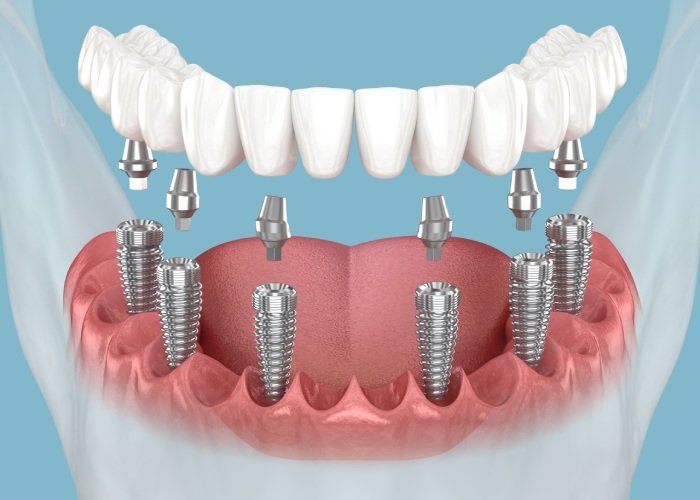
3 on 6 dental implants allow patients to replace the teeth of a single dental arch. When placed in both upper and lower jaws, they are an effective alternative to other types of full-mouth dental implants.
Unlike other fixed full-arch solutions, such as All-on-4, 3-on-6 implants do not have a pink acrylic or gingival component on the prosthesis. Eligible patients consider them to be more aesthetically pleasing than alternatives.
Timescale
Two visits to our clinic in Turkey are required for treatment: 4–5 days for the first visit and 6–7 days for the second.
Prices
We offer 3-on-6 implant treatment at our clinic in Antalya, Turkey, with prices starting from £4,500
Guarantee
We offer a lifetime guarantee on the dental implant against fracture or breakage and a 10-year zirconia crown warranty.
Table of Contents
What Are 3 on 6 Dental Implants?
Definition
The 3-on-6 implant system is a full-arch restoration. It uses three dental bridges supported by six implants. The bridges do not have any pink parts; the gums visible after placement of the 3-on-6 system are the patient’s own.
Like most other dental implants, the prostheses (bridges) used for 3-on-6 systems are fixed. Once fitted, the bridges do not move and cannot be removed by the patient, so they feel similar to natural teeth.
Who Needs 3-on-6?
Three-on-six dental implants are used to treat patients who have lost most or all of their teeth, or whose teeth are failing due to trauma or cavities.
This implant system can also be considered for people who find removable dentures difficult to use. However, 3-on-6 systems require more healthy bone and gums than other full-arch implant systems.
How the 3-on-6 Procedure Works
The 3-on-6 dental implant procedure is performed in two stages, separated by a recovery period. As with other dental implants, the treatment takes several months to half a year to complete, allowing the jaws and gums to heal. Here is a step-by-step process.

Step 1: Consultation & Diagnostics
3-on-6 implants require in-depth planning to achieve good results, as parallel alignment of all three bridges is critical. The dentist will examine your jaws and perform a CBCT scan to determine whether a 3-on-6 system is suitable for your case. This implant system places significant demands on the condition of your gums and jawbone. For an aesthetically pleasing transition between the prostheses and the gums, they must be in very good condition. If insufficient jawbone height or density is detected, you and the dentist will discuss the potential outcomes and whether bone grafts or an alternative full-arch system, such as All-on-4, would be more beneficial.
Step 2: Implant Placement
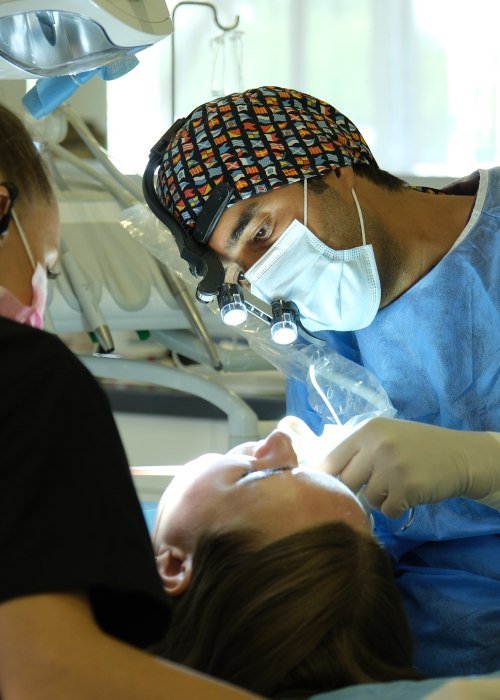
Implant placement is performed under local anaesthesia. The 3-on-6 system uses six titanium implant screws. An incision is made in the gums to access the jawbone and place the implant screws using precision surgical guides. The gum “flap” is then sutured. In some cases, implants can be placed using a “flapless” approach. This allows implant placement without suturing.
Step 3: Temporary Teeth
It is not possible to immediately fit permanent dental bridges. First, implants need to complete the bone integration (osseointegration) process and form a strong connection with the jawbone. To avoid leaving you without any teeth, the dentist will provide temporary teeth. Unlike the final bridges, these are usually single-piece, splinted temporary bridges. A removable temporary prosthesis can be used as an alternative. Osseointegration typically takes two to six months.

Step 3: Final bridges
Once your recovery is complete, you can return to the clinic to have your final bridges fitted. These are made from zirconia, a durable dental ceramic. The 3-on-6 system uses three such bridges per jaw. They are manufactured using a computer-controlled process for precision, to ensure the final restoration meets the planned dimensions.
Benefits of 3 on 6 Dental Implants
The benefits of 3 on 6 implants include:
Enhanced stability compared with removable dentures
Implants do not move and cannot slip during use.
Restoration of chewing function
Implants allow you to use more of your bite force than removable dentures. Since there is no artificial plate or prosthetic gum component, the 3-on-6 system feels more natural.
Jawbone preservation
Implant screws transmit pressure stimuli into the jawbone, which helps to prevent bone atrophy and shrinkage.
Long-lasting solution
The lifespan of zirconia bridges is typically more than 15 years, provided you maintain good oral hygiene. The implants can last even longer.
Get a Free Consultation and a Personal Dental Implant Treatment Plan
Upload your X-ray and receive expert advice within 24 hours
Who Is a Candidate for 3 on 6?
Several criteria distinguish patients who are candidates for 3-on-6 implants:
Good general health
Dental implant placement is a surgical procedure, so you need to be healthy to ensure proper healing. People with serious, untreated illnesses, such as uncontrolled diabetes, may be ineligible for dental implants.
Sufficient jawbone volume and strength
3-on-6 systems are not suitable for cases in which much of the jawbone structure has been lost due to resorption. Depending on the patient’s case, it may be possible to rebuild the jawbone with a bone graft.
Approaching full edentulism
P atients who are close to losing most of their teeth can replace all of their dentition with 3-on-6 implants on both arches. However, if you have been missing teeth for a lengthy period of time, you are unlikely to be eligible without bone grafting.
Severe tooth loss
3-on-6 systems replace teeth in a single jaw. They should be considered if many of your teeth are missing or very damaged.
Recovery and Healing Time
The recovery period following the placement of implant screws can be divided into three phases.
Initial Healing Period
This phase lasts for the first week following implant placement. The jawbone and gums begin healing after surgery. Pay extra attention to your diet and closely follow the dentist’s recommendations. Some initial soreness and swelling are normal and should resolve by the end of the week.
Osseointegration Period
Osseointegration typically takes two to six months. Although you won’t observe many visible changes during this stage of recovery, it is very important for the success of the treatment. The implant screws fuse with the jawbone during the osseointegration period. Once it is complete, they form a strong connection that can withstand the high pressure of the permanent zirconia bridges.
Final Prosthesis Placement
After osseointegration, the temporary prosthesis is replaced with three permanent zirconia bridges. The dentist may need to make some minor adjustments to the bridges after you try them on, which is why this period can last for several days.
Aftercare
Following the recommended aftercare procedures is crucial to ensuring treatment success and minimizing the potential risks associated with 3-on-6 dental implants.
- Brush your teeth using toothpaste suitable for implants.
- Floss under and between the bridge sections every day.
- Avoid smoking and alcohol.
- Limit your diet to liquid and soft foods while your gums heal.
- Gradually transition to eating more solid foods as osseointegration progresses.
- Avoid foods that are too hard to cut with a fork until the final zirconia bridges are fitted.
- Wear a night guard if you grind your teeth while sleeping.
- Visit your dentist regularly to ensure your gums are healthy, clean the implants more thoroughly, and detect any signs of potential side effects, such as peri-implantitis.
Before and After Results
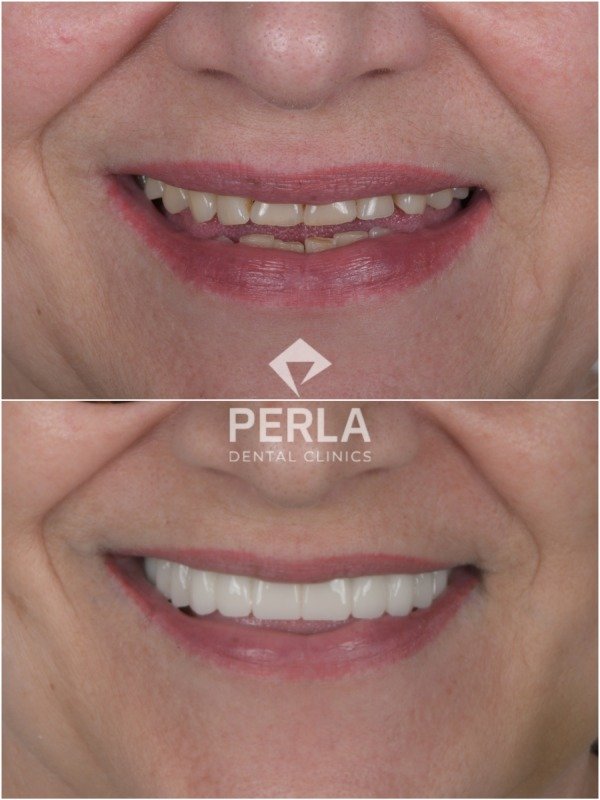
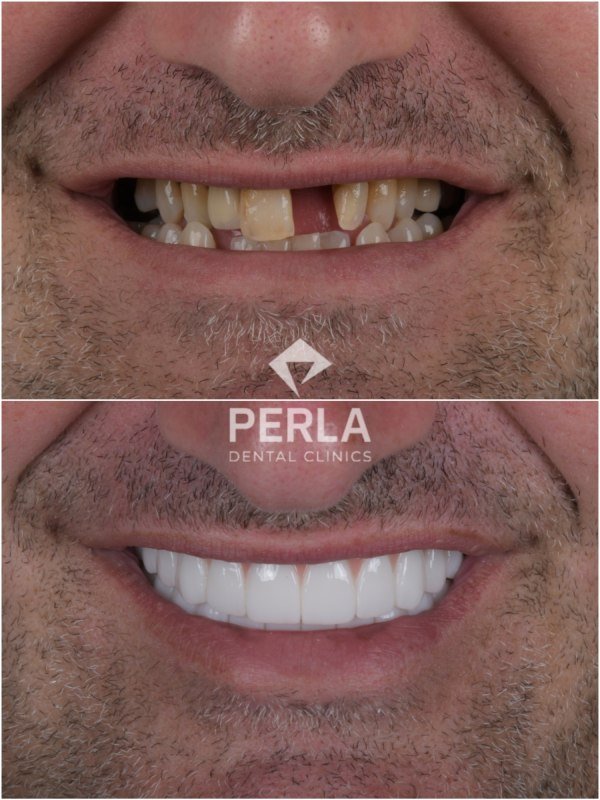
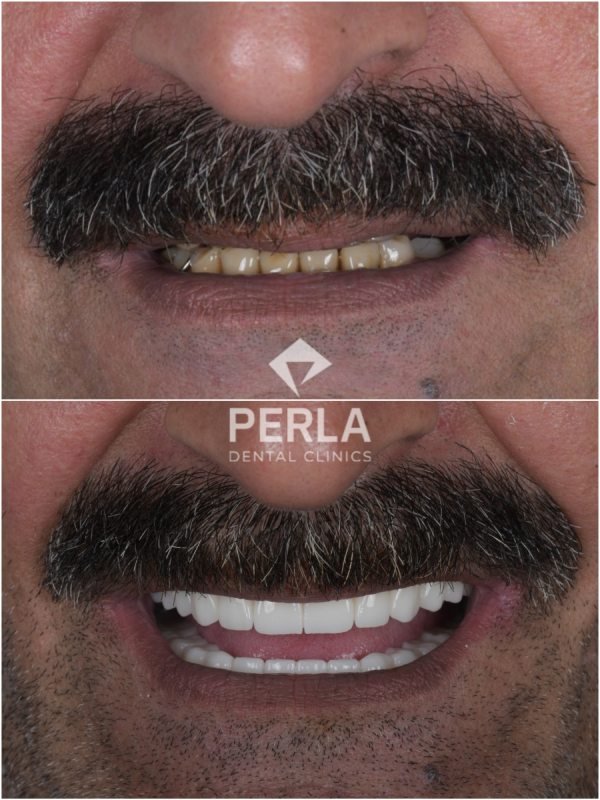
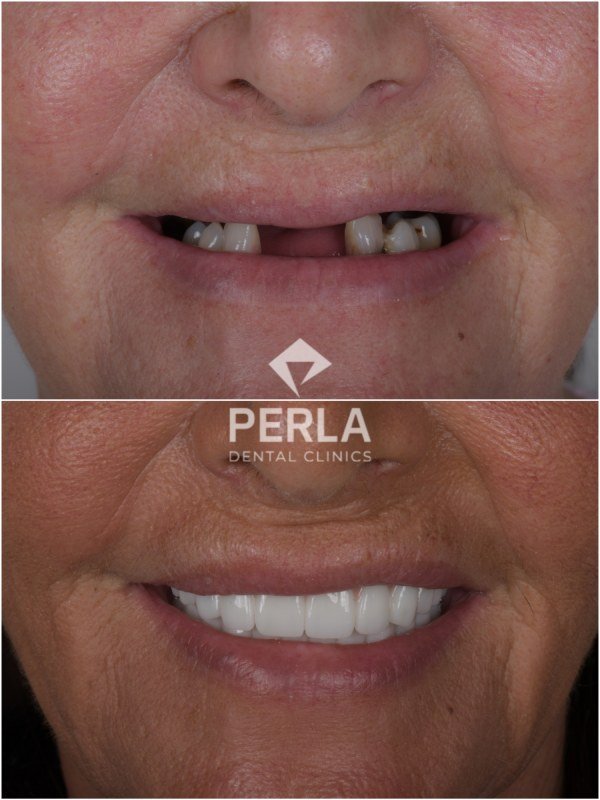
Most patients are pleased with the before-and-after results of 3-on-6 systems. The treatment restores a full dental arch of natural-looking teeth. When performed using modern smile design approaches, the resulting teeth match the patient’s facial proportions and provide a harmonious aesthetic outcome.
From a functional standpoint, 3-on-6 implants allow patients to eat most foods without worrying about the restoration slipping, greatly boosting their confidence.
Cost of 3 on 6 Dental Implants
What Affects the Cost
Many factors influence the cost of 3 on 6 dental implants. The major ones are provided below.
| Factor | Influence on cost | Details |
|---|---|---|
| Implant brand | Moderate | Implants differ in price by brand. |
| Surgeon’s experience | Moderate | Highly experienced dental surgeons often achieve better outcomes, but their charges are typically higher. |
| Country and clinic location | High | 3-on-6 implant prices differ widely between countries. |
| Bone grafting | High | Patients who require a bone graft or a sinus lift need to spend significantly more. |
Average Prices
Many patients choose to travel to other countries in hopes of finding more affordable 3-on-6 dental implants. Since the price of implants varies due to differences in living and labour costs, dental tourism can help you save money, provided you are careful when choosing a dental clinic.
| Country | Average 3-on-6 implant costs |
|---|---|
| UK | £17,000 – £25,000 (per jaw) |
| Europe | €8,500 – €13,000 (per jaw) |
| Turkey | £3,000 – £5,000 (per jaw) |
When performed in Turkey, implants are often offered as part of a package deal with additional services included in the total price.
3-on-6 Dental Implant Package Prices in Antalya
3 On 6 + 12 Zirconia Crowns
£
4500
For One Jaw
- Consultation
- Panoramic X-Ray
- 6 Neodent Implants
- 12 Zirconia Crowns
- Hotel Stay Free
- VIP Transfer Free
Free Consultation
Treatment requires two visits over 5–6 months
3 On 6 + 14 Zirconia Crowns
£
4850
For One Jaw
- Consultation
- Panoramic X-Ray
- 6 Neodent Implants
- 12 Zirconia Crowns
- Hotel Stay Free
- VIP Transfer Free
Free Consultation
Treatment requires two visits over 5–6 months
Is it worth it?
The cost of 3-on-6 systems is considerably higher than that of removable dentures. However, despite the higher upfront costs, most patients consider implants to offer better functional and aesthetic value in both the short and long term.
Implant-supported prostheses do not need to be replaced as often. Additionally, implants protect the jawbone from resorption, helping to prevent bite collapse and allowing the use of greater bite forces.
Get a Free Consultation and a Personal Dental Implant Treatment Plan
Upload your X-ray and receive expert advice within 24 hours
3-on-6 vs Other Implant Solutions
While 3-on-6 has similarities to other full-arch implants, it is a distinct solution with its own advantages and drawbacks.
3 on 6 vs All-on-4
All-on-4 dental implants use a single splinted bridge supported by four implant screws to restore an entire dental arch. The All-on-4 bridge uses a gum-like base to mask the transition between the prosthesis and the gums. The system distributes pressure evenly across the jaw and can be placed in patients with significant bone resorption without using bone grafts.
3-on-6 advantages over All-on-4 systems:
- Less bulky prostheses.
- Three separate bridges allow the jaw to flex more naturally.
- More aesthetic value for patients with little bone loss.
3-on-6 disadvantages over All-on-4 systems:
- Significantly more expensive.
- Not suitable for patients with long-term edentulism without major bone augmentations.
- More difficult to plan and place.
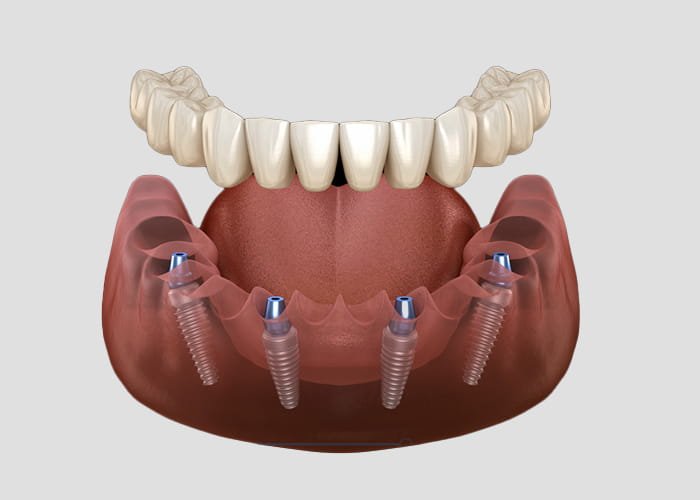
3-on-6 vs All-on-6
All-on-6 dental implants use a similar bridge to All-on-4 systems, but are supported by six implant screws. The increase in the number of implants makes the fixed prosthesis more stable and enhances the restoration’s longevity. Thanks to the high stability of an All-on-6 system, if a single implant screw develops issues over time, the bridge can be supported by five implants while the problem is resolved.
3-on-6 advantages over All-on-6 systems:
- Less bulky prostheses.
- Allows the jaw to flex more naturally.
- Improved aesthetics for eligible patients.
3-on-6 disadvantages over All-on-6 systems:
- Cannot be placed in patients with bone loss without augmentations.
- No implant redundancy. Failure of a single implant screw means one-third of the teeth in a single jaw need to be replaced.
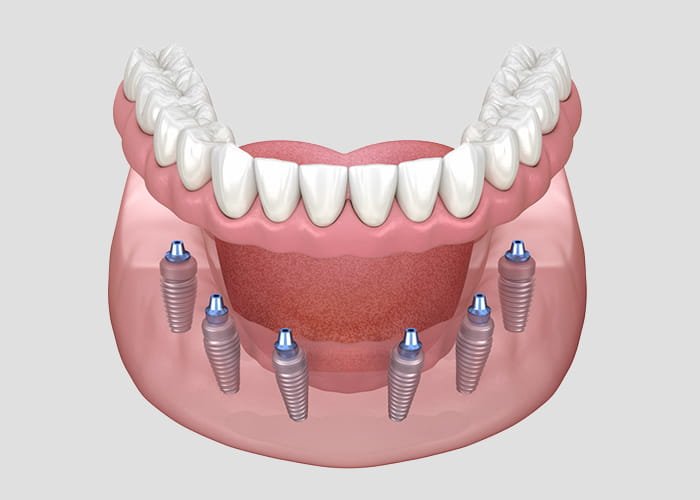
3-on-6 vs Dentures
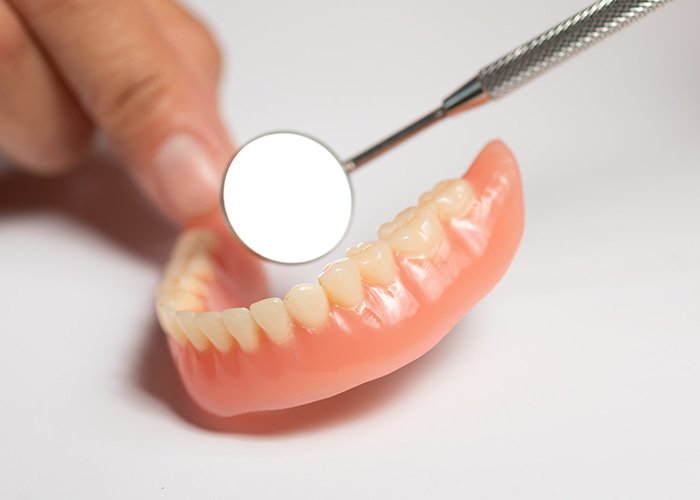
Removable dentures can be used as an alternative to fixed full-arch restorations. They do not require surgery, so the patient can get a new set of teeth faster. However, dentures have more compromises in both comfort and aesthetics.
3-on-6 advantages over dentures:
- Implant-supported bridges are more similar to natural teeth in use and appearance.
- Implants are more comfortable for most patients.
- A 3-on-6 system can stop bone resorption.
- Significantly fewer limitations on what foods can be eaten.
- No anxiety over restorations moving or slipping out of the mouth.
3-on-6 disadvantages over dentures:
- Much more expensive.
- Requires more time to place, prepare, and recover from.
- Not suitable for many patients with full edentulism, unless expensive and invasive bone grafts are performed.
3-on-6 vs Single implants
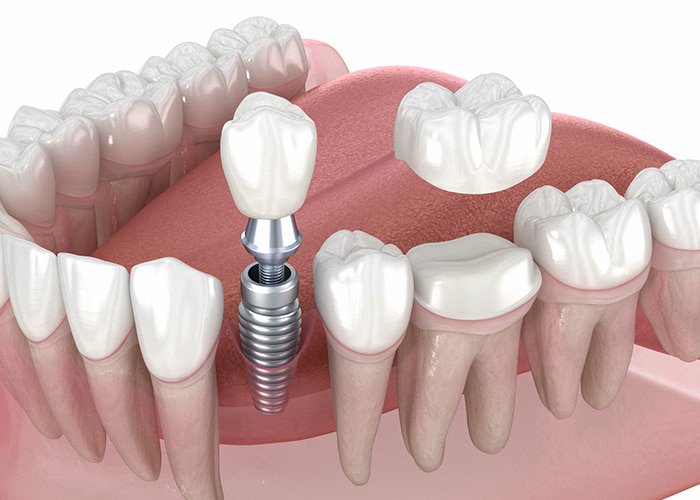
3-on-6 and single implants can be very similar in aesthetic value. Single implants use a separate dental crown for every implant screw, each replacing one tooth. No artificial gum is used, so the patient’s natural gums are visible.
Single implants are used to restore separate teeth. Most often, they are used when patients need to restore just one or two teeth in different parts of the mouth, not as an alternative to full-arch implants.
Restoring every tooth with a separate implant is often not possible because some parts of the jawbone are weaker than others, and the extent of surgery required can negatively affect the patient’s oral health.
Risks and Considerations
Implant placement requires surgery and is associated with certain risks, no matter how carefully it is performed. The risks of 3-on-6 dental implants are comparable to those of other full-arch implant systems:
- Infection: Bacteria may enter the surgical site before or after surgery, leading to complications such as inflammation or abscesses.
- Peri-implantitis: Without good oral hygiene, a condition similar to gum disease can develop, leading to bone loss and implant failure.
- Failure of osseointegration: Implants may fail to fuse with the jawbone due to infection, allergic reaction, or mechanical failure.
If you notice anything unusual after implant placement or experience symptoms such as implant mobility, purulent discharge, uncontrolled bleeding, or persistent swelling, contact the dentist immediately.
How Long Do 3-on-6 Implants Last?
The total lifespan of three-on-six dental implants should be considered separately for the implant screws and the zirconia bridges.
3-on-6 implant screws can last for 20 years or more. The lifespan of the bridges is about 15 years. These estimates depend on proper maintenance and oral hygiene.
Attend regular implant check-ups and thoroughly clean under and between the bridges with a water flosser to prevent bacterial build-up.
Why Choose This Method Instead of Alternatives
Reading reviews of 3-on-6 dental implants can help you better understand why patients prefer this type of restoration.
For many patients, this treatment offers a suitable combination of longevity and comfort associated with All-on-X systems, with a more natural aesthetic reminiscent of single implants.
EXCELLENTTrustindex verifies that the original source of the review is Google. Bir yıldır hizmet alıyoruz kızımın tedavi için gelmiştim gayet memnun kaldım herkese tavsiye ederim kaliteli bir hizmeti ve güler yüzlü bir personeli varPosted onTrustindex verifies that the original source of the review is Google. Memnunuz sonuna kadar tavsiye ediyoruz kızımla birlikte geliyorum hercekten doktorlar çok iyiPosted onTrustindex verifies that the original source of the review is Google. I have had the best experience ever at Perla dental . Amazing from start to finish . I dealt with Khalid (the interpreter) and Seda (the dentist) I have nothing but positive words to say . I had a dental implant after being told I couldn’t have one seda made it happen . I would recommend 100 times over again and again . Thankyou Perla XPosted onTrustindex verifies that the original source of the review is Google. Güler yüzlü ekip başarılı işlem teşekkürler Dr. Serra KadıoğluPosted onTrustindex verifies that the original source of the review is Google. Dis tedavi islemlerim icin geldim hizmetten cok memnun kaldim tekrardan ugrayacamPosted onTrustindex verifies that the original source of the review is Google. Herşey çok güzeldi teşekkürlerPosted onTrustindex verifies that the original source of the review is Google. Kliniğin temizliği ve personelin güleryüzlü davranışı çok iyi. Yapılan işlemler profeatonel şekilde yapılıyor. Yıllardır aynı hizmet kalitesini sunuyorlar.Posted onTrustindex verifies that the original source of the review is Google. Girişten itibaren çok nazik ve güler yüzlü bir şekilde karşılandık ve işlemlerimizle hemen ilgilenildi 😊😊Posted onTrustindex verifies that the original source of the review is Google. hizmetten memnunuz. ilgili çalışanlar ve doktorlar. temiz klinik.Posted onTrustindex verifies that the original source of the review is Google. Klinik çok temiz ve düzenliydi. Doktorumuz oldukça ilgiliydi, her aşamayı detaylıca anlattı. Personelin yaklaşımı da çok iyiydi. Memnun kaldım.

Medically reviewed by:
Dr. Onur Ademhan
Oral and Maxillofacial Surgeon
Founder and CEO of Perla Dental Clinics. Graduated from Ankara University Faculty of Dentistry and specialized in Oral and Maxillofacial Surgery at Gazi University.
Frequently Asked Questions About 3-on-6 Dental Implants
What Are 3-on-6 Dental Implants?
3-on-6 dental implants are used to replace all the teeth in a single dental arch with three fixed bridges supported by six implants.
How Much Do 3-on-6 Implants Cost?
The cost of a 3-on-6 system varies greatly depending on where it is performed. In Turkey, the average cost ranges from £3500 to £5000 per jaw.
Are They Better Than All-on-4?
3-on-6 systems are less bulky than All-on-4, and can be preferable if you have healthy gums and jawbone and do not want a gum-replacing part of an All-on-X bridge. However, All-on-4 is less expensive and suitable for more patients.
How Long Do They Last?
3-on-6 implants last more than 20 years. The zirconia bridges they support have an average lifetime of 15 years.
Are They Removable?
No, 3-on-6 implants are not removable. They are carefully placed to maintain parallel alignment for comfort and good aesthetic.
Is the Procedure Painful?
The surgery uses local anaesthesia or IV sedation, depending on the patient’s needs. This helps the procedure to be generally well-tolerated and more comfortable for the patient. Some soreness may occur after the anaesthesia wears off.
How Long Is the Healing Period?
The initial healing period, during which the gums and the bone recover, takes about a week. Osseointegration takes up to six months.
Who Is Not Suitable?
Patients who have lost a lot of their jawbone volume and vertical height due to resorption are not suitable for 3-on-6 implants without major bone grafting.
If you are considering getting 3 on 6 dental implants in Turkey, a free consultation can help you determine whether this treatment is suitable for you.
Contact our dental specialists to discuss your case and plan an implant treatment that meets your aesthetic and functional requirements.