+90 534 226 60 59
  Mon - Fri: 9:00-18:00; Sat: 9:00-17:30; Sunday: Closed

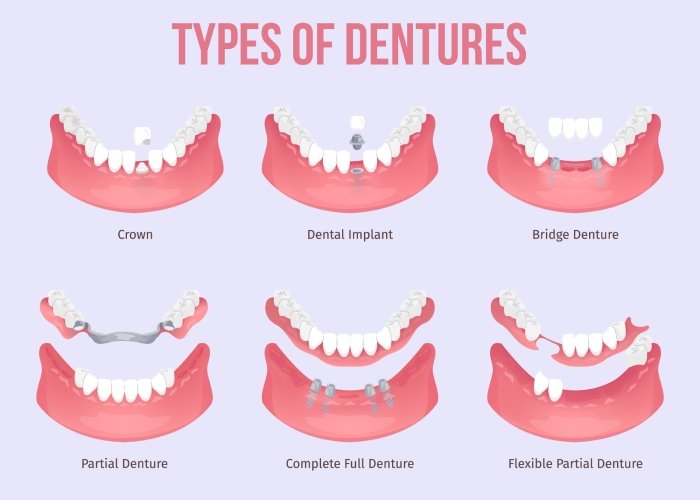
Dentures are typically removable prostheses that replace some or all of the patient’s teeth. There are many types of dentures, and determining which is suitable for your case can be confusing.
Depending on your case, removable, implant-retained, partial, or full dentures may be preferable. This article covers the general differences between the various types of dentures. For more information on current prices and the denture treatment process, please refer to our Dentures in Turkey page.
Table of Contents
When Are Dentures Needed?
The choice between different denture types depends on your clinical case, specifically on whether you have lost some, most, or all of your teeth.
All types of dentures exist to fulfil the same objective: to restore some of the dental function, appearance and phonetics lost or altered due to tooth loss. Dentures are relatively fast to manufacture and cheaper than implants and bridges. Dentures can be a better option for your case because:
- Partial dentures do not rely as much on healthy neighbouring teeth to place as bridges do.
- All types of dentures place much less requirement on the patient’s jawbone density compared to implants,
- Dentures do not require bone graft surgeries to strengthen the jawbone, which may be required for placing dental implants.
Full vs Partial Dentures
The difference between full and partial dentures lies in the number of teeth replaced by the prosthesis and the tissues used for their support.
| Factor | Full Dentures | Partial Dentures |
|---|---|---|
| Teeth replaced | All teeth in a dental arch | Some teeth in a dental arch |
| Primary support | Soft tissues, suction | Remaining teeth, via clasps |
| Stability | More prone to movement | Better stability when eating or speaking |
| Ease of adaptation | Require a longer adaptation period | Easier to adapt to, feel more natural |
Full Dentures
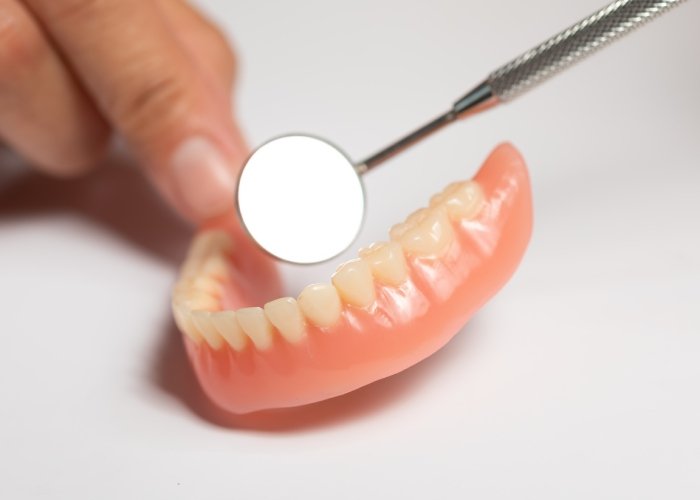
Full dentures restore entire dental arches, meaning they replace all teeth in a single jaw. They are used when the patient has no teeth left, or when the remaining teeth are insufficient, too damaged or affected by caries to support a partial denture.
Partial Dentures
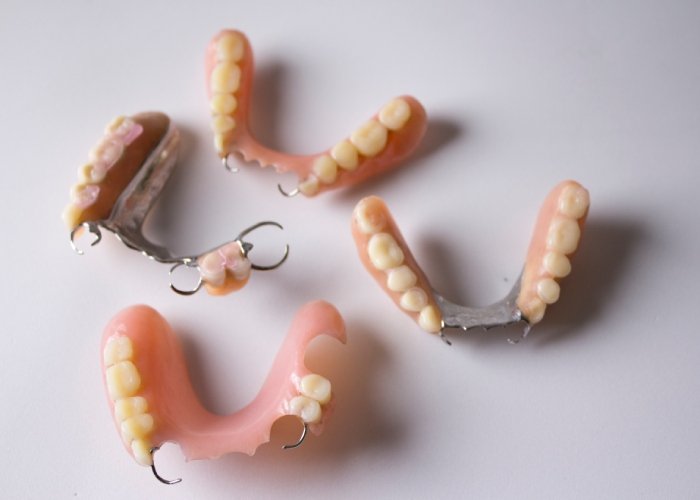
Partial dentures are used for patients with several missing teeth. They can use both the soft tissues and the remaining teeth for support. Partial dentures attach to the teeth by clasps and rests, which are connected to the denture substructure. Unlike dental bridges, however, the supporting teeth do not need to be adjacent to the site of tooth loss.
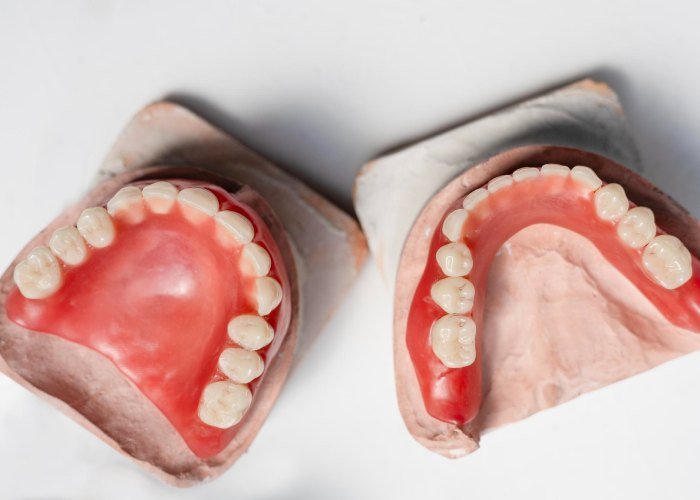
Upper and Lower Dentures
Upper and lower full dentures differ in shape and attachment methods. Full upper dentures often cover the entire roof of the mouth, creating suction that helps keep them in place.
Lower dentures are horseshoe-shaped because they cannot cover the tongue. They rely more on the jawbone and muscular control for stability.
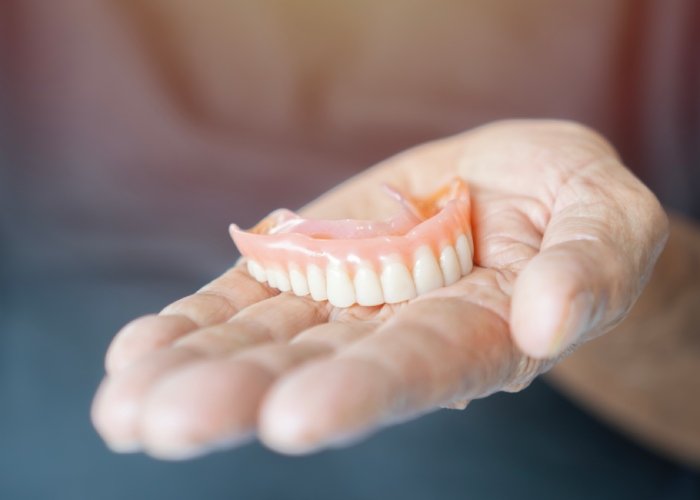
Immediate Dentures
Immediate dentures are used to replace teeth immediately after they are extracted. They do not offer a precise fit, since they are planned before tooth extraction.
Immediate dentures are typically replaced or converted to a long-term prosthesis several months after tooth extraction.
Removable vs Implant-Supported Dentures
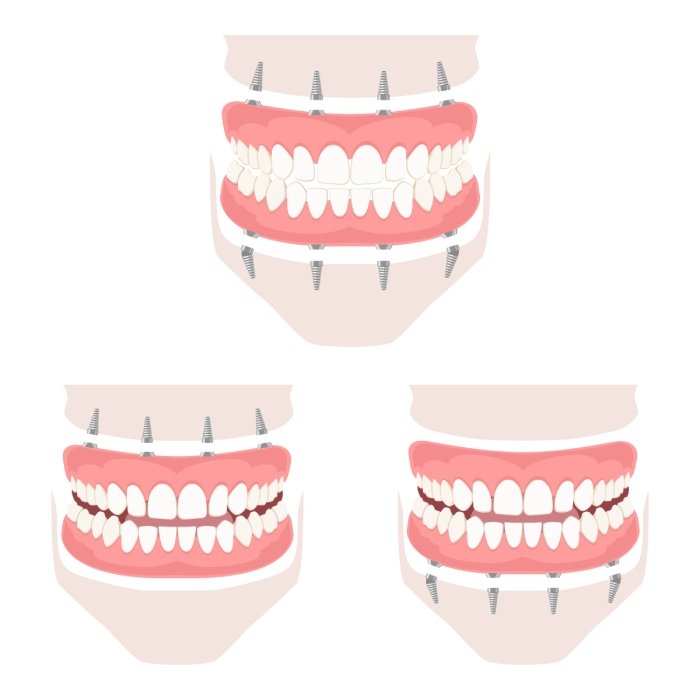
Denture options include removable and fixed, and removable dentures can also be implant-retained.
Removable dentures are not fixed in place and can be removed by the patient. These dentures usually rely on soft tissues or the remaining teeth for support. Removable prostheses that are placed over natural teeth, roots, or implants are called overdentures.
When dentures use implants for better stability, they are called implant-retained or snap-on dentures. Implants provide additional support, making them more comfortable.
Implant-supported prostheses are fixed. They cannot be removed by the patient, but are more secure than conventional removable dentures and allow the patient to exert greater bite force. However, they are harder to clean and may be unsuitable for patients with impaired manual dexterity.
Denture Materials
The most common denture materials are acrylic resin and cobalt-chromium. Acrylic is used for denture bases, which resemble artificial gums and hold denture teeth in place. Cobalt-chromium is used for rigid denture frameworks.
When referring to acrylic dentures, it usually means that no metal framework is present, though there may be metal clasps.
Cobalt-chromium dentures use a metal framework, but the areas where the teeth are replaced still use acrylic to mimic the gums.
| Types of Dentures | Materials | Durability | Aesthetic Value | Lifespan |
|---|---|---|---|---|
| Acrylic Resin Dentures | Acrylic resin for base, optional metal clasps | Medium, brittle when dropped | High, but metal clasps may be difficult to conceal completely if used | 5-7 years |
| Cobalt Chromium Dentures | Cobalt-chromium framework and clasps, acrylic resin bases | High for framework, better pressure distribution | High, metal framework and clasps concealed on the other side of the teeth | 10-15 years for metal framework, 5-7 for acrylic bases |
| Flexible Dentures | Nylon-containing base | Highest fracture resistance | Very high, no noticeable clasps to conceal | 2-5 years |
Acrylic Resin
Acrylic resin is the material used primarily for denture bases. It is usually tinted pink to resemble gums. Acrylic dentures are inexpensive and easier to adjust than prostheses with metal frameworks. However, they can be bulkier, since acrylic cannot be made as thin as metal without compromising its strength.
Cobalt-Chromium (Metal Framework)
Cobalt-chromium is used for denture frameworks. It is a very durable material, which makes it possible to fabricate lightweight, thin dentures with good structural integrity. Cobalt-chromium is often used for metal partial dentures. It is more expensive and harder to adjust than acrylic.
Flexible Dentures (Nylon-Based)
Flexible dentures use nylon-derived materials for their bases. They may be more comfortable and resist shattering under pressure. However, they cannot be relined and usually have a short service life.
Composite vs Porcelain Denture Teeth
The materials used for denture teeth are different from those used for bases and frameworks.
Composite denture teeth are lightweight and easily adjustable. They are inexpensive to manufacture and replace, but their service life is shorter than that of porcelain teeth, and they tend to stain easily.
Porcelain denture teeth look more natural and have a longer service life. However, they are more easily damaged by dropping, heavier, and more expensive. They can also cause wear on opposing natural teeth.
Suction, Palateless, and Horseshoe Dentures
Suction dentures are made using a special process to create a better seal with the jawbone. Suction dentures offer a more reliable fit in either jaw for a significant percentage of cases, compared to conventional full dentures.
Palateless, or horseshoe dentures, are used for the upper jaw. As they do not cover the palate, they are less bulky and alter food taste less than traditional upper dentures. These dentures are usually implant-supported.
Risks, Limitations and Adaptation
Many denture problems are associated with poor fit, bad oral hygiene, and incorrect use. Commonly occurring issues are:
- Gum irritation
- Ulceration
- Dental stomatitis
These issues are preventable and can be corrected if they occur. Following proper oral hygiene recommendations and regular denture maintenance is very important for ensuring long-term comfortable wear.
The shape of your jaw will continue to change after you lose teeth, so your dentures will require periodic adjustments to ensure they fit properly.
Adaptation to removable dentures takes some time, since dentures do not feel exactly like natural teeth. The typical adaptation timeline looks like this:
Day 1-3
You can experience some soreness and increased salivation, since your mouth perceives dentures as a foreign object. You may find eating or speaking uncomfortable.
Week 1-2
Your mouth starts to adapt to the dentures. You may still experience some sore spots and need to adjust how you speak, but it should become easier.
Week 3-4
The dentures should be increasingly comfortable to wear. You can expect to have mostly adapted to eating and speaking while wearing dentures.
After 1 month
You should be comfortable wearing your dentures. Eating very chewy foods can take a bit longer to master.
Some types of dentures, particularly lower full dentures, can take up to half a year to adapt to.
If you don’t feel you are adapting to your dental prostheses or experience increased discomfort, your dentures may require additional adjustments.
Dentures vs Implants and Bridges
Dentures are just one method of restoring missing teeth. Popular alternatives include dental implants and bridges.
Dental bridges replace one or more missing teeth. They use prepared teeth on either side of the site of tooth loss as supports. Dental bridges are not suitable for patients who have lost most of their teeth or whose intact teeth cannot support the restoration.
Dental implants are placed into the jawbone and can support crowns or bridges. They feel more like natural teeth in use. Placing dental implants requires surgical intervention and sufficient jawbone density.
Tooth replacement comparison
| Restoration | Stability | Invasiveness | Longevity |
|---|---|---|---|
| Removable Dentures | Lower stability compared to fixed restorations | Relatively non-invasive, with only minor alterations to existing teeth | 5-7 years |
| Implants | Very stable, similar to natural teeth | Requires surgery to place | 20+ years |
| Bridges | Stable, but depends on the condition of supporting teeth | Requires permanent modification of abutment teeth | 10-15 years |
How Getting Dentures in Turkey Works
Thanks to the wide range of denture types available in Turkey, as well as the lower prices and comprehensive service packages offered to international patients, it is possible to replace missing teeth at a lower cost and to a higher clinical standard than is possible locally.
A patient needs to visit Turkey once for conventional dentures, and twice for implant-supported or retained dentures. A single stay in Turkey will range from 5 to 10 days and require 2 to 5 appointments.
The process of getting dentures in Turkey as an international patient is as follows:
- Online consultation: The clinic will advise you on whether dentures are a good solution for you and help to plan the treatment.
- Travel to Turkey: If your dentures are included in a service package, hotel and transfers between the airport, clinic, and the hotel, as well as accommodations, may be included in the price.
- In-clinic consultation: The dentist will make dental scans or X-rays and schedule any necessary teeth extractions.
- Tooth preparation: The dentist will make any necessary tooth preparations and take dental impressions.
- Denture fabrication: The dentures are manufactured in a dental laboratory.
- Temporary dentures: If any of your teeth were extracted, you can get immediate temporary dentures placed the same day.
- Fitting and adjustment phase: The manufactured dentures are fitted and adjusted over one or more appointments.
- Follow-up appointment: A final follow-up appointment can be scheduled to ensure the dentures match your needs
Which Type of Denture Is Right for You?
Only a consultation with a dentist can determine which type of dentures is suitable for your case, but you can make an estimate based on your oral health.
Many patients prefer implant-retained dental prostheses. If you have not been missing teeth for long, implant-retained dentures may be a good choice. Options such as All-on-4 are also possible for people whose jawbone density is insufficient for traditional implant-retained dentures.
If you prefer a removable prosthesis and only some of your teeth are missing or heavily damaged, you are likely to be a candidate for partial cobalt-chromium dentures. Other types of dentures may be recommended based on your case of tooth loss and sensitivity to denture materials.
You can receive an initial assessment of your case and narrow down your denture options via an online consultation at our clinic. Our dentists will help you select appropriate dental prostheses based on photos or X-rays of your teeth.

FAQ About Types of Dentures
What Are the Different Types of Dentures?
Denture types are divided into full and partial dentures by treatment scope, and fixed and removable by method of attachment. Additionally, dentures can be classified by whether they use a metal substructure and base material as acrylic, cobalt–chromium, or flexible dentures.
What Is the Difference Between Full and Partial Dentures?
Full dentures replace all the teeth in a jaw. Partial dentures replace some of the teeth and are used for patients who still have some or most of their natural teeth. They are supported by both remaining teeth and soft tissues.
What Are Dentures Made Of?
Dentures often use several materials. Denture bases are usually made from acrylic resin. Partial dentures can use a cobalt-chromium framework. Denture teeth can be made of acrylic, composite resin, or porcelain.
Are Flexible Dentures Better Than Acrylic Dentures?
Whether flexible dentures are better for you depends on your case. Flexible dentures can feel more secure due to their grip. They are also much less brittle than acrylic resin. However, they need to be replaced more often.
Do Dentures Cause Bone Loss?
Dentures that are not supported by implants or natural roots do not prevent bone loss, and, if poorly fitted, can accelerate it. If you want to prevent further bone loss, implant-supported overdentures may be a good alternative.
What Type of Denture Is the Most Stable?
Implant-retained dentures are more stable than other types of removable dental prostheses. Among non-implant-supported removable prostheses, cobalt-chromium partial dentures can provide greater stability than alternatives.
How Long Do Dentures Last?
Dentures last about five to seven years. Cobalt-chromium dentures’ metal frameworks can serve up to fifteen years, but their acrylic bases require more frequent replacement.
Which Type of Denture Is Best for Severe Bone Loss?
Severe bone loss can limit the types of dentures a patient can wear. Implant-supported systems, such as All-on-4 or suction dentures, may provide better stability and comfort in such cases.
Are Implant-Supported Dentures Better Than Removable Dentures?
Implant-supported dentures are generally more comfortable to wear and more secure, though they are more difficult to clean, since they cannot be removed from the mouth. However, they require surgical placement of implants, are more expensive, and have a lengthy recovery period.