+90 534 226 60 59
  Mon - Fri: 9:00-18:00; Sat: 9:00-17:30; Sunday: Closed

Dental implant abutments connect different parts of an implant system. In most implants, abutments connect the implant fixture, which is in the jawbone, to a crown or bridge above the gum line. Implant abutments are not the same as abutment teeth prepared for dental bridges. Implant abutments may differ between types of dental implants. They can be made from different materials, be custom or prefabricated, and placed at different stages of implant treatment.
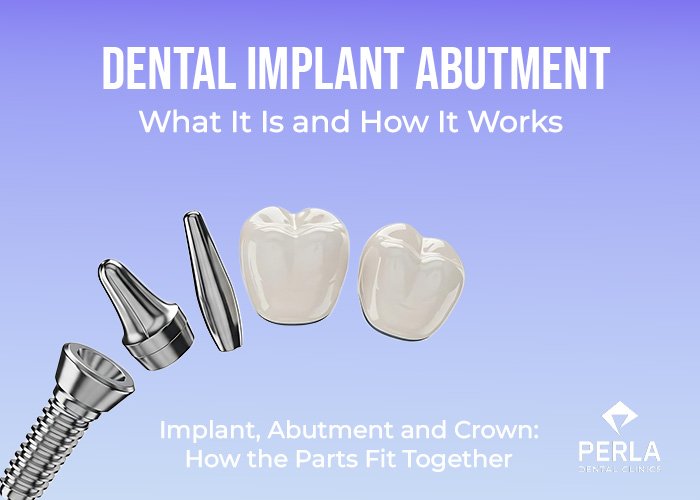
Table of Contents
What Is a Dental Implant Abutment?
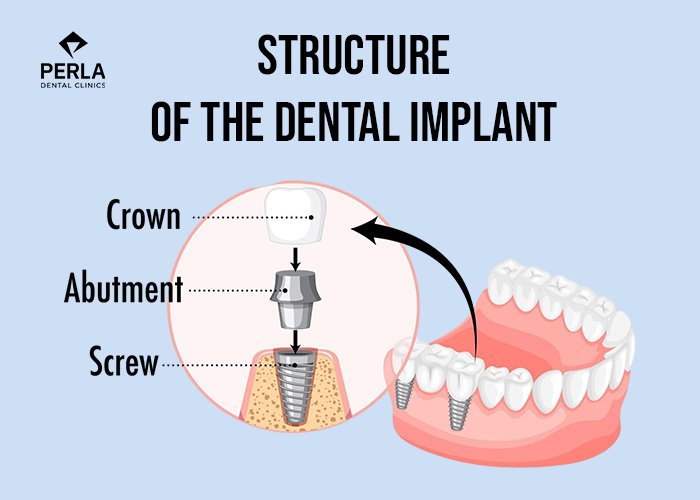
Dental implant abutment is a component connecting the implant fixture, which is inserted into the jaw, to a crown or other restoration, the part of the restored tooth that is above the gums.
How and when the implant abutment connects to the other parts of the implant system depends on the type of dental implant. In most systems, it is a separate component, distinct from the implant post and prosthesis (i.e., the crown).
A typical full implant system consists of:
- Implant post
- Implant abutment
- Prosthesis: crown or bridge
Implant, Abutment and Crown: How the Parts Fit Together
Abutment, crown, and fixture are three common dental implant components that comprise a full implant system: the implant, or fixture, sits in the jaw, the crown replaces the upper part of a tooth, and the abutment connects the two.
Some implant systems do not have a separate abutment. This means it is integrated with another part of the system. Such systems have their benefits and drawbacks, and their use depends on the patient’s case.
| Implant System Part | Where it sits | What it does | What patients often confuse it with |
|---|---|---|---|
| Implant post | In the jaw | Replaces the tooth root, anchoring other components | Abutment: most implant posts do not directly connect to the crown. |
| Abutment | Between the fixture and the crown | Connects the fixture and the crown | Implant post: abutments do not reach into the jawbone. |
| Crown | Above the gums | Replaces the visible parts of the tooth | The full implant system: Crowns are separate from the implant fixture. |
Is an Abutment the Same as a Post?
The implant post and abutment are different parts of the implant system. Implant posts are also called fixtures or screws, because they are placed into the jawbone and most look like threaded screws.
Is an Abutment the Same as a Crown?
The implant crown and abutment are different parts. The crown is the piece that replaces visible portions of the tooth. An implant abutment helps to support it and connect it to the implant fixture below. The procedure for attaching the crown differs depending on the implant design and treatment plan.
When Is the Abutment Placed During Implant Treatment?
The timing of dental implant abutment placement depends on the kind of implant system and the treatment plan. For two-stage treatments, this occurs after the implantation site has healed to a certain extent.
A typical dental implant procedure sequence at Perla Dental Clinics is as follows:
- Implant placed (first visit)
- Healing and assessment
- Abutment attached (second visit)
- Impression or dental scan taken (second visit)
- Crown or other restoration fitted (second visit)
For international patients in Turkey, whether the abutment is placed during the first or second visit depends on the individual treatment plan.
Can the Abutment and Crown Be Placed at the Same Time?
Some one-stage implant treatments have the dental implant abutment procedure performed immediately or soon after the implant fixture is placed. Whether such a procedure is suitable for the patient depends on the case and type of restoration.
Does Abutment Placement Hurt?
If abutment placement requires uncovering the implant, the procedure is performed under anaesthesia. As such, most patients do not feel excessive discomfort. Some soreness may be present after the medication wears off. Swelling, excessive discomfort, and persistent pain after placing an implant abutment should be discussed with the dentist.
Healing Abutment, Temporary Abutment and Final Abutment
Several terms are used to refer to the three main types of implant abutment: healing, temporary, and final. These abutments are used at different stages of the dental implant procedure: a healing abutment helps to shape the gums during healing. A temporary abutment is used to connect a provisional crown. A final abutment is the piece that connects the permanent crown to the implant fixture.
| Term | When the patient may hear it | What to ask the dentist |
|---|---|---|
| Healing abutment | At the end of the recovery, when preparing the gums for a natural contour around the restored tooth | How long will I wear the healing abutment? How can I avoid dislodging it accidentally? |
| Temporary abutment | Before the provisional crowns are placed to support them, so that the patient does not remain with missing teeth | Are there any dietary restrictions while wearing temporary abutment and crowns? |
| Final or permanent abutment | After implant healing is complete, when preparing for manufacturing the permanent restorations | What material will the final abutment be made of? Will the restoration be screwed or cemented to the abutment? |
Types and Materials of Dental Implant Abutments
Dental implant abutment types can differ by material and design. Some implant abutments are prefabricated, while others are custom-made. Which one is chosen depends on the clinical situation and should be confirmed by the dentist.
| Implant abutment material | What it means | What cannot be assumed without the dentist's confirmation. |
|---|---|---|
| Titanium | Durable, highly reliable option that can resist high pressures | You should not assume that titanium abutments provide the best support for your case. |
| Zirconia | Sufficiently resilient and very aesthetic option for specific use-cases | Do not assume that the use of zirconia abutments automatically results in a more aesthetic final restoration |
Titanium, Zirconia, Custom and Prefabricated Abutments
Titanium abutments are the most common type. They have a long history of use and are well-suited for positions subjected to heavy pressure, especially the molar region. Titanium alloys are well established in dentistry, and most implant systems support the use of titanium abutments.
Zirconia abutments are made from a very durable ceramic material, and are white or tooth-coloured. They are often preferred for use in the aesthetic zone, such as front teeth, to minimise the chances of abutment showing through as the gums age.
Prefabricated abutments are provided by the manufacturer as-is. They are standardised and are usually less expensive. These are often used in typical cases, where the patient’s dental anatomy does not demand a custom solution.
Custom abutments are fabricated or milled to match the patient’s dental anatomy. They may provide better outcomes in unusual cases, where a one-size-fits-all prefabricated option is not recommended.
Can an Abutment Become Loose, Fail or Fall Out?
Symptoms such as a loose-feeling implant, movement of the restoration, persistent pain after abutment placement, or sudden changes around the implant can indicate issues that should be addressed quickly. You can learn more about expected symptoms after implant placement in our article. Contact the dentist if you experience them. Loosening abutment does not imply implant failure. Addressing the issue promptly may help to resolve it without endangering the restoration.
Ask these questions about what to expect:
- Is soreness or swelling expected after treatment?
- Should I take any medications to manage them?
- What should I do and avoid to promote healing and recovery?
Contact the dentist promptly if:
- You experience severe swelling.
- Pain or bleeding persists or worsens.
- You get a fever.
- The treated area looks unusual.
- You experience other worrying symptoms.
Is the Abutment Included in the Implant Quote?
Whether the abutment cost is part of the implant quote depends on how the quote is structured. If you choose a dental implant package for international patients at Perla Dental, it includes:
- Consultations
- Panoramic X-Ray
- Anaesthesia and all necessary medications
- Tooth Extractions
- Implants placement
- The required number of implants, crowns, and abutments as part of the implant-supported restoration
- Temporary Teeth
- Transfers (Airport – Hotel – Clinic)
- English-speaking coordinator
You can find more on our page about dental implant prices in Turkey.
Questions to ask before agreeing to an implant quote:
- Are all parts of the implant system included in the quote?
- Are there any additional treatments or expenses I may require?
- Are procedures performed during separate visits to Turkey billed separately?
- What post-treatment support is included in the quote?
- What are the terms of accommodation and transfers included in the treatment package?
Dental Implant Abutment vs Bridge Abutment Teeth
An abutment tooth is not the same as an implant abutment. Abutment teeth are natural teeth prepared to support a dental bridge. A dental bridge consists of a pontic, which is supported by crowns. These crowns are placed on abutment teeth.
Implant abutments connect implant fixtures to artificial crowns. They do not rely on natural teeth.
This page covers: Implant abutments, which connect different parts of the implant system.
This page does not cover: Abutment teeth, which are natural teeth that support the crowns, which are connected to a pontic in a dental bridge.
Questions to Ask Before Travelling for Implant Treatment
Knowing more about implant abutments will help you better understand the broader implant treatment and procedures involved. You can ask these questions to clarify your implant treatment plan:
- How many visits are required to get dental implants in Turkey?
- How will my implant abutment and crown be prepared?
- What should I do if I experience any problems with the implant after returning home?
- What documents and details about my implants should I keep?
Get in touch with our experts to receive a response within one hour, and receive a personalised treatment plan based on your dental photos and panoramic X-ray.
FAQ About Dental Implant Abutments
What Is a Dental Implant Abutment?
An implant abutment connects different parts of an implant system. In most implants, it connects the implant fixture to a crown. It can be made from different materials.
How Long After an Implant Do You Get the Abutment?
This depends on the personalised treatment plan. One-stage treatments can have the abutment placed soon after the fixtures. Two-stage treatments have the abutment placed at the end of recovery.
Can the Abutment and Crown Be Placed at The Same Time?
Implant abutments can sometimes be placed along with temporary crowns. These crowns need to be replaced after full recovery. Not every patient’s case is suitable for this immediate-loading protocol for implant placement.
Is Abutment Placement Painful?
Abutments are placed under anaesthesia. Some soreness can occur after it wears off. Most patients do not report feeling pain during abutment placement.
What are the Different Types of Dental Implant Abutments?
Implant abutments differ in manufacturing methods and materials. Materials can include titanium and zirconia. They can be custom-made or prefabricated.
What Happens If an Abutment Feels Loose?
Contact the dentist if your abutment feels loose or is visibly moving. Addressing this issue promptly can prevent further issues with the implant. It does not necessarily imply that the implant has failed.
Is the Abutment Included in the Implant Price?
Whether an implant abutment is included in the implant quote can vary. Always clarify costs to avoid unexpected expenses. We can provide you with a treatment plan with costs after a consultation.
Is an Abutment Tooth the Same Thing?
No, abutment teeth are not the same as implant abutments. Abutment teeth are natural teeth that support a dental bridge. Implant abutments rest on implant fixtures.

Medically reviewed by:
Dr. Onur Ademhan
Oral and Maxillofacial Surgeon
Founder and CEO of Perla Dental Clinics. Graduated from Ankara University Faculty of Dentistry and specialized in Oral and Maxillofacial Surgery at Gazi University.