+90 534 226 60 59
  Mon - Fri: 9:00-18:00; Sat: 9:00-17:30; Sunday: Closed

Dental fillings in Turkey allow patients to restore their teeth with aesthetically pleasing and durable materials. Tooth fillings replace damaged areas of the tooth and restore its function.
There are many types of tooth fillings available to repair chips and cracks, as well as to fill cavities caused by tooth decay. When performed in a clinic in Turkey, it is a brief, one- or two-appointment procedure that can be completed during a holiday.
Timescale
Usually, a single visit is enough to place a filling, with the 30-60-minutes procedure
Prices
The cost of a composite white filling at Perla Dental Clinics is £50
Guarantee
We offer a 12-month guarantee on composite white fillings
Table of Contents
What is Dental Filling Treatment
A dental filling is a restorative treatment that replaces missing tooth material to restore the tooth’s structure and integrity. A filling is placed after the affected tooth is thoroughly prepared, and decay is removed.
While fillings are most often used to repair teeth damaged by decay, they can also be used for cracked teeth, provided that the damage is not severe.
Indications and Contraindications
Tooth fillings are indicated for patients who have:
- Decayed teeth, provided enough healthy tooth structure remains to support the filling.
- Minor chips or cracks in their teeth.
- Worn-out teeth.
A filling is not a suitable dental procedure when:
- The damaged tooth has lost too much structural integrity to allow a filling attach securely.
- The tooth’s pulp is infected, meaning the bacteria have reached the nerve.
- The patient has an untreated condition, such as gum disease, that precludes placing a filling.
In the above cases, a temporary filling may be used as part of a procedure, such as after a root canal to treat the infected nerve, but it is not a final restoration.
Types of Tooth Fillings
Tooth fillings can serve different roles, either as a permanent or temporary restorations. Permanent fillings can be categorised based on the type of filling material used.
Temporary vs. Permanent Fillings
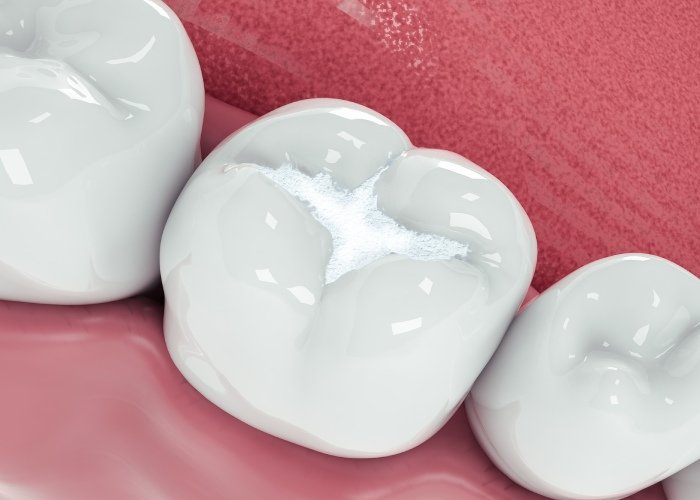
The primary difference between temporary and permanent types of dental fillings is that temporary fillings serve as interim restorations, which are used to protect the tooth during lengthy treatment.
For example, a temporary filling is placed when the patient waits for a porcelain inlay or onlay to be made in a lab. Temporary fillings are not durable and would wear off or break if not replaced within a reasonable timeframe.
Permanent fillings are designed to last as long as possible for their material, usually at least five years. They use high-quality dental materials, such as modern composite resins.
White Fillings (Composite)
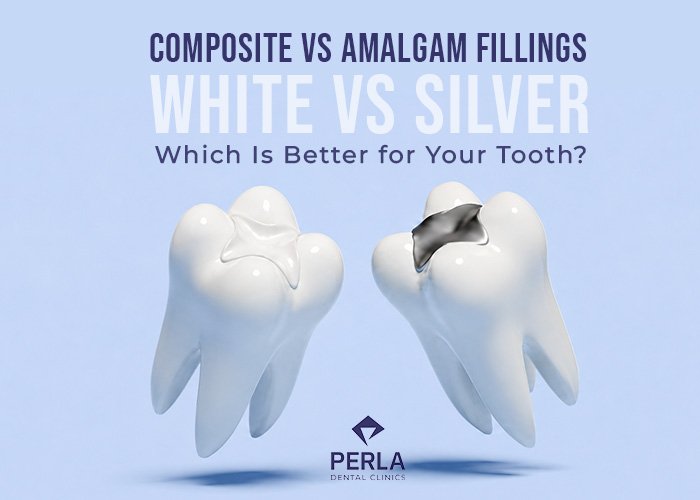
Composite fillings are also called white fillings. They are made of composite resin. This material can be coloured to match the shade of the treated tooth. Modern white fillings look similar to natural teeth and are suitable for front teeth.
Porcelain Fillings
Porcelain fillings are also known as inlays and onlays. Unlike other types of fillings, inlays and onlays often require two clinic appointments. This is because most porcelain restorations are made in a laboratory after the patient’s teeth have been cleaned of decay. In some cases, CAD/CAM milling techniques can be used to manufacture the filling chairside and it can be placed in a single appointment.
Porcelain fillings are similar to crowns, but they cover only the decayed portion of the tooth. They are typically more long-lasting than white fillings and can look even more natural. However, porcelain fillings cost more than other types.
You can find a more detailed breakdown of this restoration’s benefits and indications on our inlay and onlay treatment page.
Amalgam Fillings
Amalgam fillings are made from a metal alloy. These are also known as grey fillings. Although they are made of metal, they require only one appointment to place. This is because the hardening of the filling is achieved through a process called amalgamation, in which the metal alloy sets at room temperature.
Amalgam fillings do not look like enamel, so they are suitable only for back teeth. However, they are inexpensive and durable.
Glass Ionomer Fillings
Glass ionomer fillings are easy to apply to the tooth and are self-curing, but they lack mechanical durability for long-term use. Fillings made entirely of glass ionomer cements are rarely used as permanent restorations in adults.
One major benefit of glass ionomer cements is that they release fluoride. When used in combination with another material, glass ionomer cement is suitable for deep cavities. Glass ionomer is applied only inside the tooth and acts as a liner, while a more durable filling material is placed on top of the liner.
Benefits of Teeth Fillings
Fillings help to:
- Stop cavities from getting larger.
- Strengthen damaged teeth to prevent further damage.
- Restore the tooth’s appearance.
- Conceal localised discolouration or dark spots.
Fillings are preferable over alternatives when the tooth is only moderately damaged. Placing a filling is cheaper and requires less tooth preparation than, for example, a crown. This is why fillings are used so often on teeth with minor to medium damage.
The Dental Filling Procedure: Step-by-Step
This overview outlines the main stages involved in placing a white filling. There are minor differences in the procedure for different types of fillings, such as how the filling is hardened and whether etching is required. However, other same-day filling treatments follow most of these general steps.
Anaesthesia
Fillings are placed under local anaesthesia. The dentist will inject the anaesthesia near the treated tooth. As such, the treatment is painless.
Removing Decay
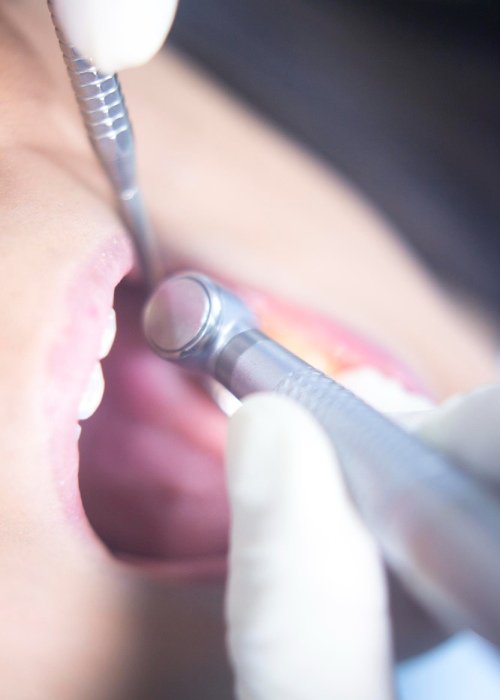
The dentist will use drills or other tools to remove the decayed or softened tissue from the damaged teeth. This ensures that the cavity does not spread under the filling. The amount of material that needs to be removed depends on the extent of the damage or infection.
Cleaning and Etching
Once all infected dentine and other damaged tissue have been removed, the dentist will clean the site with a disinfectant. The prepared part of the tooth is then treated with a special solution to create microscopic irregularities on the surface where the filling will be placed. This is called etching. It provides more surface area for the filling material, improving its adhesion.
Placing the Filling
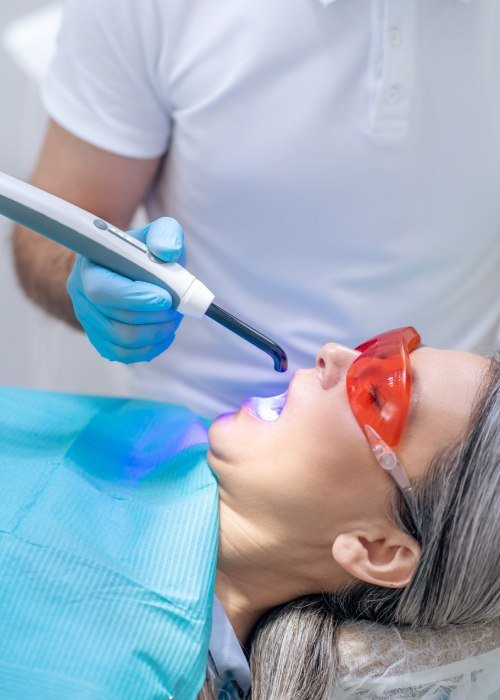
The filling material is placed and shaped to completely replace the removed and missing parts of the tooth. The method of hardening the filling varies between materials. For example, white fillings are cured under an LED light.
Polishing
The dentist will polish the hardened filling to make its surface as smooth as natural enamel and ensure a proper bite. The treatment is completed after this step.
Dental Filling Aftercare
The precautions you need to take immediately after the procedure depend on the filling material. The dentist will inform you of these after the treatment.
You should wait for 2 hours before eating to ensure that the anaesthesia wears off. Otherwise, you may accidentally injure yourself without noticing. You may experience some tooth sensitivity, especially if the decay was deep, but this should pass within 48 hours after the treatment.
It may also take you some time to get used to the shape of your tooth, as it will be slightly different from what you remember. If your bite feels significantly off after the anaesthesia wears off, contact the dentist to correct the filling.
Follow the regular dental care routine after the treatment. Avoid putting excessive pressure on the filling, as it is less durable than natural enamel.
How Long Do Tooth Fillings Last?
The average lifespan of tooth fillings depends on the material, the patient’s habits, the size of the filling, and other factors. The following average filling lifespans assume good dental health and hygiene.
- Composite: 5-10 years
- Amalgam: 10-15 years
- Porcelain: 10-20 years
- Glass ionomer (standalone): 2-5 years
Tooth Filling Costs in Turkey and the UK
The cost of dental fillings varies greatly between clinics in different countries.
In the UK, fillings are available under the NHS as a Band 2 treatment, which costs £75.30. For most cases, grey amalgam fillings are used, unless treating front teeth or there is a clinical necessity for another type of filling. As such, many patients choose to travel for affordable non-metal fillings. Prices for dental fillings in Turkey are often significantly more affordable due to lower living costs. The following table compares average filling prices in Turkey and private clinics in the UK per tooth treated.
| Filling Type | Turkey Price | UK Private Care Price |
|---|---|---|
| Composite | £40–£100 | £150–£300 |
| Amalgam | £20–£80 | £90–£160 |
| Glass Ionomer | £35–£90 | £80–£150 |
| Porcelain | £95–£250 | £450–£950 |
Why Choose Perla Dental Clinics for Your Tooth Fillings in Turkey
Perla Dental Clinics is a trusted provider of restorative and cosmetic dentistry. Our clinics in Turkey are popular among international patients. We have experienced dentists, English-speaking staff, and high-quality treatments at affordable prices. We offer all major types of fillings and other restorations.
If you are unsure which type of dental filling in Turkey to choose, our dentists can help you decide based on the damage to your teeth and their location. You can also combine fillings with a range of other treatments and completely refresh your smile.
Dental Filling in Turkey Overview
Fillings are among the more common dental treatments in Turkey. They can help fix minor to moderate damage caused by caries or mechanical trauma.
Visitors who come to Turkey for dental tourism usually prefer white or porcelain fillings. These are available for £40–£100 and £95–£250, respectively.
The procedure for installing white fillings takes less than an hour per tooth and is performed under local anaesthesia. There is usually no need for follow-up appointments, allowing one to restore their teeth without a prolonged stay.
EXCELLENT Based on 2409 reviews
 Posted on Google
 yavuz buyukgebizTeşekkürler onur hocam eldar hocama tüm doktorlara cok Cook memnunuzPosted on Google
 Ayşe SoyturkAli hocama tesekkue ederim dislerim çok güzel oldu çok memnunumPosted on Google
 Elif IlaslanCok memnunum ramazan hocana tesekkürler asistanı cok yardımcı olduPosted on Google
 Gunes SanliturkÇok temiz bir yer. Personel çok ilgili. Halkla ilişkiler harika. Doktorlar desen hem çok güler yüzlü hem de işinin ehli. Güven veriyorlar. Tebrikler ve teşekkürlerPosted on Google
 Mustafa ManavÇok güzel ve temiz bir klinik. Çalışanlar güler yüzlü ve doktorlar deneyimli.Posted on Google
 Sara SamarfardI had my first visit with dr mehmet can and seda my experience was very good and really satisfied with team special thanks to mahi , she is really nice and friendly and very knowledgeable about treatment and care for patients I highly recommend to everyone, and definitely will back again soon, thanks again omid and mahi ❤️🥰Posted on Google
 KOC tipsI cannot recommend Perla Dental Clinic enough. From my very first visit to Antalya, Mahi and Zoe made everything so easy and stress-free for me. Everything that was agreed beforehand was exactly as promised, and the whole experience has been amazing. The treatment went incredibly well, and I was kept informed every step of the way, always knowing exactly what was happening and what to expect. I had 11 implants, including 2 zygomatic implants, and the level of professionalism, care, and attention I received has been outstanding. I am just about to leave after my first visit and honestly could not be happier with how everything has gone so far. Thank you to the whole team at Perla Dental Clinic, and especially Mahi and Zoe, for making such a big treatment feel so smooth and reassuringPosted on Google
 Teslime ÇınarOnur hocama geldim muayane oldum çok memnunum

Frequently Asked Questions About Dental Fillings in Turkey
How Much Does a Single Dental Filling Cost in Turkey?
The cost of a filling primarily depends on the material. Prices range from £40 to £250, with the most common type, a composite filling, costing from £40 to £100.
Is It Safe to Get Tooth Fillings in Turkey?
Turkish clinics use the same materials and techniques as doctors in the UK. When performed at a reputable clinic, placing fillings in Turkey is completely safe.
Is the Dental Filling Procedure Painful?
Most tooth filling treatments are relatively minor and are performed under local anaesthetic, so patients may experience minimal discomfort during and after the procedure.
How Much Time Does the Tooth Filling Procedure Take?
Most filling treatments take less than an hour for a single tooth. Treating multiple teeth can take longer, depending on how damaged they are.
How Many Years Do Dental Fillings Last?
Fillings can last from 5 to 20 years on average. White fillings usually last for 5-10 years, but may serve up to 15 years with good care.
Can a Filling Be Placed on a Front Tooth?
Yes, you can get a natural-looking filling on a front tooth in Turkey. Modern white and porcelain fillings look very natural and blend well with untreated teeth.
If you are considering a dental filling in Turkey, a free consultation can help you choose the best option for your needs.
Contact our dental specialists to discuss your case and get a personalized treatment plan.