+90 534 226 60 59
  Mon - Fri: 9:00-18:00; Sat: 9:00-17:30; Sunday: Closed

Persistent or worsening pain, swelling, and bleeding around the implant may indicate a dental implant infection. An infection can develop shortly after the implants are placed or many years later. This article will help you better understand the symptoms that may indicate an infection and what steps to take if you suspect a dental implant complication.
Individual symptoms and photos may not be enough for an accurate diagnosis. Contact your dentist for an expert assessment if you have any worrying symptoms around the implant.
Table of Contents
What Is a Dental Implant Infection?
A dental implant infection affects tissues surrounding a dental implant and needs professional assessment to confirm its severity and possible treatment options.
At first, the infection may affect only the soft tissues. As it progresses, it may erode the supporting bone, leading to irreversible changes in implant stability and function.
Can Dental Implants Get Infected?
Yes, tissues around a dental implant can become inflamed and infected. While this may be called an infected dental implant, in reality, the infection affects only the tissues around the implant. The implant itself, being artificial, cannot get infected like a natural tooth can. You can learn more about dental implant materials and structure on our dental implants in Turkey page.
Peri-implant tissue infections can still be serious and need prompt professional care to avoid further damage.
Peri-Implant Mucositis vs Peri-Implantitis
Peri-implant mucositis affects the soft tissues, while peri-implantitis also affects supporting bone. Both conditions can present with similar visible symptoms, such as bleeding and swelling. The only reliable way to determine which condition you have is to undergo professional diagnostics.
| Key features | Peri-implant Mucositis | Peri-Implantitis |
|---|---|---|
| Primarily affects | Soft tissues surrounding the implant | Soft tissues and supporting bone near the implant |
| Possible symptoms | Redness, swelling, bleeding | Redness, swelling, bleeding, gum recession, bone loss. |
What Are the Signs of an Infected Dental Implant?
Possible dental implant infection symptoms include
- worsening pain,
- swelling,
- bleeding,
- pus discharge,
- changes along the gum line,
- and implant mobility.
A dental assessment is needed to determine if these symptoms indicate n implant infection or a broader problem. You can learn more about different dental implant side effects in our dedicated article.
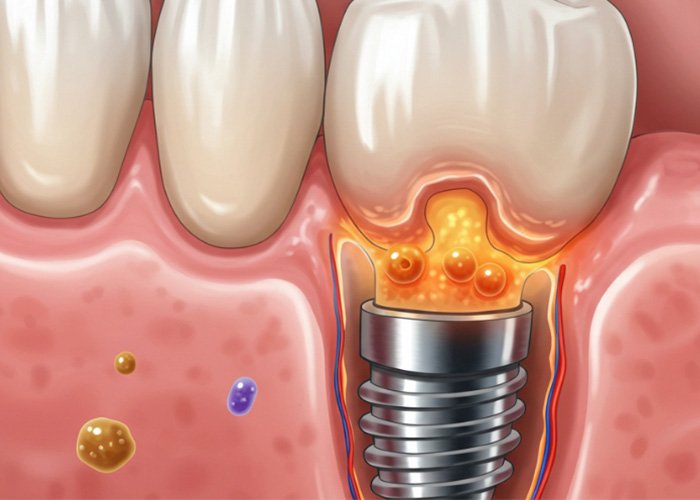
Early Changes Around the Gum and Implant
Early changes around the implant typically concern soft tissues and may include redness, tenderness, bleeding, and swelling. Bleeding in such cases is more common upon probing. These symptoms do not necessarily indicate an infected implant, especially if they occur without other symptoms. A correct diagnosis needs additional assessment by a dental professional.
When Pain, Swelling, or Bleeding Needs Prompt Assessment
Pain, swelling, and bleeding that persist or worsen beyond the expected period, or appear with pus discharge or implant mobility, should be promptly examined by a dentist. Your dentist will explain what symptoms may be normal during the initial recovery after the treatment. You can learn more about pain during recovery after an implant surgery here.
What Does an Infected Dental Implant Look Like?
Visual signs of an infected dental implant can include redness, swelling, bleeding, discharge, or a gum bump. However, visual inspection alone cannot confirm infection. Common minor symptoms of the initial recovery can sometimes resemble infection. Because of this, it is important to discuss the recovery and follow-up plan with the dentist.
Infection vs Normal Postoperative Healing
Some discomfort and swelling can occur during initial recovery, but persistent or worsening symptoms after implant surgery require a dentist examination.
Expected during early healing:
- Soreness
- Swelling
- Bleeding
- Bruising
Arrange dental assessment:
- If symptoms persist
- If symptoms get worse after day 2 after surgery
- If symptoms do not respond to recommended care (painkillers, cold compress, etc.)
Why Can a Dental Implant Become Infected?
Dental implant infection can develop when plaque-forming bacteria invade and cause inflammation of soft tissues and jawbone. Bacteria can accumulate on the implant and tissues near it. This can lead to infection due to various personal and general risk factors, such as poor oral hygiene, smoking, poor implant fit, and others.
Local risk factors:
- Improper implant or restoration fit;
- Implant surface roughness;
- Remaining dental cement;
Patient risk factors:
- History of gum disease;
- Smoking;
- Uncontrolled diabetes and other diseases;
Maintenance-related risk factors:
- Improper oral and implant hygiene;
- Lack of regular professional assessment.
Plaque, Oral Hygiene and Peri-Implant Tissue Inflammation
Plaque can contribute to the inflammation near the implant. Plaque-forming bacteria can form a biofilm on the implant or surrounding tissues, which protects them from the patient’s immune response and may help them penetrate the surrounding tissues.
Improper oral hygiene and implant care can allow the bacteria to proliferate and contribute to eventual infection. Actual oral hygiene needs can vary from patient to patient.
Gum Disease and Individual Risk Factors
A history of gum disease may influence the risk of implant infection, but it does not determine treatment outcomes on its own. Gum disease, smoking, and other systemic factors are considered when creating the patient’s treatment plan and post-surgery care guidelines. Following the dentist’s advice can help prevent or minimise infection risks.
Can Infection Develop Years After Implant Placement?
Yes, infection can develop many years after implant placement, not only during recovery, so it is important not to ignore possible symptoms. Regular dental assessments and maintenance may help discover and prevent implant infections before they become serious.
How Is Dental Implant Infection Diagnosed?
Dental implant infection diagnosis typically combines an examination of the patient’s dental history and a clinical assessment, possibly with dental imaging to compare the current bone condition with baseline. This is a comprehensive process, and a single symptom, image, or examination method cannot provide an accurate picture of the condition.
Stages of diagnosis:
- Dental history assessment;
- Clinical examination;
- Dental imaging, if necessary.
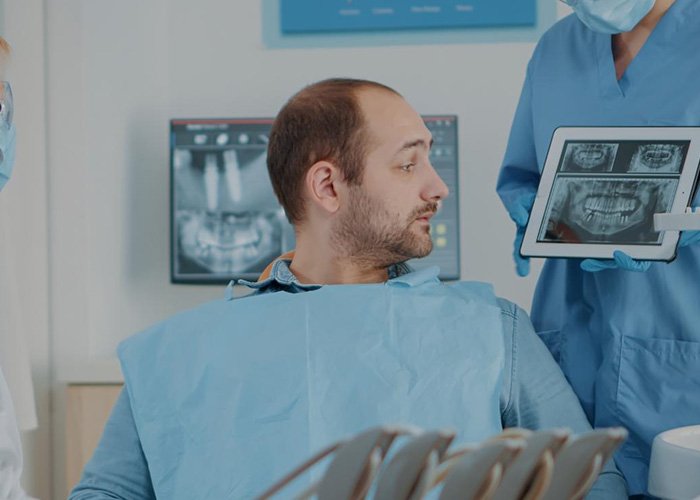
Clinical Examination and Dental History
Clinical examination and dental history assessment are the first step in diagnosing implant infection. The dentist examines the implant, surrounding tissues, and implant stability before deciding what other steps are necessary to confirm the preliminary diagnosis.
Can a Dental Implant Infection Be Seen on an X-Ray?
A dental X-ray can help compare the condition of the bone tissue around the implant with a previous radiograph. This may help detect reductions of bone volume and other changes in bone health. This alone may not be enough to confirm a current infection and should be considered with other symptoms and diagnostic methods for accurate diagnosis.
Why Symptoms and Photos Alone Cannot Confirm Infection
Symptoms and dental photographs can indicate that additional assessment is needed, but are not enough to establish a diagnosis or severity without in-clinic examination. For example, bone tissue changes may not appear on the photo, and symptoms similar to those of an infection may have other causes.
How Serious Is a Dental Implant Infection?
How serious an infected tooth implant depends on the affected tissues, available bone support, implant stability, and how the infection responds to professional care. Early assessment may deliver better treatment outcomes, but the results depend on the patient’s personal and clinical factors.
Bone Loss and Implant Mobility
Bone loss and implant mobility can indicate a serious problem, such as peri-implantitis, but both the cause and treatment options require clinical assessment. Lost bone tissue may sometimes be restored using bone grafts after the infection has been controlled, but the possibility of such treatment depends on the patient’s case..
Can an Infected Dental Implant Be Saved?
Some dental implants may be treated after an infection is addressed, but the possibility of saving them depends on the diagnosis, remaining bone support, stability, and how the infection responds to treatment.
When Dental Implant Removal May Be Considered
Dental implant removal may be considered if the patient’s response to treatment makes keeping the implant unsuitable or medical examination suggests this is the best course of action. This depends heavily on the individual patient’s condition, and extensive infection may increase the likelihood that implant removal may be necessary.
Feeling Unwell or Systemic Symptoms
Feeling generally unwell or experiencing flu-like symptoms alongside local changes around the implant requires prompt professional advice, but general symptoms can have many different causes. They are not automatically a sign of implant infection or failure. However, a consultation with a medical professional may help confirm the cause of both local and general symptoms and if they are linked.
How Is Dental Implant Infection Treated?
Dental implant infection treatment depends on diagnosis and severity of infection. It may include professional cleaning, risk control and implant care advice, or surgical care, if deemed necessary.
Treatment Depends on Diagnosis and Severity
Treatment of dental implant infection is determined after an in-clinic assessment. It depends on remaining bone support, implant stability, and the patient’s needs. Treatment duration and specific procedures may vary, and secondary or surgical care may be necessary when there is no improvement after a certain period.
Non-Surgical and Surgical Treatment Categories
Dental implant infection treatment usually starts with non-surgical procedures before moving to surgical ones, if necessary. Non-surgical treatments may involve professional mouthwashes, removal of retained dental cement, and general implant cleaning. Surgical treatments may include bone grafts, resective surgery, or removal of implant threads.
Can Antibiotics Clear a Dental Implant Infection?
Antibiotics may be used if the infection is severe or has spread beyond tissues near the implant. They do not replace diagnosis or broader treatment of the underlying problem. Antibiotic therapy duration is case-based and depends on infection severity.
What Should You Do If You Suspect an Implant Infection?
Arrange a dental assessment if you have persistent or worsening symptoms that may indicate an infection. This can include concerning swelling, discharge, implant mobility, or feeling unwell during initial recovery.
General course of action if you suspect an implant infection:
- Note changes or symptoms around the implant;
- Record their timing;
- Avoid self-treatment;
- Arrange professional dental assessment;
- Prepare and share implant treatment history and current medicine list with the dentist.
When to Arrange a Dental Assessment
Your dentist will give you a list of possible implant symptoms after surgery. Arrange an assessment if your symptoms are concerning, persistent, or worsening. Contact the dentist if the symptoms return after resolving initially. Symptoms such as pus discharge and implant mobility are not part of normal implant recovery and should be reported promptly.
Can You Treat a Dental Implant Infection at Home?
No, you cannot treat an implant infection by yourself, and no home recovery method can confirm the cause of an implant infection. Contact a dentist promptly if you suspect an infected implant. While the dentist may provide you with advice on temporary measures while you wait for an appointment, a dental implant infection home remedy is not enough to cure the cause of the infection.
What Information to Share with the Dentist
You can help your dentist make a more accurate, faster diagnosis by recording when the symptoms first began, how they progressed, when the implant was placed, and which medicines you are currently taking. Your general medical history and a list of major health conditions may also be relevant.
How Can Future Peri-Implant Problems Be Reduced?
Daily implant hygiene, as recommended by the dentist, and regular professional maintenance can help reduce the chance of future peri-implant issues.
An implant maintenance plan is individual to the patient and concerns the type of restoration, the patient’s capabilities, and personal needs.
Daily Implant Hygiene
Clean the areas around the implant and the prosthesis as advised by your dental team. You may be recommended to use implant-specific oral care products. Using them may help reduce the chances of infection and inflammation in your case. Report bleeding, swelling, discomfort, and implant mobility early to avoid further issues with the implant or the restoration.
Professional Maintenance Based on Individual Risk
Professional maintenance should consider treatment risks, implant condition, and dentist’s diagnosis. Some patients may need to visit a dental clinic more often to keep their implants safe. For example, a patient may need more frequent professional implant cleaning due to individual factors.

Medically reviewed by:
Dr. Onur Ademhan
Oral and Maxillofacial Surgeon
Founder and CEO of Perla Dental Clinics. Graduated from Ankara University Faculty of Dentistry and specialized in Oral and Maxillofacial Surgery at Gazi University.
FAQ About Dental Implant Infection
How Common Is Infection After Dental Implant Placement?
Infection and peri-implant disease are possible complications that may occur after implant placement or later. Their exact frequency varies by population, implant type, and follow-up period, but they are generally observed in a minority of cases.
Can a Dental Implant Infection Develop Years Later?
Yes, implant infection can develop in the tissues around the implant at any point during the implant’s service life. Because of this, bleeding, swelling, and other symptoms should be addressed promptly when they appear. Implant infection can progress faster than that affecting natural teeth.
Can an Infected Dental Implant Cause a Gum Bump?
A gum bump may signal implant infection and should be inspected by a dentist. However, it does not prove an underlying implant infection and may be caused by different conditions. Precise diagnosis requires an expert assessment.
Does an Infected Dental Implant Always Need to Be Removed?
No, implant removal is not guaranteed if there is an infection. Many cases can be treated non-surgically. Treatment depends on available bone support, stability, and response to the initial procedures.
How Much Does It Cost to Remove a Failed Dental Implant?
Implant removal costs vary with complexity and patient needs, so a precise price can only be confirmed after an individual assessment. Infection may need additional procedures after implant removal to address the bacteria.
Can a Dental Implant Infection Make You Feel Unwell?
Feeling generally unwell can have many causes, but local changes around the implant along with feeling unwell require prompt professional advice. Remember that the general and implant-specific issues may not be connected even if they occur at the same time. If general illness persists after addressing the implants, contact your general practitioner.