+90 534 226 60 59
  Mon - Fri: 9:00-18:00; Sat: 9:00-17:30; Sunday: Closed

Gum recession means that the margin of the gum tissue moves or pulls away, exposing more of the tooth, potentially increasing sensitivity, making the tooth more prone to decay, and making the teeth look longer. Treatment options depend on the scale and causes of gum recession. Treatment may involve managing the underlying cause and surgical root coverage.
This guide can help you learn more about what may cause gum recession, how it is treated, and how a gum recession treatment in Turkey may be planned.
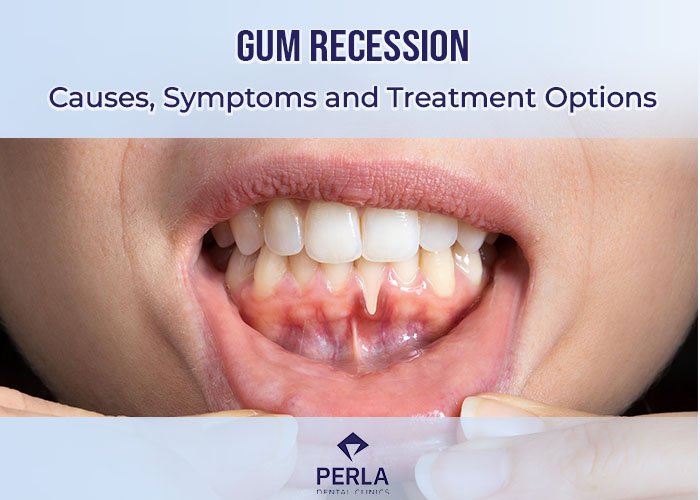
Table of Contents
What Is Gum Recession?
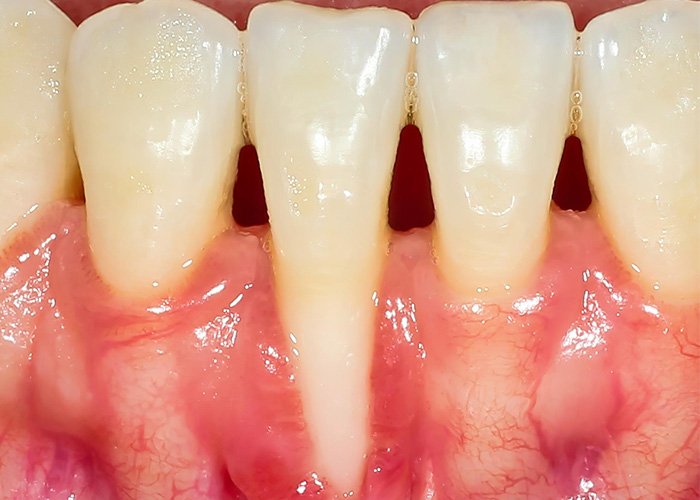
Gum recession is a condition in which the gum margin moves towards the root end of the tooth, possibly exposing more of the root, which can make the tooth look longer and lead to other complications.
Also called gingival recession, the condition can have different causes, affect one or several teeth, and progress into different recession types. The parts of the tooth exposed because of recession are not covered by enamel, making them less resistant to damage and bacteria. As such, gum recession is not only an aesthetic problem, but also a clinical one.
What Are the Symptoms of Gum Recession?
Gum recession symptoms vary, and only some of them may appear in each patient’s case. Possible signs of gum recession include:
- Tooth sensitivity;
- Elongated teeth;
- Notched gumline;
- Root exposure, appearing as a darker or yellowish area at the base of the tooth.
Teeth become more sensitive when the gums recede because this exposes the less protected parts of the tooth. Advanced gum recession can make the gums more prone to inflammation. If this happens, the patient can observe bleeding. However, this is not a guaranteed symptom of gum recession.
What Causes Gum Recession?
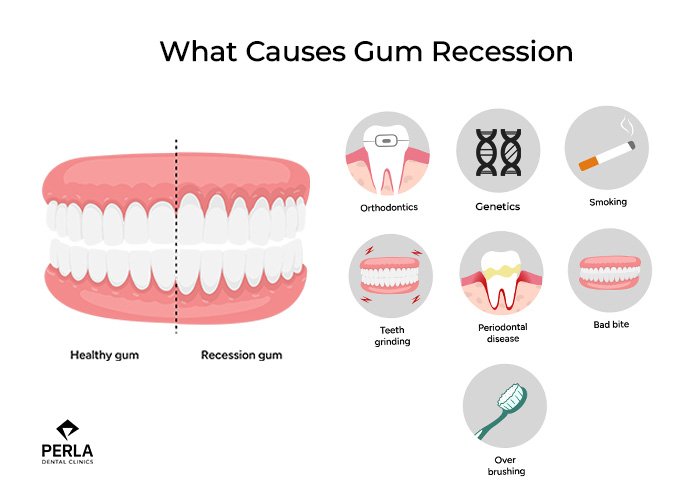
Gum recession can have multiple causes, as several factors influence its occurrence. This includes genetic predisposition, ageing, bruxism, physical trauma, gum disease, poor oral hygiene, and more.
Most cases of gum recession are due to a combination of the factors above, and it can occur even in patients with good oral hygiene and otherwise healthy teeth.
Gum Disease and Poor Oral Hygiene
Gum disease is a major contributing factor to gum recession. Infection and inflammation can affect the gums only (gingivitis), or also affect the jawbone (periodontitis). Periodontitis may lead to gum recession. Because of supporting bone or connective tissue loss, the gum margin may move, exposing more of the tooth.
Poor oral hygiene can lead to plaque formation, which increases the chances of gum disease and, consequently, gum recession.
Aggressive Tooth Brushing and Local Trauma
Aggressive tooth brushing and other causes of local physical trauma may damage the gums. Repeated mechanical trauma increases the possibility of gum recession. Susceptible patients may be recommended to use softer toothbrushes and less abrasive toothpaste to avoid damaging the gums. Changing the brushing technique away from harsh horizontal motions to gentler swipes away from the gums may also help, if advised by the dentist.
Smoking, Bruxism and Other Contributing Factors
Smoking and bruxism (teeth grinding) may accelerate gum recession or make it more likely to occur. Nicotine dependence has a comprehensive negative effect on the patient’s oral health. It disrupts normal blood flow, promotes bacterial plaque formation, and may mask existing symptoms of gum recession.
Bruxism may make teeth flex at the gum margin or promote bone loss in patients with existing gum disease, which makes recession more likely. It is not a major risk factor for gum recession, but may contribute to it along with other factors.
Genetics, Thin Gums, Tooth Position and Orthodontics
People with a thin gingival phenotype, whose gums are naturally thinner at the margin, are statistically more prone to gum recession. Tooth position and orthodontic issues may also affect the chances of gum recession. For example, crowded teeth can make them difficult to clean, while tilted teeth may have less natural support, increasing chances of periodontal conditions.
Is Gum Recession Serious?
Untreated gum recession can lead to different dental issues, including tooth sensitivity, root caries, and non-carious lesions. It may also cause aesthetic concerns, such as elongated teeth and root exposure.
Because tooth roots are not protected by enamel, they are softer and more prone to damage if exposed. Exposed roots caused by recessed gums are vulnerable to bacteria, which can lead to serious cavities.
Gum recession may reflect underlying bone loss. These issues may lead to tooth mobility and increase the chances of tooth loss. However, the exact consequences of gum recession depend on the patient’s case.
Can Receding Gums Grow Back?
Receded gums do not grow back by themselves, but gum recession may be managed through surgical root-coverage procedures. They allow the dentist to move or add soft tissue to the affected area, effectively stopping or reversing gum recession.
Stopping gum recession means preventing the gum line from retreating further and restoring the connection between the soft and hard tissues. The surgical treatment is effectively a transplant. It does not make the gum tissue grow back; instead, it covers the receded area by moving existing tissue. Non-surgical management may also stop further gum recession, but it does not cover the recessed areas.
How Is Gum Recession Diagnosed?
Gum recession is diagnosed through professional dental examination and measurement of gum attachment loss. In some cases, X-ray imaging may also be used.
Loss of gum attachment may be measured with a periodontal probe. By inserting the probe into the gum pockets, the dentist can compare the differences between interproximal and buccal attachment losses. This allows the dentist to classify the recession into one of three types, which differ in severity.
Gum recession diagnosis also involves determining its cause. Resolving the underlying causes of recession is a crucial step in stopping it.
How Is Gum Recession Treated?
Gum recession treatment may involve surgical procedures and non-surgical management. Treatment depends on the cause and severity of gum recession, and the patient’s overall periodontal health.
Non-Surgical Gum Recession Treatment
Treating gum recession without surgery is possible in mild cases that are caused by issues such as improper oral hygiene technique, plaque buildup, and non-severe gum disease. Management strategies may involve various in-clinic procedures and advice aimed at changing the patient’s behaviour.
Gum recession may be caused by inflammation from uneven or rough dental restoration surfaces. Correcting these issues may also be part of non-surgical treatment. Successful nonsurgical management of gum recession stops it from progressing further, but does not necessarily restore the gingival margin to its original state.
Gum Graft and Surgical Treatment
Gum grafts and other surgical treatment options are considered for more severe cases, where restoring the gingival margin is important for aesthetic and functional goals.
Gum and connective tissue grafts transplant tissue to restore the lost soft tissue in the area of recession. In a coronally advanced flap technique, the dentist makes incisions and repositions gum tissue towards the tooth to cover the exposed area. In some cases, dermal and collagen matrices may be used to avoid harvesting graft tissue from the patient.
The outcomes of surgical gum recession treatment may vary, and complete root coverage is not always achievable.
How Does a Dentist Choose the Right Treatment?
The choice between non-surgical management and gum graft for receding gums depends on the cause, the patient’s gingival phenotype, recession severity, and treatment goals.
Because treatment depends on many factors, two patients with the same type and scale of gum recession may require different solutions.
| Treatment | Main purpose | Surgical | Typical use |
|---|---|---|---|
| Periodontal treatment | Control disease | No | Active periodontal inflammation |
| Desensitising treatment | Reduce sensitivity | No | Exposed root |
| Connective tissue graft | Root coverage/tissue augmentation | Yes | Selected recession defects |
| Coronally advanced flap | Root coverage | Yes | Selected recession types |
Is Gum Graft Surgery Safe and How Long Does Recovery Take?
Gum graft surgery is generally considered safe. However, it is a surgical procedure, so a complication-free recovery cannot be guaranteed. The chance of potential side effects is generally low, and a dentist can address them if they occur.
Risks and Possible Complications
Possible gum graft complications include:
- Infection;
- Bleeding;
- Graft Failure;
- Partial Root Coverage;
- Recession recurrence.
Some short-term effects are considered normal during initial recovery after the surgery. These include minor bleeding (if graft material was taken from the patient), swelling, and soreness. Severe bleeding or swelling, pus discharge, graft motility, and other worrying symptoms are not part of normal recovery and should be reported to the dentist.
Recovery and Aftercare
Gum graft surgery aftercare includes measures to protect the graft site from mechanical damage and aid healing and gum tissue maturation.
Typical recovery timeline after gum graft surgery:
- First days after surgery: Peak swelling and soreness. Graft may look white or grey. Patient should prioritise rest. Liquid and soft foods only.
- Towards the end of the first week after surgery: Swelling and soreness begin to subside at the graft site. Patient may incorporate soft foods that do not require chewing on the graft side. The patient may return to work if it is not physically demanding.
- Second week after surgery: There should be minimal or no discomfort at this stage. Graft tissue should begin transitioning to a normal colour. The patient should avoid very hard, crunchy, spicy, or acidic foods.
- Third week and beyond: The graft site should begin to match the surrounding gum tissue in colour, though colour maturation may take longer in some cases. The patient may be able to return to normal diet and exercise levels, though the dentist may recommend avoiding biting into very hard foods on the graft side for longer.
The patient should follow the dentist’s oral hygiene recommendations during recovery. Patients should avoid smoking and take the prescribed medication as instructed by the doctor.
Can Gum Recession Come Back After Treatment?
Gum recession recurrence may happen because of new oral conditions or treatment failure. A gum graft does not guarantee protection against gum recession, and long-term success depends on preventing the underlying causes from returning.
Gum graft lifespan and long-term success can depend on:
- Diagnosis of underlying causes;
- Surgical technique;
- Oral hygiene;
- Periodontal stability;
- Smoking;
- Mechanical trauma;
- Genetic factors and patient-specific anatomy.
Can You Have Dental Implants With Receding Gums?
You may be able to get dental implants with receding gums if the recession isn’t active, the underlying causes are identified and treated, and the recession doesn’t negatively affect implant surgery prognosis.
To place dental implants in Turkey, you should not have active gum disease. If you have untreated periodontitis, it should be resolved before planning implant treatment.
If you have lost the necessary soft tissue or underlying bone support, the dentist may restore it surgically with soft tissue or bone grafts. The possibility and timing of such treatment depend on the individual clinical case. For more details, read our article about how a dental implant treatment is planned.
Gum Recession Treatment in Turkey
Gum recession treatment in Turkey may be a suitable option for patients who prefer dental tourism because of potentially lower costs, treatment selection, or as part of a dental holiday.
A preliminary treatment plan for a gum recession procedure may be created after a remote consultation. The patient should confirm what services are included in the price, the duration of the stay in Turkey, and details about transfers, accommodation, and any additional services.
What Affects the Cost of Treatment in Turkey?
The cost of a gum recession treatment in Turkey depends on the type of procedure, its scale, and which underlying causes need to be addressed.
Surgical and non-surgical procedures for managing gum recession differ in price. Surgical procedure prices also depend on the type of graft material used and how many sites are involved.
As such, the total treatment quote depends on the patient’s clinical case and can be confirmed only after a dental assessment. A patient may obtain a preliminary quote after a remote consultation, but the final cost can only be determined after the dentist diagnoses the underlying causes of recession.
When Should You See a Dentist About Gum Recession?
We advise visiting a dentist early if you suspect gum recession to prevent further movement of the gum margin. Possible signs include:
- Visible tooth roots, which may appear as darker or yellower areas near the gum margin;
- Notches in the gum line;
- Increased tooth sensitivity;
- Visibly longer teeth.
Don’t wait until the gum recession gets serious. If you notice gum recession or its signs, a dental check-up can help identify the underlying causes and determine whether treatment is necessary. Request a remote dental assessment at our clinic to receive a preliminary diagnosis and develop a potential treatment plan.

Medically reviewed by:
Dr. Onur Ademhan
Oral and Maxillofacial Surgeon
Founder and CEO of Perla Dental Clinics. Graduated from Ankara University Faculty of Dentistry and specialized in Oral and Maxillofacial Surgery at Gazi University.
FAQ About Gum Recession
Can Gum Recession Happen on Just One Tooth?
Yes, gum recession can be local to just a single tooth. This can happen due to mechanical trauma that affects only one tooth, tooth anatomy, or other factors. It is also possible for multiple teeth to have different underlying causes of gum recession.
Is Gum Recession Normal With Age?
Ageing is a factor that makes gum recession more likely, but it is not an expected physiological change. It may signify underlying changes in jawbone or soft tissue support, and should be examined by a dentist. This may help protect your teeth from further damage, including potential tooth loss.
Is Gum Graft Surgery Painful?
Gum graft surgery is performed under anaesthesia, but healing takes some time, so postoperative soreness and discomfort are expected for most patients. How uncomfortable the surgery and recovery are depends on the individual patient and treatment scale. In general, postoperative pain may be managed with painkillers, which may be recommended or prescribed by the dentist.
Can a Gum Graft Fail?
Yes, a gum graft may fail. Gum graft failure may be due to physical disturbance, biological incompatibility, unresolved underlying health issues and other factors. Following the dentist’s aftercare recommendations may help prevent gum graft failure.
How Long Does a Gum Graft Last?
Long-term gum graft success depends on the patient’s periodontal health, tooth brushing technique, smoking, post-surgery maintenance, and the severity of the original defect. Gum recession may recur due to new gum disease, mechanical trauma, or other issues. Maintaining good oral hygiene, visiting the dentist regularly, and managing the underlying cause of gum recession may help prevent recurrence.