+90 534 226 60 59
  Mon - Fri: 9:00-18:00; Sat: 9:00-17:30; Sunday: Closed

Comparing mini dental implants vs regular implants can help you understand your dentist’s recommendation. Mini and regular implants may differ in size, bone requirements, functional capacities, and cost.
Patient suitability for each implant type depends on the individual case. This article can help you prepare questions about why your dentist may recommend mini or regular implants.
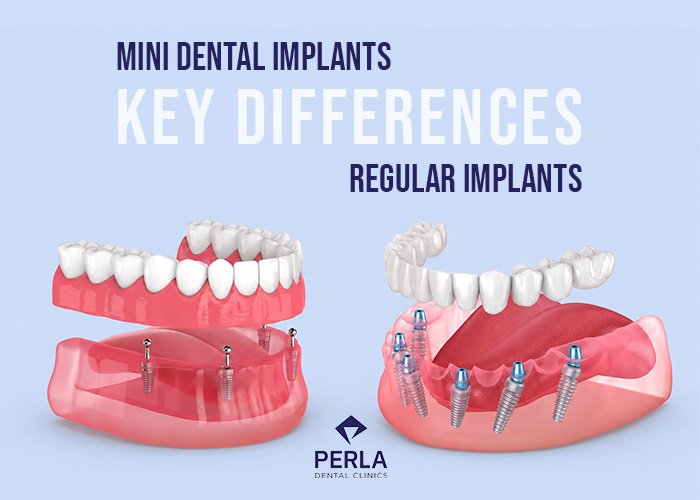
Table of Contents
Mini Dental Implants vs Regular Implants at a Glance
Mini dental implants differ from regular implants in size, design, indications, and treatment requirements. You can learn more about mini dental implants in our article. Your implant type choice may depend on your oral health and treatment goals. Which option is chosen depends on the results of a professional evaluation.
| Factor | Mini Dental Implants | Standard Implants |
|---|---|---|
| Diameter and design | Usually smaller than 3mm in diameter, one-piece design | Usually more than 3mm in diameter, two-piece design (implant and abutment). |
| Typical restoration | Overdentures | Fixed restorations (crowns or bridges) |
| Planning and bone condition considerations | Less demanding of the jawbone condition. | Demand more jawbone volume and density. |
| Procedure and healing | Less-complex surgical procedure. May require less healing time. | Surgery protocol differs by implant and case. May require more healing time. |
| Function and load | May support a more limited load. | May support higher loads. |
| Maintenance and Limitations | Typically used for retaining removable prostheses, which may be easier to maintain for patients with limited mobility. More than two implants may be needed due to the narrow diameter. | Maintenance difficulty depends on the type of prosthesis used. Requires sufficient jawbone volume, width, and height to place. |
| Cost factors | Tend to be cheaper. | Tend to be more expensive. |
The table above can help you compare the two treatments. The final decision depends on the result of the dental evaluation.
What Are the Key Differences Between Mini and Regular Dental Implants?
Differences between mini implants and conventional implants include size and design, treatment planning, primary use cases, and treatment value. How important these factors are for treatment results depends on the patient’s condition and goal.
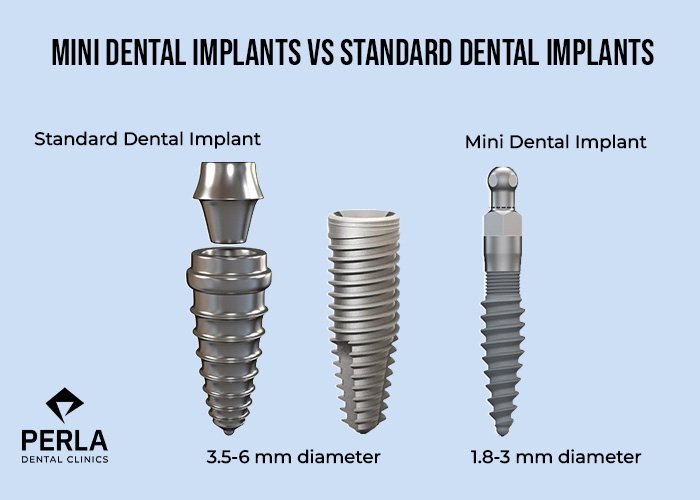
Size and Design
Mini implants are usually smaller than 3 mm in diameter and shorter in length than standard-size implants. Dental implant size terminology can vary, however, and not all small-diameter or narrow implants are classified as mini implants.
Mini implants are single-piece, with the head and screw fused. Conventional implants are typically two-piece, with separate abutment and screw, but one-piece conventional implants also exist.
Procedure, Healing, and Bone Requirements
The complexity of a dental implant procedure can depend on available bone, the condition of the treatment site, the implant system, and the patient’s clinical needs.
The surgical procedure for mini dental implants is usually less complex than that for conventional implants. Lower implant diameter and length mean that, in many cases, mini implants require less jawbone volume and dimensions than conventional implants. This may make them suitable for patients with bone loss who want an alternative solution to conventional dentures.
Strength, Function and Longevity
Dental implant longevity and function depend on design, position, load, and maintenance. One study established a 12-month mini implant survival rate of 89% for 4 mini implants and 82% for 2 mini implants when used to retain a mandibular overdenture. Survival rates for other restorations and implant types can vary from these numbers. During treatment planning, the dentist will determine an appropriate implant and prosthesis configuration to provide a suitable tooth restoration for the patient’s case.
Cost and Long-Term Value
Cost comparisons of implant treatments should consider not only the price of implants themselves but also the components of the treatment plan, maintenance, and future care.
Implant treatment price can vary from patient to patient because of differences in the number of implants required, the type of restoration used, the materials, and any additional procedures performed before and after implant placement.
The long-term value of an implant restoration depends on patient goals and needs. Mini implants may offer good long-term value in cases where the patient needs a solution for retaining overdentures, especially if the jawbone condition precludes or complicates placement of conventional implants.
Who May Be Considered for Mini or Regular Dental Implants?
Placing dental implants requires thorough examination, dental imaging when necessary, and a case-specific treatment plan. Patient suitability can vary depending on the clinical case.
The dentist may assess the following factors when determining the patient’s suitability for implant treatment:
- General and oral health;
- Available jawbone density and volume;
- Tissue condition at the implant site;
- Prosthesis type;
- Patient goals.
A candidate for mini dental implants should meet the clinical requirements before surgery. While mini implants may sometimes be placed in patients ineligible for standard implants, it does not mean that mini implants are suitable for every case. Eligibility for mini and conventional implants is determined during a dental examination.
Ask for a personal dental assessment to discover which implants may be appropriate for your case. A remote consultation with our clinic can provide you with a personal treatment plan based on your dental photos, X-rays, and other available imaging.
What Should You Ask Before Choosing an Implant Type?
Before choosing between mini and regular implants, you should ask the dentist how the recommended treatment and restoration will fit your anatomy, how functional it may be, and what the risks, maintenance, and total cost of the treatment are.
You may want to ask these or similar implant treatment questions:
- Are dental implants a suitable solution for my case?
- Which type of prosthesis can be used to restore my teeth?
- Will I require additional procedures before placing the implants?
- What are the risks of placing mini or regular implants in my case?
- What alternatives to regular/mini implants are there that are suitable for my case?
- What is the possible total cost of the treatment when placing regular and mini implants?

Medically reviewed by:
Dr. Onur Ademhan
Oral and Maxillofacial Surgeon
Founder and CEO of Perla Dental Clinics. Graduated from Ankara University Faculty of Dentistry and specialized in Oral and Maxillofacial Surgery at Gazi University.
Frequently Asked Questions
What Is the Downside of Mini Dental Implants?
A mini dental implant may not suit every case that requires high functional demand or strength from the implant body. More than one mini implant is typically required for most use cases, and their survival rate tends to be slightly lower than that of conventional implants. There is also less data on long-term use of mini implants currently.
Are Mini Dental Implants Actually Smaller?
Mini implants are generally smaller than conventional implants. They are generally considered one-piece implants that are smaller than 3 mm in diameter and length. Clinical definitions can vary; however, not all reduced-size implants are considered to be mini implants.
How Painful Are Mini Dental Implants?
Discomfort during recovery after mini implant placement varies with each individual patient, procedure, and treatment site. The type of anaesthesia used during surgery depends on the implant treatment plan. Generally, the procedure and recovery are well tolerated, but following the dentist’s recovery advice is crucial for good results.
How Much Does a Full Set of Mini Dental Implants Cost?
Prices for a full set of mini dental implants vary depending on the number of implants, the patient’s case, restoration type, diagnostics, additional procedures, and follow-up. Mini dental implant treatments can address different types of tooth loss, which may also influence the price. Treatment cost may be determined after a dental check-up.
How Long Do Mini Implants Last?
The service life of mini dental implants varies with load, prosthesis type, indication, planning, and patient-specific factors. For example, a 2024 study reports a 76% survival rate for mandibular overdentures retained by mini dental implants after 7 years. The survival rate of mini implants used to retain other restoration types may differ and can depend on follow-up examinations and proper implant care.
Are Mini Implants the Same as Snap-In Dentures?
Mini implants and snap-in dentures are distinct parts of a possible tooth replacement system. Implants can retain certain types of removable dentures, but they are a supporting component, not the prosthetic teeth themselves. The implants are the parts inserted into the jawbone and can retain different types of dentures or support a fixed restoration.