+90 534 226 60 59
  Mon - Fri: 9:00-18:00; Sat: 9:00-17:30; Sunday: Closed

Front teeth dental implants are dental restorations that replace both tooth roots and crowns of missing front teeth. In this article, we outline the specific benefits and types of implants used for front teeth.
Information about other types of dental implants in Turkey is available on the treatment page.
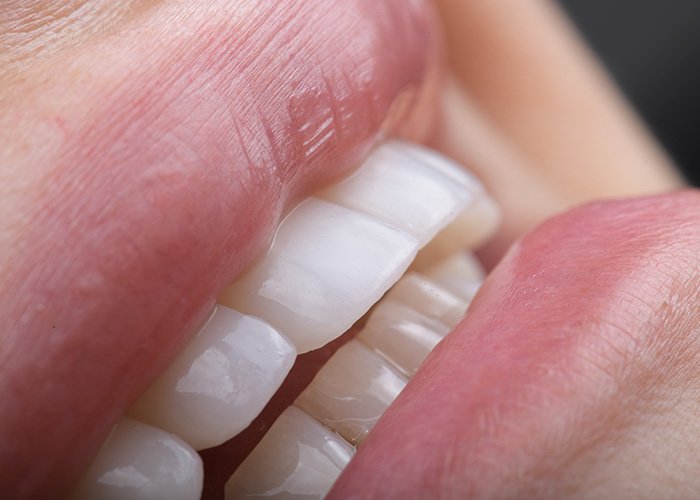
Table of Contents
What Is a Front Tooth Implant?
A front tooth implant is an advanced dental restoration that, like other implants, can support dental crowns or bridges.
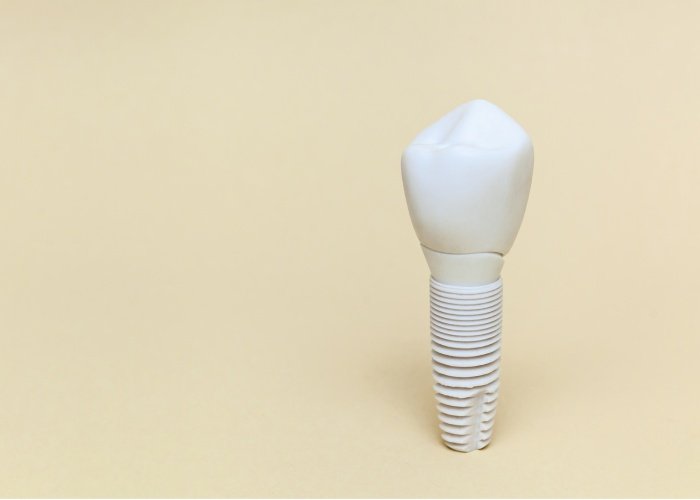
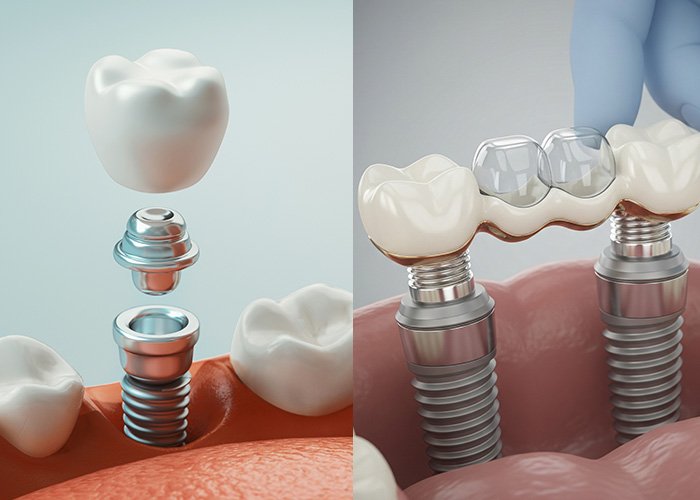
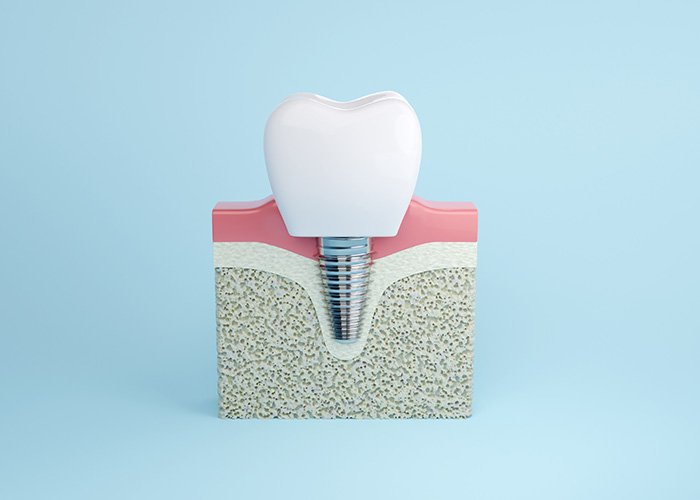
The implant fixture, which is inserted into the jawbone, replaces the tooth’s root, while crowns and bridges (dental prosthetics) restore visible parts of the teeth. The fixture and the prosthetic are often connected by an abutment.
Dental implants for front teeth focus on issues specific to teeth in the aesthetic zone, where the appearance of the dental restoration is very important.
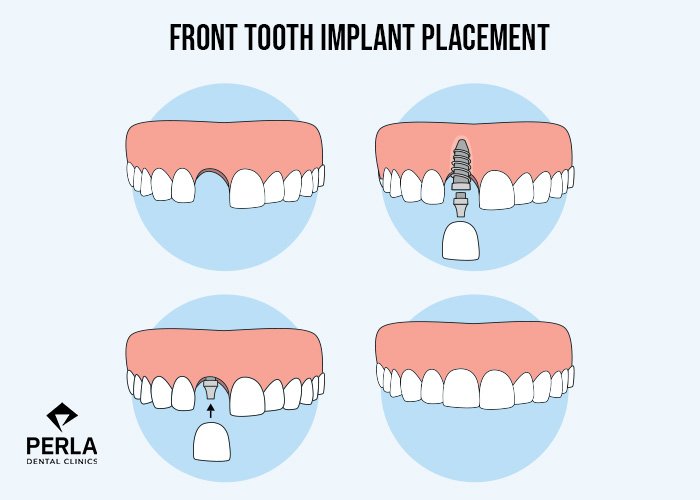
The Importance of Restoring Missing Front Teeth
Your front teeth play functional and aesthetic roles. A missing anterior tooth is immediately noticeable and completely changes a person’s appearance. Furthermore, missing teeth negatively impact speech.
This can have a profound influence on patient self-perception and can lead to the movement of adjacent teeth. When implants replace a missing tooth, patients get a fixed restoration that looks and feels much closer to natural teeth than removable prostheses.
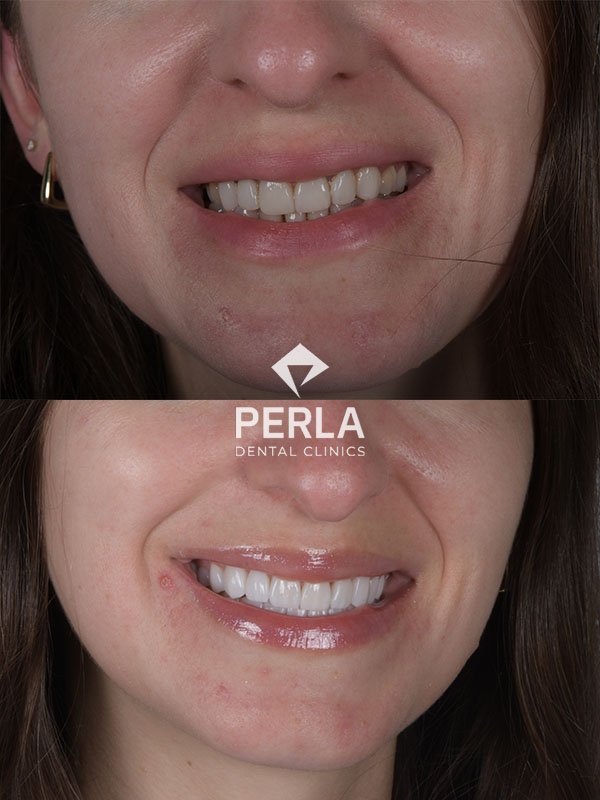
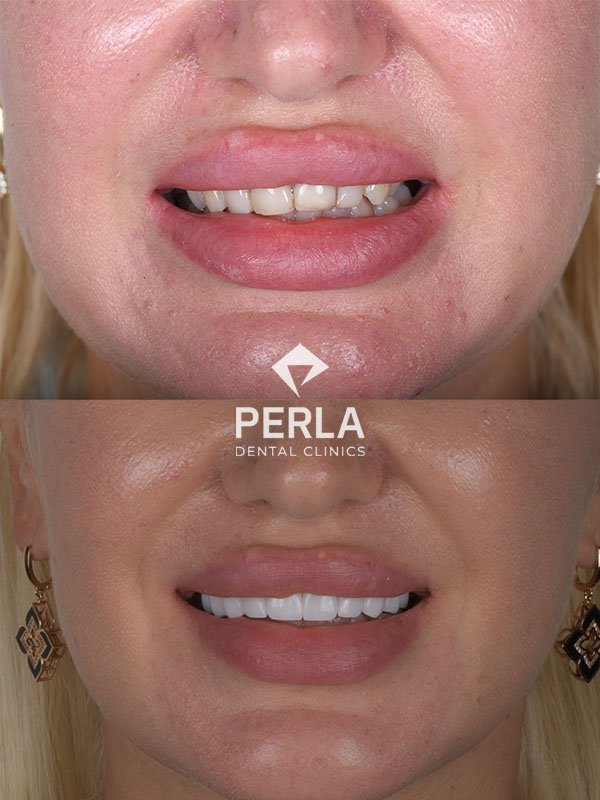
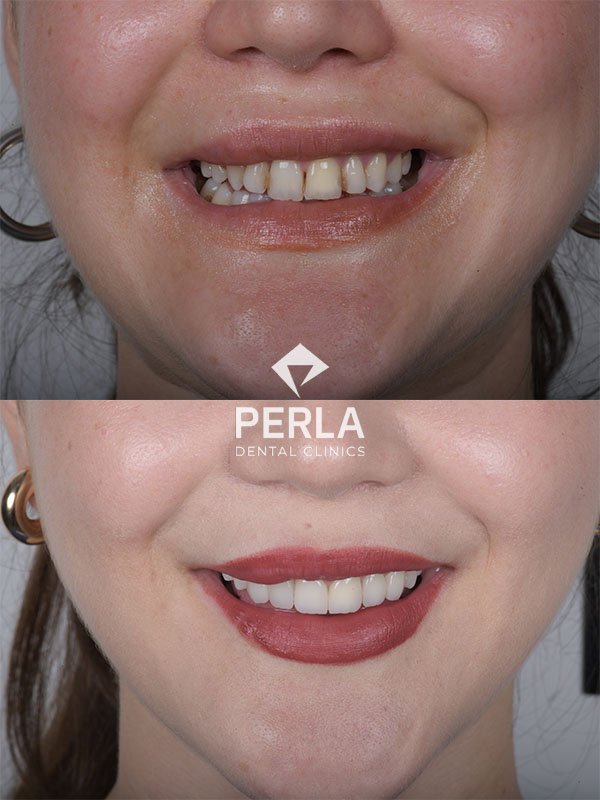
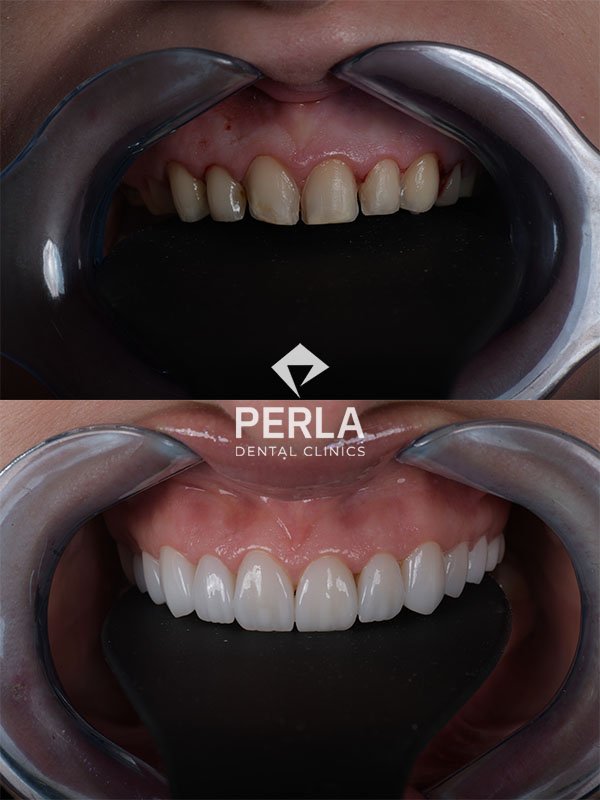
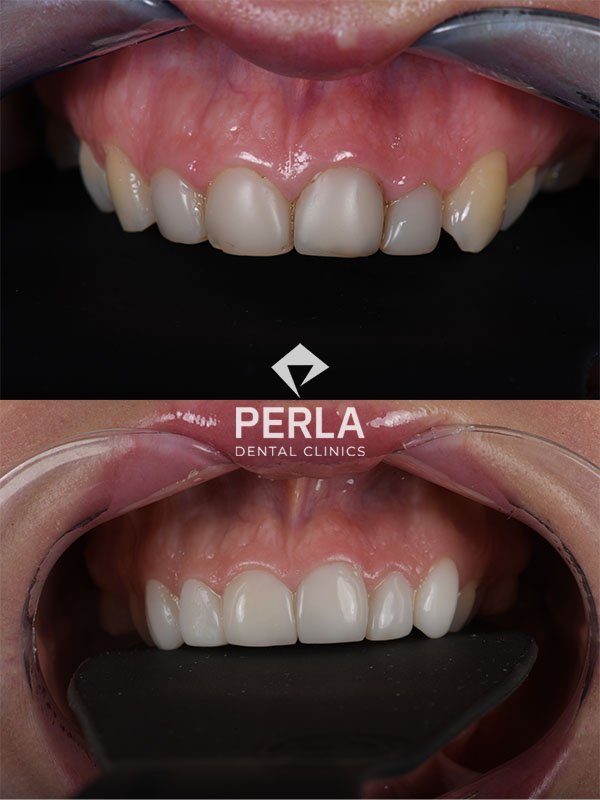
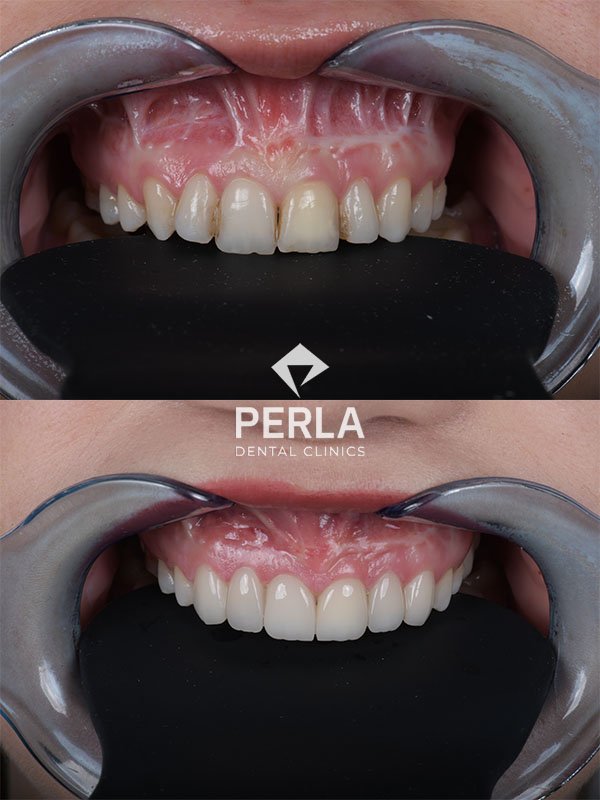
Front Teeth Dental Implants Before and After
Replacing a missing front tooth can immediately improve your smile. Our patients’ before and after photos reflect the profound changes possible thanks to front teeth implants.
Benefits of Front Teeth Dental Implants
Dental implants provide the following advantages:
- Prevent bone loss and preserve facial proportions.
- Reduce the chances of losing adjacent teeth due to their movement.
- They require no preparation of adjacent teeth.
- The closest restoration to natural teeth.
Who Can Get Front Tooth Dental Implants?
Anterior tooth implants can be placed when the patient has no temporary or absolute contraindications to treatment. These are patients whose jawbones have completed development and who have adequate oral and dental health.
Common contraindications for the treatment include:
- Gum
- Uncontrolled diabetes.
- Autoimmune disorders.
- Haemophilia and other diseases that prevent blood clotting.
- Ongoing bisphosphonate therapy.
The condition of the jawbone at the surgery site is also important. When jawbone density or volume is insufficient, the patient may require a bone graft before replacing a missing front tooth.
How Does a Front Tooth Implant Differ from Other Implants?
Just like other types of dental implants, front teeth implants replace missing or damaged teeth, particularly incisors and canines.
Restoring front teeth places a high demand on the aesthetic value of the artificial tooth. Unlike posterior teeth, which are inconspicuous when one talks, front teeth are highly visible. As such, front teeth implant procedures aim to provide immediate temporary crowns if the patient’s jawbone is in good condition.
The amount of tissue loss differs between patients. This is taken into account when planning anterior tooth restorations, with particular attention given to the restoration’s materials and proportions to ensure a natural appearance.
Types of Dental Implants for Front Teeth
A planned tooth extraction procedure consists of several stages. While surgical extraction is more complex, its stages are mostly in addition to those of simple extraction. The typical procedure stages are outlined below.
Zirconia Implants
Zirconia dental implants are a highly natural-looking option for front teeth. They are made of zirconium dioxide, a biocompatible ceramic material. Zirconia fixtures are white and are less likely to look out of place in patients with thin gums or at risk of further gingival recession. This helps avoid the ‘grey shine’ that is possible with metal fixtures.
Many zirconia tooth implants are one-piece, which means they lack a separate abutment. This can make it difficult to adjust the angle after placement, so they are less suitable for cases where accurate placement is challenging due to unusual bone morphology or other issues.
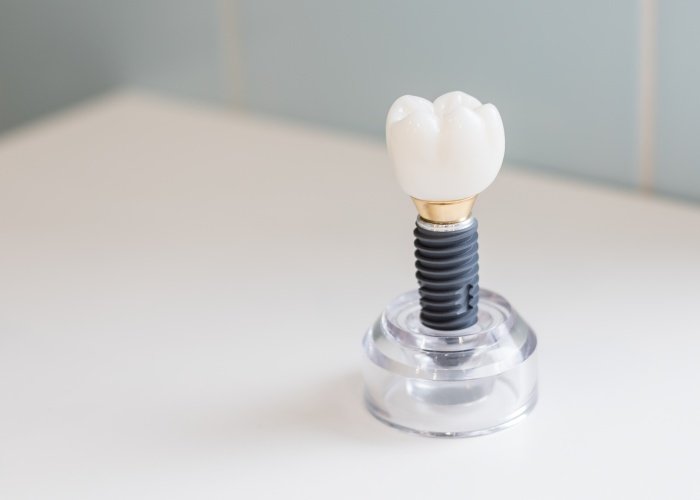
Titanium Implants
Made from commercially pure metal or an alloy, depending on the brand, these implants are durable and come in a greater variety of diameters than those available for zirconia.
Because of their grey colour, these implants may show through if the patient’s gums are very thin. However, their wider range of diameters and special fixture surface treatments make them preferable in cases where the patient’s jaw dimensions are limited.
These tooth implants are often two-piece and use a separate abutment. In most cases, using a zirconia abutment can alleviate cosmetic concerns.
Single Tooth Implant
Single-tooth implants use a single front dental implant post for each replaced tooth. This is the preferred type of implant when the patient requires only one replacement tooth or when the missing teeth are not consecutive. In single-tooth implants, each fixture supports a single dental crown.
Implant-Supported Bridge
Implant-supported bridges contain two or more tooth implants and replace several consecutive missing teeth. Instead of relying on permanently altered adjacent teeth for support, an implant-supported bridge is supported only by fixtures placed in the jawbone, preserving the healthy surrounding teeth.
Mini Implants
Mini implants are one-piece screws that can be made much thinner than traditional tooth implants. They are typically used in cases where the present bone width precludes the placement of conventional dental fixtures. Due to their size, they can not support high loads.
Usually, several mini tooth implants are placed as supports for removable overdentures, which can replace several missing teeth.
Mini implants can be used in some cases where no bone augmentation is possible, or the patient’s jaw width is insufficient for standard-diameter fixtures.
| Implant Type | Primary advantage | Key consideration |
|---|---|---|
| Zirconia | Metal-free, similar to natural tooth root in colour | Limited availability of two-piece solutions; Higher price |
| Titanium | Very durable, better availability of two-piece solutions | Not suitable for people sensitive to metals. Less suitable for patients prone to gingival recession. |
| Single-tooth implant | Does not affect neighbouring teeth. Closest to natural teeth in form. | Places higher requirements on the jawbone density. |
| Implant-supported bridge | Restores multiple teeth with fewer posts | Requires special cleaning techniques and tools |
| Mini-implants | Less invasive, simpler placement procedure. Suitable for a narrow jawbone. Less expensive. | Not suitable for areas of higher bite force. Possible higher failure rate. |
Which Implant Works Best for Front Teeth?
When choosing dental implants for the front teeth, the type to use depends on the patient’s needs and budget. No implant offers advantages that render other types obsolete in all cases.
Zirconia fixtures are used when exceptionally natural-looking restorations are a priority, or the patient is sensitive to metal. However, the patient’s jawbone should allow proper placement of zirconia fixtures.
Titanium fixtures are available in many configurations, surface treatments, and diameters. They are preferable for maximum durability and are usually less expensive than zirconia.
The choice between single-tooth restorations and implant-supported dental bridges depends on the number of adjacent teeth that are lost. Single-tooth restorations are the most similar to natural teeth, but they require more healthy bone and can be more expensive.
Front Tooth Implant Procedure
The dental implant process for anterior teeth consists of four steps: two treatment stages separated by a recovery period that lasts several months, and a dental examination that precedes them. The patient needs to make two visits to Turkey for this dental treatment.
The procedure steps are as follows:
Dental examination and planning
The patient undergoes a CT scan and consultation to assess current dental health and create a personalised treatment plan.
Implant placement
The dentist places implant fixtures under local anaesthesia. The placement procedure depends on the type of fixture, but, when possible, the immediate-loading protocol is used. This means the patient receives a temporary prosthesis immediately or shortly after dental surgery.
Recovery and osseointegration
Once the fixtures are placed, the patient needs several months to half a year to recover from the surgery. During this period, the implant integrates with the jawbone, creating a strong connection similar to that of a natural tooth root.
Permanent prosthesis loading
Once the fixture osseointegration is complete, the patient returns to Turkey for permanent prostheses. These new tooth prostheses are manufactured based on post-recovery dental scans.
Risks and Complications
Common side effects include minor bleeding, swelling, and bruising. These are expected during the first week of recovery, are manageable, and should pass within several days to a week after surgery. Implants have a high success rate of over 95%, so while more serious complications are possible, they are rare and can be treated.
| Complication | Probability | Solution |
|---|---|---|
| Advanced peri-implantitis | 6-10% | Professional cleaning, removal of infected tissues |
| Abutment screw loosening | 7-12% | Have the abutment screw tightened or replaced at the dental clinic. |
| Osseointegration failure | 2-5% | Removal and replacement |
Recovery Process
While full recovery takes several months, the first weeks are the most important. The initial recovery should pass as follows:
- Day 1-3: Pain at the surgery site and swelling peak on day 2. These symptoms can be reduced with painkillers and ice compresses.
- Day 4-7: Gradual decrease in post- surgical pain and swelling. While some bruising may remain, it should begin to fade.
- Week 2: Post-surgical pain, swelling, and bruising should resolve by the end of this week.
If you feel that your recovery deviates from this timeline or you experience unusual symptoms, contact the dentist as soon as possible.
How Much Do Front Teeth Dental Implants Cost in Turkey in 2026?
Placing a front tooth implant costs up to 70% less in Turkey than in the UK. While precise prices vary depending on the brand and treatment type, lower overheads allow clinics in Turkey to offer more competitive prices.
| Treatment type | Price in Turkey | Price in the UK |
|---|---|---|
| Zirconia single-tooth implant | £650-£1600 | £3000-£4500 |
| Titanium single-tooth implant | £400-£1000 | £1600-£3000 |
| Implant-supported bridge | £800-£2500 | £3500-£7000 |
| Mini-implants | £300-£1200 | £700-£1500 |
Restore Your Smile by Replacing Front Teeth at Our Clinic in Antalya
If you have missing front teeth, replacing them promptly is critical for maintaining your smile. Book a free online consultation at our clinic to learn more about our treatments and receive a personalised quote for high-quality implants from Straumann, Nobel Biocare, and Astra Tech, starting at £430.
Frequently Asked Questions About Front Teeth Dental Implants
Are Front Teeth Implants Safe?
Yes, this is a safe and effective restoration. While the jawbone tends to be quite thin near anterior teeth, great care is taken to ensure safety and aesthetic results.
What Is the Success Rate of Front Teeth Implants in Turkey?
These implants are successful in 95% of cases. The long-term survival rate depends on the amount of durable bone that can support the implant and the patient’s oral hygiene.
How Much Does a Front Tooth Replacement Cost in Turkey?
The cost of an anterior tooth replacement in Turkey ranges from £300 to £1600 per implant. The actual price can vary with the quality of the material used for the fixture and prosthetic teeth.
What Is the Best Implant for Front Teeth?
No type of tooth implant is definitely the best when replacing front teeth. The choice depends on which type is more likely to provide the patient with a perfect smile.
Do Front Teeth Implants Have Natural Aesthetics?
Yes, front tooth implants restore your smile and provide a natural appearance. The restoration’s materials and proportions are chosen to achieve aesthetically pleasing results, even when bone resorption or other dental issues prevent restorations from matching the original dimensions of the dentition.
Is Front Tooth Implant Treatment Painful?
The surgery is conducted under anaesthesia and is well-tolerated by most patients. Some mild pain can be experienced after the surgery and is manageable with painkillers.
What Is the Lifespan of Front Tooth Implants?
The lifespan of front tooth implants varies with type, but is generally more than 20 years. The prostheses placed on them may have a slightly shorter lifespan, but can be replaced without additional surgeries.
Can Mini Implants Be Used for Front Teeth?
Mini implants can be used for restoring front teeth, especially as supports for removable overdentures. However, this type of implant typically has lower long-term stability if the patient places much pressure on it.
Can I Eat Normally with Front Tooth Implants?
Soft foods should be eaten during recovery, since dental prostheses cannot be fully loaded. You can resume your normal diet after osseointegration is completed.
Are Front Tooth Implants Difficult to Clean?
Single-tooth implants can be cleaned like natural teeth, since they preserve interdental spaces. Bridges require a different technique, as the patient should clean beneath the prosthesis.
Is Turkey a Good Place to Get Dental Implants?
Yes, Turkey is one of the most popular destinations for dental tourism, attracting thousands of international patients each year.

Medically reviewed by:
Dr. Onur Ademhan
Oral and Maxillofacial Surgeon
Founder and CEO of Perla Dental Clinics. Graduated from Ankara University Faculty of Dentistry and specialized in Oral and Maxillofacial Surgery at Gazi University.