+90 534 226 60 59
  Mon - Fri: 9:00-18:00; Sat: 9:00-17:30; Sunday: Closed

Laser teeth whitening is an in-clinic whitening treatment that can improve your tooth shade by oxidising pigments that cause staining in the upper tooth layers. This is a popular treatment among dental tourists in Antalya, Turkey, where lower costs and wider availability make it an attractive option on its own or as part of a broader smile aesthetic improvement.
This article will help you understand how laser teeth whitening is performed, how much it costs in Turkey, and why patient suitability and results can vary.
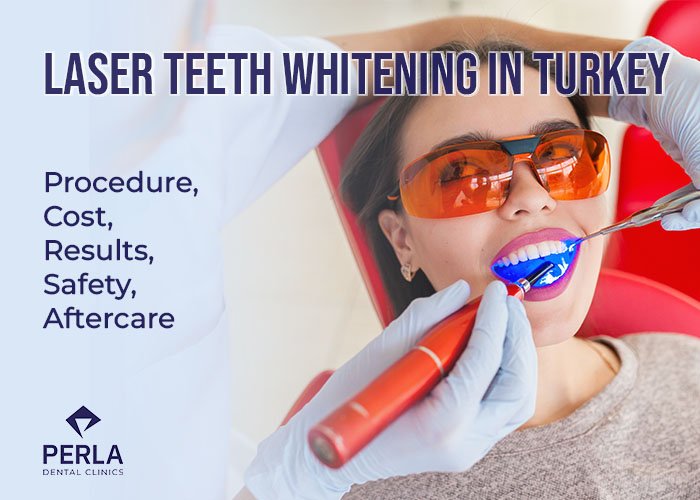
Table of Contents
What Is Laser Teeth Whitening and How Does It Work?
Laser teeth whitening is an in-clinic treatment that uses laser-activated whitening gels to improve the shade of natural teeth. Like other types of professional chairside tooth whitening, it is performed entirely during a clinic appointment under the control of a qualified clinician.
In this type of teeth bleaching, the laser activates a whitening gel applied to each treated tooth. The gel is usually based on hydrogen peroxide but may use other bleaching agents. You can learn more about professional teeth whitening in Turkey on our treatment page.
Laser teeth whitening differs from other types of whitening procedures by using lasers instead of LED or other light sources. This delivers more concentrated energy for activating the bleaching gel, speeding up the oxidation reaction that makes tooth-staining pigments invisible. Thus, laser tooth whitening may help the treated teeth reach the desired shade in less time.
Laser tooth whitening does not remove tooth structure. A gingival barrier protects the patient’s soft tissues from the bleaching agent and the laser.
Who Is Suitable for Laser Teeth Whitening?
Patient suitability for laser teeth whitening depends on the type and severity of staining, individual needs, presence of dental restorations, gum and tooth health, and other factors. The dentist determines this after a dental examination.
Tooth staining can have different natures. The two main types are intrinsic and extrinsic stains. Extrinsic stains are surface-level. They are primarily caused by the patient’s diet or smoking habits. Intrinsic stains are located deeper, in the dentin, and may be caused by ageing, trauma, disease, or certain medications.
Tooth whitening is effective against extrinsic staining. Intrinsic stains may respond to laser tooth whitening, as some lasers can interact with staining molecules deeper in the tooth, but can be more difficult to remove.
Whether the patient’s desired tooth shade is reachable, and how many whitening sessions are required, may depend on the original tooth shade. You may learn how dentists assess tooth shade here.
Patients should note that restorations such as veneers and fillings do not respond to laser tooth whitening. In cases where there is untreated gum disease, infection, or other urgent dental issues, they may require treatment first.
May be suitable candidates:
- Natural teeth without large restorations.
- Extrinsic, surface stains.
- Good oral hygiene, without active gum disease or similar conditions.
May require additional assessment or alternative treatment:
- Teeth with restorations, such as veneers or fillings.
- Deep, intrinsic stains.
- Sensitive teeth or gums.
Laser Teeth Whitening Procedure in Turkey
The laser teeth whitening procedure consists of several steps, starting with an examination and shade matching and ending with a final shade check after whitening.
The procedure starts with assessment of the patient’s teeth and gums. The dentist matches the tooth shade using a shade guide to record the baseline shade. By checking tooth and gum health, the doctor ensures that the bleaching solution and laser light won’t irritate or damage them. Large restorations and their visibility are also considered when planning laser tooth whitening.
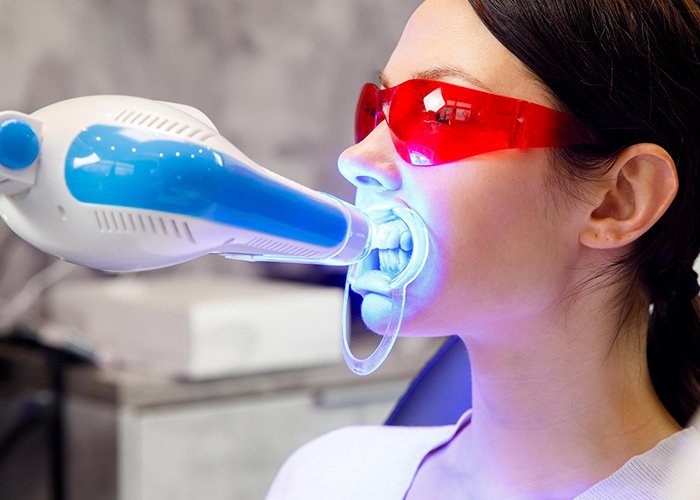
Before starting the procedure, the patient’s gums and lips are protected with a gingival barrier and other measures. The whitening gel is applied to the teeth, and then is irradiated with a laser beam to activate the bleaching components. The laser may pass each tooth several times. The laser beam may also affect some pigment deeper in the teeth.
After the whitening is completed, the dentist measures the tooth shade and compares it with the baseline shade. If the goal is not reached in one appointment, it may need to be repeated. The precise timing and procedure of additional sessions depend on the individual case.
How Long Does Laser Teeth Whitening Take?
A single laser tooth whitening session may take about an hour to complete, but the duration of each appointment and the total number of appointments depend on the patient’s case.
Session duration can vary depending on how deep the staining is, how far the patient’s desired tooth shade is from the baseline shade, how many whitening cycles are required, and other factors.
If the patient’s tooth shade is close to the desired shade, one session of laser tooth whitening may be enough to achieve the goal. Other patients may require additional sessions or custom at-home tray-based whitening to complete the treatment. Treatment planning for additional sessions depends on the patient’s needs.
Laser Teeth Whitening Cost in Turkey vs the UK
Costs of laser teeth whitening in Turkey tend to be lower than in the UK, but for a more precise price comparison, the patient should account for the total cost of the treatment with any additional expenses.
When comparing treatment costs between Turkey and the UK, patients should also consider travel and accommodation costs, and check whether the prices are listed per session. After a remote consultation, the clinic should provide clear preliminary costs for the treatment and any additional services in a written quote.
| Country | Average laser teeth whitening price |
|---|---|
| Turkey | from £200 to £300 |
| UK | from £600 to £800 |
Patients travelling to Turkey for a dental treatment may also consider combining teeth whitening with other procedures to save on travel.
What Results Can You Expect from Laser Teeth Whitening?
Laser teeth whitening results are highly individual, and the dentist cannot guarantee reaching a specific shade is possible in all cases. After an initial dental examination, the dentist may estimate a range of shades that may be possible based on the tooth baseline shade and type of staining.
Laser teeth whitening aims to neutralise staining pigment molecules, so the maximum possible result depends on how naturally white the patient’s teeth are. Enamel density also influences the result, with thinner enamel showing more of the yellow dentin underneath. Because of this, every patient’s results are different even when all other aspects of the procedure are the same.
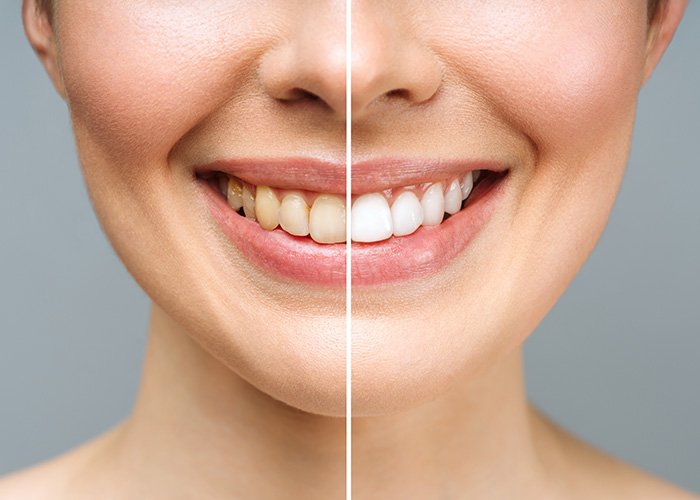
If the patient wants a whiter shade than laser teeth whitening can provide, the dentist may recommend an alternative treatment, such as dental veneers.
How Long Does Laser Teeth Whitening Last?
The lifespan of teeth whitening results varies by patient and depends on diet, oral hygiene, baseline tooth shade, and maintenance. Treatment results are not permanent, since the patient’s teeth can become stained again or change colour due to ageing or trauma.
| Longevity factor | Why does it impact longevity? |
|---|---|
| Diet | Certain foods and drinks can stain the teeth faster; limiting them can help preserve the treatment results. |
| Smoking | Smoking may significantly contribute to teeth yellowing. |
| Oral hygiene | Improper oral hygiene promotes plaque formation and staining. |
| Initial staining | The type and severity of initial staining may affect results; teeth with significant baseline staining may be more prone to a colour rebound after the bleaching agent dissipates. |
| Maintenance | Regular maintenance and touch-ups may prevent the need for a full tooth whitening procedure. |
Is Laser Teeth Whitening Safe?
Dentist-supervised laser teeth whitening is generally considered safe. The possibility of side effects may vary, but whitening following laser medical equipment manufacturer’s guidelines and best practices can help avoid damaging the enamel or the pulp when the treatment is performed by a dental professional.
Possible side effects after teeth whitening include tooth sensitivity and gum irritation. Most often, these symptoms are temporary and should resolve on their own. Protecting the soft tissues from contact with the bleaching gel can help avoid gum irritation.
A patient should contact the dentist if symptoms after laser teeth whitening are severe or unusual.
Laser Teeth Whitening Aftercare
The precise laser teeth whitening aftercare protocol may depend on the patient’s individual treatment plan and is generally divided into immediate post-treatment care, which should be followed for the first several days, and long-term care to help retain the new tooth shade for longer.
Do:
- Follow the dentist’s instructions;
- Maintain oral hygiene as advised.
Avoid:
- Highly staining foods and drinks as advised;
- Smoking.
Initially after the treatment, treated teeth may stain more easily. For this reason, the dentist may prescribe a white diet after whitening. This means limiting drinks like tea, coffee, and wine, and avoiding smoking and foods like berries and curry. Since teeth may temporarily feel sensitive after treatment, the patient may want to avoid very hot, cold, and acidic foods for several days after whitening.
Long-term care involves following the dentist’s maintenance advice, maintaining good oral hygiene, and limiting staining foods and drinks.
Laser Teeth Whitening vs Veneers and Other Cosmetic Treatments
Laser teeth whitening can only change the colour of a natural tooth, and the patient’s individual factors may limit its effects. Veneers or dental bonding may be alternatives if the patient wants to change tooth shape or reach a shade impossible with whitening.
Veneers cover the entire anterior surface of the tooth, while dental bonding can result in different shapes. Unlike whitening, these treatments may require permanent adjustment to the tooth’s natural enamel. Veneers and bonding can potentially be made of any shade. How many teeth should be treated with veneers or other restorations to provide a uniform aesthetic effect depends on the patient’s case.
| Concern | Whitening | Veneers | Bonding |
|---|---|---|---|
| Colour | ✓ | ✓ | ✓ |
| Shape | No | Yes | Yes |
| Minor gaps and chips | No | Yes | Yes |
| Natural enamel bleaching | Yes | No | No |
Is Laser Teeth Whitening in Turkey Worth It?
Whether laser teeth whitening in Turkey is worth it depends on your goals, budget, and local treatment options. Laser teeth whitening is a brief procedure, so many patients who go to Turkey for dental treatments usually have it as part of a larger treatment plan.
Laser teeth whitening in Turkey may be practical if:
- You want to get it during a holiday in Turkey;
- It is planned as part of a broader smile improvement treatment;
- Your local treatment options are lacking or do not suit your specific needs;
Consider local treatment if:
- You want to avoid international travel and preparing relevant documents;
- You do not require any additional procedures apart from tooth whitening;
- You prefer to have more convenient touch-up opportunities at the same dental clinic.
If you choose dental tourism in Turkey, remember to obtain a written treatment plan and quote from the clinic before you travel. This can be done after a remote consultation with the clinic.

Medically reviewed by:
Dr. Onur Ademhan
Oral and Maxillofacial Surgeon
Founder and CEO of Perla Dental Clinics. Graduated from Ankara University Faculty of Dentistry and specialized in Oral and Maxillofacial Surgery at Gazi University.
Frequently Asked Questions About Laser Teeth Whitening in Turkey
Does Laser Whitening Work on Yellow Teeth?
Laser whitening works on yellow teeth if the staining is mostly contained to the upper layers of the tooth (extrinsic staining). Discolouration caused by ageing, trauma, or changes deep inside a tooth may not respond well to laser whitening. The doctor may suggest alternative treatments if laser teeth whitening is not enough to reach your goal.
Can Smokers Have Laser Teeth Whitening?
Smoking is not a contraindication for laser teeth whitening. However, patients should abstain from smoking for several days after the procedure to avoid staining the teeth back immediately, as they are more porous during this time. Smoking will also negatively impact the longevity of whitening results. As such, patients who smoke may need more frequent whitening touch-ups.
Can Teeth Become Stained Again After Whitening?
Yes, they can. Laser whitening oxidises the pigments in and on the tooth, but does not prevent future staining. To preserve the results of a whitening procedure, the dentist may advise you to avoid certain foods and drinks, follow good oral hygiene, and have regular dental check-ups.
Can I Have Laser Whitening If I Have Sensitive Teeth?
If you have sensitive teeth, they require a dentist’s assessment before treatment. Whether you are eligible for laser whitening may depend on how sensitive they are. For patients with sensitive teeth, eligibility may not be guaranteed before an in-clinic assessment.
How Soon Can I Fly After Laser Teeth Whitening?
You can fly as soon as the treatment is completed; however, this does not mean that your teeth return to their normal porosity immediately. Follow the dentist’s advice and avoid staining and irritating foods for the required period. This may mean avoiding airport or inflight foods.
How Soon After Whitening Can I Eat Normally?
The exact timing can vary, but in many cases patients can return to their normal diet 48 hours after treatment. Immediately after the procedure, you should avoid staining, acidic, and very cold and hot foods. To prolong treatment results, you may want to limit very staining foods and drinks even after the first 48 hours.