+90 534 226 60 59
  Mon - Fri: 9:00-18:00; Sat: 9:00-17:30; Sunday: Closed

If you are looking to improve the appearance of your smile, you may be a suitable candidate for porcelain veneers in Turkey. A range of natural-looking veneers is available at affordable prices that will enable you to permanently change the colour of your teeth, fill in cracks and gaps, and treat crooked dentition.
The prices for dental veneers in Turkey start at £200 per tooth, depending on the type and number of restorations placed. The treatment duration is up to a week for a full smile veneer restoration.
Table of Contents
What are Porcelain Dental Veneers in Turkey?
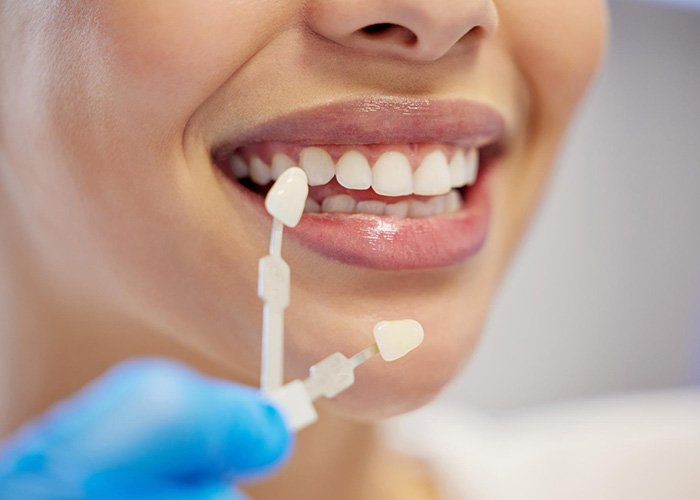
Porcelain veneers in Turkey are a type of cosmetic dental restoration used for patients who want to improve the appearance of their teeth without resorting to more invasive options, such as crowns. They replace some of the enamel on the front part of the treated dentition, transforming the smile visually while preserving the natural durability of the teeth.
There are several types of dental ceramics available for veneers, allowing patients to choose the best porcelain restorations for their needs.
How Are Porcelain Veneers Different from Other Veneer Types?
The main difference between porcelain dental veneers and those made from other materials is aesthetics and durability. Ceramic restorations are, on average, more natural-looking than composite or metal-based options. While dental ceramics differ in appearance, they are all significantly closer to natural enamel than polymers.
How Much Do Porcelain Veneers Cost in Turkey?
The cost of porcelain veneers in Turkey will depend on the type of veneer chosen. In all cases, however, you can save up to 70% of the price compared with the same veneers in the UK and the USA. The cost of conventional porcelain veneers in Turkey starts at £200 per veneer. The affordable cost of dental restorations at Turkish clinics enables us to offer full smile veneer procedures, which are a good choice for patients who want to completely transform their appearance.
Comparing Prices: Turkey vs. UK and USA
The prices of veneers depend on the material, the country in which the treatment is performed, and the dentist’s experience. You can compare average veneer prices per tooth using the table below.
| Veneer Type | Price in Turkey | Price in the UK | Price in the USA |
|---|---|---|---|
| Conventional Porcelain Veneers | £200-£300 | £700-£1500 | $1000-$2500 |
| Zirconia Veneers | £175-£300 | £900-£1500 | $1200-$2600 |
| E-max Dental Veneers | £225-£400 | £800-£1400 | $1200-$3500 |
The prices are current as of 2026.
How Do I Determine How Many Veneers I Need for a Full-Set Treatment?
The number of tooth veneers you will need for treatment depends on your goals. If you want to completely change your smile, you will need a full set of restorations. However, even for this type of procedure, the number of restorations can vary. Our dentists will determine how many teeth need to be treated based on your smile line, which is the number of teeth visible when you smile.
Types of Dental Veneers
Turkish dental clinics offer many kinds of dental veneers. The variety helps to ensure there is a perfect dental restoration for your particular needs. Our doctors can help you choose the best type of veneer based on the results of your consultation and dental check-up.
The primary differences among varieties of veneer restorations are appearance, durability, and the amount of dental enamel that must be removed to place a veneer.
Conventional Porcelain Veneers
There are many types of conventional dental ceramics, but, on average, they are similar in appearance and durability. Materials such as feldspathic porcelain are well-established in Turkish dentistry and can be placed at a lower cost than more advanced approaches. Conventional restorations offer a good balance between natural appearance and durability and are resistant to staining.
Zirconia Veneers
Zirconia, also known as zirconium ceramics, is one of the most durable non-metal dental materials. It is significantly more resistant to wear and fracture than dental porcelain. It is more expensive than conventional options, but it has a longer lifespan.
Zirconia is opaque, but naturally white. This makes it useful for Hollywood smile procedures, which result in brilliant, shining smiles.
E-max Dental Veneers
E-max is also known as lithium disilicate. It is preferred by patients who want the most natural-looking smiles. The E-max material boasts exceptional translucency and can be made thinner than many other alternatives without extra risk of cracking.
E-max can transmit natural teeth colour from beneath the restoration, making it easier to blend in among untreated dentition. It is well-suited for correcting tooth shape.
Lumineers
Lumineers are a proprietary type of modern ultra-thin veneers. Unlike most other types of dental restorations, Lumineers can be placed without removing any natural enamel from the front of the treated teeth. This makes them perfect for patients who do not want to permanently alter their dentition. Lumineers are popular as a permanent alternative to tooth whitening procedures.
Composite Veneers (Alternative Option)
While composite veneers in Turkey are not made from dental porcelain, they are a very popular alternative for patients seeking a more affordable, quick-to-place restoration. Composite restorations are made from composite resin. While not as durable, they can be placed without tooth preparation. Some types of composite veneers can be shaped directly on the tooth, eliminating the veneer manufacturing stage of the procedure. This allows the dentist to place them in a single day.
No-Prep Veneers
No-prep veneers can be made from different materials and are placed with minimal or no enamel removal. They are preferred by patients who need a quick procedure to correct a minor cosmetic issue, such as a small crack. There is no need for extensive dental modification, so the procedure is considered to be minimally invasive.
Temporary Veneers
Temporary veneers are made from polymer materials and are usually placed as part of a more permanent veneer procedure. Dentists place temporary restorations while patients wait for their porcelain veneers to be made. Temporary restorations help to protect the prepared tooth surfaces and conceal the irregularities that remain after surface preparation. They aren’t used as a stand-alone treatment.
Palatal Veneers (Palatal Onlays)
Palatal onlays are used for protecting worn-down anterior teeth. Unlike other types of restorations, onlays are placed on the inner surfaces of the teeth, which are not visible to others. The goal is to create additional support for weakened teeth and alleviate wear caused by bruxism, erosion, and other conditions.
Benefits of Porcelain Veneers
The best way to answer the question, “Are porcelain veneers suitable for my case?” is to consider the advantages of having them placed at a Turkish clinic. Local clinics use advanced materials and techniques to maximize benefits, including the following.
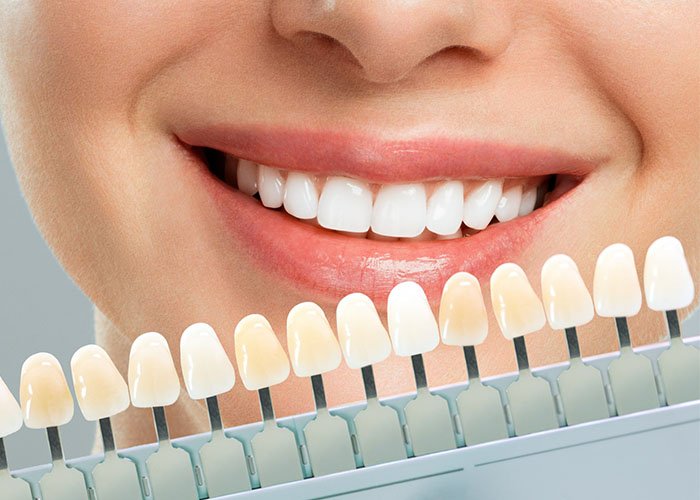
Aesthetic Enhancement
Porcelain dental veneers are an ideal permanent cosmetic procedure for many cosmetic defects. They can be used to close cracks and gaps, make the smile more even and balanced, improve tooth colour, and more.
Minimally Invasive Treatment
Veneers do not require the doctor to remove as much enamel as crowns and other permanent restorations do. The only altered parts are the outer surfaces of the treated teeth. This is enough to change their appearance while preserving the underlying tooth structure.
Durability
Materials used for veneer procedures are very durable and can serve you for many years. Furthermore, dental porcelain is resistant to staining, so your dental restorations will not only keep their original shape, but retain their colour for the entire service life with just a regular oral hygiene routine. The survival rate of porcelain veneers can be estimated at 91% at 15 years. As such, their expected service life is 10-15 years.
Improved Oral Health
Veneers can help correct your bite and eliminate small gaps between teeth, making it easier to properly clean your teeth and minimizing the risk of cavities and other dental issues. Surfaces covered by restorations are less exposed to bacterial contact and are more resistant to bacterial damage.
Functionality
Veneers can help correct minor misalignments between teeth and straighten crooked teeth. This creates a more even bite, helping distribute pressure evenly during eating. The surface of dental porcelain is also more resistant to plaque formation, helping to improve oral hygiene.
Confidence Boost
Veneers improve patients’ smiles, which helps to increase their confidence in their appearance. The procedure also provides immediate result, first with temporary restorations, then with permanent ones. There is no need to wait for months, like is required for orthodontic treatments, to make your dentition more even and balanced.
Low Maintenance
Treated teeth can be brushed and flossed just like untreated dentition. There is no need for special cleaning techniques or solutions. This allows you to keep your regular oral hygiene routine. Ceramic is stain-resistant, which helps maintain your porcelain veneers’ original appearance.
What Dental Issues Can Be Resolved Using Porcelain Veneers?
“Are porcelain veneers suitable for my dental issue?” is another question that many of our patients ask. The following is a non-exhaustive list of common dental issues that can be treated with ceramic veneer procedures:
- Gummy or unbalanced smiles
- Crooked or misshapen teeth
- Superficial cracks and other light damage
- Severe discolouration or staining
The Process of Porcelain Veneer Placing in Turkey
The process of placing tooth veneers consists of several stages. They help to ensure that the restorations fit patients perfectly and can serve them for many years without extensive maintenance.
Consultation and Smile Design
The treatment starts with a consultation. The doctor will examine your teeth to help you choose the best veneer type for your case. We can create a digital smile design to let you see what your teeth will look like after the procedure.
Tooth Preparation
The doctor will remove some enamel from the outer surfaces of the treated teeth. It will be replaced with the porcelain veneers. The amount removed depends on the thickness of the veneer, adjusted to keep the tooth the same size after treatment.
Veneer Fabrication
The ceramic veneers are made in dental labs based on your tooth impressions. The doctor will place temporary veneer covers on your teeth while you wait for the permanent ones to be made, which can take several days.
Placement and Bonding
When your permanent restorations are ready, the doctor will remove the temporary tooth veneers. The permanent veneers are first tried on without bonding, allowing the doctor to adjust them as needed. When they fit you perfectly, the doctor will bond them to the teeth.
Aftercare and Maintenance
Dentist will provide specific aftercare advice after the procedure.
Why Choose Turkey for Porcelain Veneers?
Turkey is among the best destinations for porcelain veneers. You can save more than 70% on the cost of veneers compared with the UK and the USA. Turkey offers a wide variety of cosmetic restorations placed by experienced dentists, so you can be sure that your new smile will suit you perfectly.

Medically reviewed by:
Dr. Onur Ademhan
Oral and Maxillofacial Surgeon
Founder and CEO of Perla Dental Clinics. Graduated from Ankara University Faculty of Dentistry and specialized in Oral and Maxillofacial Surgery at Gazi University.
Frequently Asked Questions About Porcelain Veneers
Are Porcelain Veneers Permanent?
Porcelain veneers require irreversible tooth preparation before placement and are considered permanent. This means the veneers should be replaced rather than removed.
Do Porcelain Veneers Damage Natural Teeth?
Some natural tooth enamel is removed before placing porcelain veneers, but this does not damage the tooth. Tooth preparation is relatively minor, so the treated tooth retains its structural integrity.
Are Porcelain Veneers Painful to Get?
No, they aren’t. This is a minimally invasive treatment, so there is no pain or major discomfort during the procedure or recovery. Temporary tooth sensitivity can occur, but it is brief and resolves on its own.
How Many Veneers Is Required for a Full Smile Makeover?
The number of veneers required for a full smile makeover depends on your smile line. This is the number of teeth visible when you speak or smile. Most patients require six to ten veneers per arch.
What Is the Difference Between Porcelain Veneers and Composite Veneers?
They use different materials. Composite veneers use a polymer-based material, while dental porcelain is a ceramic. Composite is less expensive and can be shaped chairside, but is more susceptible to staining and is less durable than porcelain.
How Much Do Porcelain Veneers Cost in Turkey?
Porcelain veneers in Turkey cost between £200 and £300 per tooth. The actual cost depends on the clinic location, the veneer material, and the dentist’s experience.
How Long Does It Take to Get Porcelain Veneers in Turkey?
A stay in Turkey for a full smile makeover lasts 5-7 days. The treatment requires several appointments for dental impressions, manufacturing, and adjusting the veneers.
How Many Visits Do Porcelain Veneers Require?
The treatment can take two to four clinical appointments. A recovery period is not required, which means it can be completed in a single visit to Turkey.
Can I Get Veneers in Turkey During a Short Trip?
Porcelain veneers require several clinic appointments over at least 5 days for the best results. If you require very fast results, composite veneers can be placed in just one or two days.