+90 534 226 60 59
  Mon - Fri: 9:00-18:00; Sat: 9:00-17:30; Sunday: Closed

Implant-retained dentures can be a more stable alternative to traditional removable dentures, combining their ease of cleaning and maintenance with implant retention to prevent unnecessary prosthesis movements.
The procedure for this type of denture depends on the patient’s individual case, as do the possible benefits and risks. These aspects of the treatment are explained in this article.
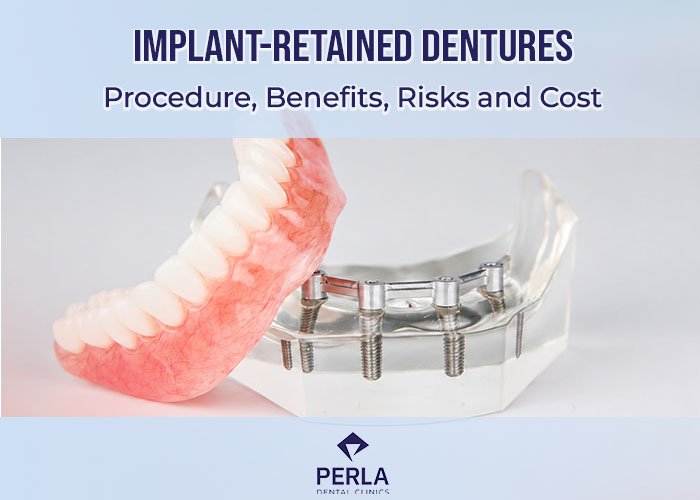
Table of Contents
What Is Implant-Retained Denture?
Implant-retained dentures are a type of dental prosthesis that uses dental implants for additional stability and comfort. The prosthesis can connect to dental implants using different types of connectors. Implant-retained dentures use implants to hold them in place, but do not rely on them exclusively for support. This type of denture can also be called an implant-retained overdenture.
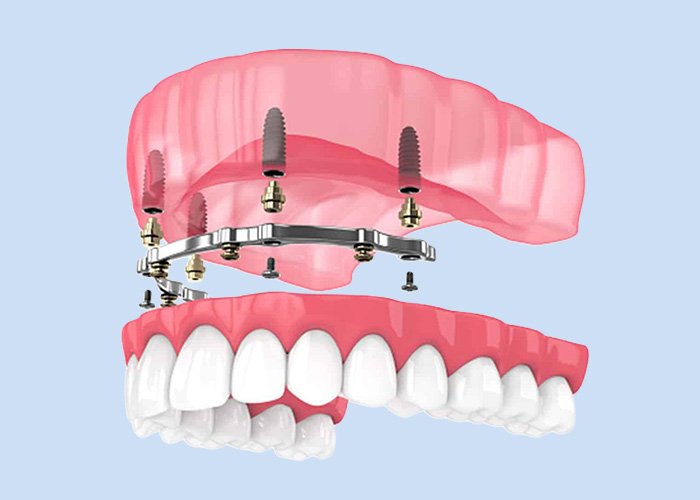
How Implant-Retained Dentures Work
Implant-retained dentures require dental surgery to place implants into the patient’s jawbone. The number of implants depends on which jaw is treated and the patient’s clinical needs. Implants connect to the denture via a prosthetic attachment. This connection is more stable than that of traditional dentures, which are retained in place via suction or muscular control.
Patients can remove implant-retained dentures to clean them.
This type of denture is placed over implants, which is why they may also be called an implant overdenture. Snap-in and snap-on dentures are terms used for specific types of implant overdentures, depending on the locators or attachments they use.
Implant-Retained vs Implant-Supported Dentures
Implant-retained dentures use implants for retention, but most biting forces are absorbed by the patient’s gums and ridge, similar to traditional dentures. In implant-supported dentures, implants absorb all biting forces.
In an implant-retained denture, implants are placed to prevent the prosthesis from moving out of place. Implant-supported dentures also use them for support, hence their name. Learn more about dental implants in Turkey and implant-supported prostheses in out treatment page.
Implant-Retained Dentures vs Traditional Dentures
Implant-retained dentures tend to provide better comfort, speech, and stability than conventional dentures. However, they require dental surgery to place the implants and tend to cost significantly more.
A 2020 meta-analysis comparing implant-retained mandibular (lower-jaw) dentures to traditional dentures found that patients are overall more satisfied with implant-retained prostheses than traditional removable dentures. The aesthetic value of both restoration types was mostly similar between implant-retained and traditional options.
Who Is Suitable for Implant-Retained Dentures?
Implant-retained dentures may suit patients who have lost most of their teeth and want a more stable alternative to conventional dentures.
Suitability for dental implants and implant-retained dentures depends on the patient’s clinical case, medical, and lifestyle factors, including:
- Bone condition;
- Oral health;
- Medical history;
- Oral hygiene;
- Smoking habits.
Who May Benefit From Implant-Retained Dentures?
Most implant-retained denture candidates are people with complete or substantial tooth loss who need a more stable, removable solution than traditional dentures.
Potential candidates also include people who already have conventional dentures but are unsatisfied with their stability or find them challenging to retain.
Bone Requirements and Bone Loss
Placing dental implants requires the patient’s jawbone to meet the density and dimensions requirements. The precise requirements for bone volume and quality depend on the patient’s case.
Placing implant dentures with bone loss may demand a bone graft if clinically necessary. A CBCT assessment may help determine whether a bone graft is needed and evaluate the current condition of the patient’s jawbone. The timing of bone grafts in implant treatments is explained in more detail on our dental implant assessment and placement page.
Medical and Lifestyle Factors That Affect Suitability
A dentist may assess the following factors to determine if implant-retained denture candidates can proceed with the treatment:
- Oral hygiene;
- Active oral disease, such as gum disease;
- Smoking habits;
- General health condition;
- Healing capacity;
- Medication and other medical factors.
Generally, patients should treat any active oral diseases before proceeding with implant placement. Smoking can make complications after implant placement more likely, so dentists may recommend that smokers abstain during the initial recovery period.
Implant-Retained Dentures Procedure Step by Step
The implant-retained dentures procedure involves several stages, from initial planning and implant placement to manufacturing and fitting of the prosthesis. The procedure’s general steps can vary by patient, depending on the clinical case and the type of implants and prosthesis fitted. Each implant-retained treatment plan is individual and is created for the patient after a consultation and assessment.
The treatment is usually done in this order:
- Assessment and CBCT;
- Implant placement;
- Healing and osseointegration;
- Attachment and denture fitting;
- Follow-up.
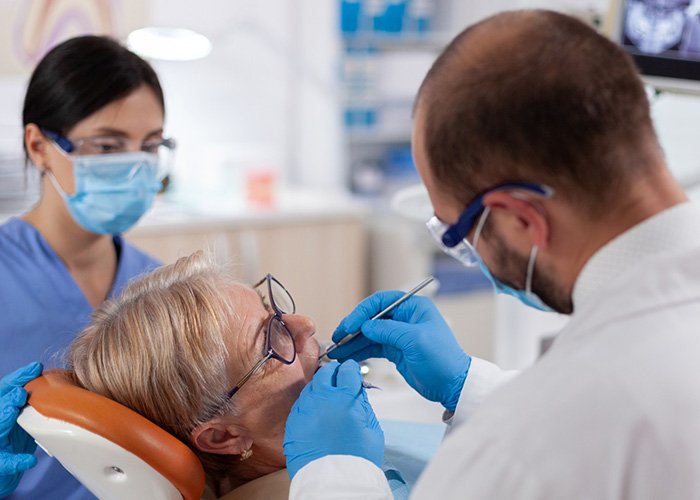
Consultation, CBCT Scan and Treatment Planning
The implant-retained dentures treatment process starts with a consultation, which allows the dentist to understand the patient’s goals and determine whether implant-retained dentures are the right solution. A CBCT scan helps the clinic assess the patient’s jawbone condition and the anatomical details necessary to plan the treatment. The patient’s general medical history and current medications may influence treatment planning.
When creating the patient’s individual treatment plan, the dentist accounts for the jaw and the patient’s clinical case to determine the number and position of implants.
Implant Placement and Preparatory Treatment
Some people may need a bone graft to compensate for insufficient jawbone parameters. Whether the extractions or bone grafts can be performed at the time of implant surgery depends on the jawbone condition and the patient’s oral health.
Surgical placement of implants involves accessing the jawbone, usually by making incisions to expose it. The dentist makes precise holes for the implants and screws them in, then sutures the gums.
Healing abutments may be required after placing the implants if a temporary prosthesis is not used. A more detailed overview of a step-by-step dental implant procedure is available in a dedicated article.
Healing and Osseointegration
The healing and osseointegration stage usually takes up to six months. Implants cannot retain dentures immediately after placement. To do so, they need to complete osseointegration. This process forms a strong connection between the jawbone and the implant surface and occurs naturally during recovery.
During the initial healing period, the patient should carefully follow all of the dentist’s recommendations and maintenance instructions to promote recovery. This may involve an initial liquid and soft food diet, careful cleaning, and other factors. Rest and avoiding strenuous activity during the first weeks of recovery is also important.
The patient may be able to receive a temporary prosthesis for use during recovery. Whether this is possible depends on the case and helps minimise the time the patient spends without teeth.
Attachment Placement, Denture Fitting and Follow-Up
The final procedure stage involves preparing the implants and the final prosthesis, attaching them, and making any final adjustments.
Depending on the method used to place implants, they may need to be exposed before proceeding with the treatment by making new incisions in the gum, removing the cover screw, and replacing it with a healing abutment.
Once recovery is complete, the clinic takes dental scans or impressions of the treated jaw to manufacture the final dentures. They serve as a model for making a prosthesis that fits the patient’s anatomy. A verification jig may be used to ensure that the model of the patient’s jaw matches the actual anatomy.
Initially, a model of the future denture may be made from wax. This is tried in before finalising the design, allowing the dentist to check the fit, resulting bite, and other important parameters that will define how comfortable the prosthesis is.
There may be several provisional try-in prostheses used at each step of denture manufacturing to ensure correct fit. When making the final denture, the laboratory embeds attachments that will connect with the corresponding abutments placed on the implants.
At the final appointment, the dentist connects the denture to the implants and shows the patient how to remove it for cleaning and maintenance. A follow-up appointment may be required to ensure the prosthesis fits properly when in use.
How Long Does the Implant-Retained Denture Procedure Take?
The total implant overdenture treatment time varies because clinical cases differ in scale, number of implants required, need for additional procedures, recovery time, number of adjustments, and other factors.
Healing Time and Temporary Dentures
A typical healing time for implants is six months, but actual duration can vary. In some cases, the patient may receive temporary dentures if the treatment plan includes them. Patients can wear these dentures after initial healing is complete, as recommended by the dentist. This is usually a week or two after the implants are placed.
What Can Affect the Treatment Timeline?
The treatment timeline can depend on the need for bone grafting and other procedures, as well as healing rate. Whether these procedures are required depends on the patient’s bone quality and general health. Extractions and other preparatory treatments can also prolong the initial stages of the treatment.
Complications can prolong recovery, and complex prostheses may need more time to make and adjust during the final stages of treatment.
How Many Implants Are Needed for Implant-Retained Dentures?
There is no single number of implants required for every implant-retained denture, as it is determined by the condition of the patient’s jaw, whether the denture is intended for the upper or lower jaw, and prosthesis complexity.
Two vs Four Implants
The choice between 2 and 4 implants for overdenture depends on the need for stability, available bone density and dimensions, and the patient’s desired treatment budget. Four implants generally provide more stable retention by giving more connection points for the denture.
Upper vs Lower Jaw
Prosthetic planning for the upper and lower jaw is different due to differences in bone anatomy and pressure distribution. Upper jaw dentures generally require more implants, with the four-implant option being the most common. Lower-jaw dentures often use two or four implants.
What Determines the Number of Implants?
The actual number of implants depends on the patient’s case and is determined by:
- The treated jaw;
- Bone availability;
- Implant positions;
- Prosthetic design;
- Attachments;
- Patient’s individual treatment goals.
What Are the Benefits of Implant-Retained Dentures?
Implant-retained dentures’ advantages are primarily due to the use of implants, enabling the prosthesis to connect to a more stable retention than the patient’s natural anatomy can provide alone.
The benefits can include:
- Improved retention;
- Reduced denture movement;
- Potentially no or less reliance on adhesives;
- Greater stability
- Jawbone preservation
- Better chewing function.
What Are the Risks and Possible Complications?
Implant-retained dentures can involve both biological and prosthetic complications. Causes of biological complications include bacteria, improper healing, osseointegration failure, and trauma. If left unaddressed, biological complications can progress over time and lead to broader health risks.
Prosthetic complications can result from wear, improper fit, mechanical overload, or irregular maintenance.
Implant Failure, Infection and Peri-Implant Disease
Implant failure, infection, and peri-implantitis are common examples of biological complications. The chances for these complications increase with improper hygiene, smoking, and individual factors, such as a history of gum disease or genetic predisposition.
While these complications are more common during initial recovery, peri-implantitis and related implant denture problems may arise later due to plaque build-up resulting from poor oral hygiene or irregular professional cleaning and maintenance.
Attachment Wear, Loss of Retention and Denture Repairs
High biting pressure, bruxism, and general prolonged use can gradually wear down the attachments or the prosthesis. Regular dental check-ups can address these issues before they become serious. In some cases, denture repairs may be possible, depending on the extent and type of damage.
How to Care for Implant-Retained Dentures
Implant denture care includes daily cleaning, regular patient maintenance, and occasional professional cleaning and maintenance during dental checkups. General care procedures are similar to those for traditional dentures.
Daily Cleaning and Denture Care
Cleaning implant dentures involves removing the prosthesis, gently brushing the denture with non-abrasive denture paste, and cleaning the mouth and implant abutments. Patients should remove their dentures before sleep. Soak the denture in clean water or denture-cleaning solution overnight.
Soak the denture in specialised cleaning solution for deeper cleaning, when required. Inspect the connectors weekly to check for damage and wear.

Check-Ups, Adjustments and Attachment Replacement
Visit your dentist regularly for dental check-ups. The prosthesis requires regular professional cleaning and may need adjustments for best fit. Attachment linings may need to be replaced as they wear, which helps protect the prosthesis’ more durable and expensive parts.
How Long Do Implant-Retained Dentures Last?
There is no single lifespan for the entire implant-retained denture system because the implants, prosthesis, and attachments are separate components that wear at different rates.
Implants, Dentures and Attachments Have Different Lifespans
Implants are typically the most durable components of an implant-retained overdenture system. Many implants last for more than ten years.
The dentures themselves may have a shorter total lifespan and can require adjustments during that time to provide the best fit. The actual lifespan depends on the clinical case.
Attachments have the shortest total lifespan and may require regular replacement during dental check-ups. They are designed to absorb most of the wear, preserving the prosthesis and implants from damage.
What Affects Long-Term Results?
Factors influencing implant denture lifespan include:
- Oral hygiene;
- Smoking habits;
- Bite forces;
- Maintenance schedule;
- Peri-implant tissue health;
- Prosthetic wear.
Because these factors differ for every patient, each case can have a different total lifespan even when the same type of implants and prosthetics are used. The best way to maximise the restoration’s service life is carefully following the dentist’s general and restoration-specific care advice.
Implant-Retained Dentures in Turkey
Getting implant-retained dentures in Turkey can help patients take advantage of potentially lower prices and greater availability, but also requires careful planning to ensure a seamless treatment process and adequate post-treatment support. When planning a dental treatment in Antalya, it is important to confirm treatment duration, schedule, pricing, and
Cost and Treatment Logistics in Turkey
Treatment costs for implant overdenture in Turkey depend on the case complexity and the number of implants required for the patient. The clinic discusses preliminary pricing and treatment logistics during a remote consultation.
A provisional diagnosis can be based on general photos and panoramic X-ray imaging, but the clinic confirms the final diagnosis after a dental assessment. Patients should receive a written treatment plan and itemised quote before they travel to Turkey.
How Many Trips and How Long You May Need to Stay
Patients’ travel schedule and stay duration for implant-retained dentures depend on the number of extractions required, the need for bone grafting, healing time, implant stability, and the complexity of the prosthetic stage. Dental implant treatment in Turkey takes most of the total recovery time because implants require 3-6 months to complete osseointegration. Because of this, patients need to come to Turkey at least twice.
Are Implant-Retained Dentures Right for You?
The choice between fixed and removable implant dentures depends on the patient’s needs, oral health, budget, and ability to fulfil maintenance requirements for removable and fixed prostheses.
When Implant-Retained Dentures May Be a Good Option
An implant-retained denture may suit patients who prefer:
- A more stable retention than that of traditional dentures;
- A removable prosthesis for easier cleaning and maintenance;
- A less complex and potentially less expensive prosthesis than some fixed options.
When a Fixed Implant Solution May Be More Suitable
A fixed implant-supported denture may be preferable when:
- The patient prefers a non-removable prosthesis;
- Available bone density and dimensions, as well as general oral health, allow for it;
- The patient understands possible implications of different hygiene requirements for fixed and removable prostheses, and natural teeth, as well as possible price differences.
In all cases, suitability for removable and fixed implant dentures should be confirmed after clinical and radiographic assessment.
Contact our clinic for a remote consultation to get a preliminary assessment based on your dental X-rays and general photos and receive your personal treatment plan and quote.

Medically reviewed by:
Dr. Onur Ademhan
Oral and Maxillofacial Surgeon
Founder and CEO of Perla Dental Clinics. Graduated from Ankara University Faculty of Dentistry and specialized in Oral and Maxillofacial Surgery at Gazi University.
Frequently Asked Questions About Implant-Retained Dentures
Can Existing Dentures Be Converted to Implant-Retained Dentures?
In some cases, the clinic can convert dentures to implant dentures. This depends on denture design, material, and fit. Optimal implant positions and the condition of the denture are also important. The best way to learn whether it is possible to convert your traditional dentures is to consult a relevant dental professional.
Can Implant-Retained Dentures Come Loose?
Retention of implant-retained prostheses can decrease over time. Implant dentures lose retention as attachment components wear down from use. In some cases, this may be intended, and some parts of denture attachments may be designed as sacrificial components, absorbing most of the wear, such as replaceable nylon inserts. These parts of the implant denture are less expensive and are replaced during regular dental check-ups.
Can You Eat Normally With Implant-Retained Dentures?
Many patients find it more comfortable to eat with implant-retained dentures, but the experience may not be identical to natural teeth. In particular, implant-retained dentures may not be able to provide the patient with the ability to use their full chewing force, as they are supported mostly by the patient’s soft tissues. Implants can prevent such dentures from moving during chewing, but they are not designed to absorb the full chewing force.
Do You Need Denture Adhesive?
Implant-retained dentures are designed to use implants as the main source of retention. As such, adhesive is not usually required, but it may be necessary for patients whose cases do not allow the implants to provide the required level of retention. Such cases are generally rare.
Are Implant-Retained Dentures Painful?
Implant-retained dentures require dental surgery to place the implants, which is done under local anaesthesia in most cases. Some temporary discomfort during surgery may be possible, but it is generally minor. Post-operative discomfort is generally more noticeable, with pain and swelling peaking on the second day after surgery for most patients. Severe pain that does not respond to painkillers, appears suddenly past the expected timeframe, or increases in intensity over time is a cause for concern and requires assessment.