+90 534 226 60 59
  Mon - Fri: 9:00-18:00; Sat: 9:00-17:30; Sunday: Closed

Cracked teeth may range from minor cracks that affect only the upper enamel layer to more serious damage that spreads to the dentine or pulp.
Symptoms can include pain when biting or chewing, inflammation, and swelling. They can be intermittent. Left untreated, a crack can deepen. Addressing the damage promptly can help preserve the tooth.
This article will help you identify possible signs and outcomes of a cracked tooth, but diagnosis and suitable treatment may only be determined after a dentist’s assessment.
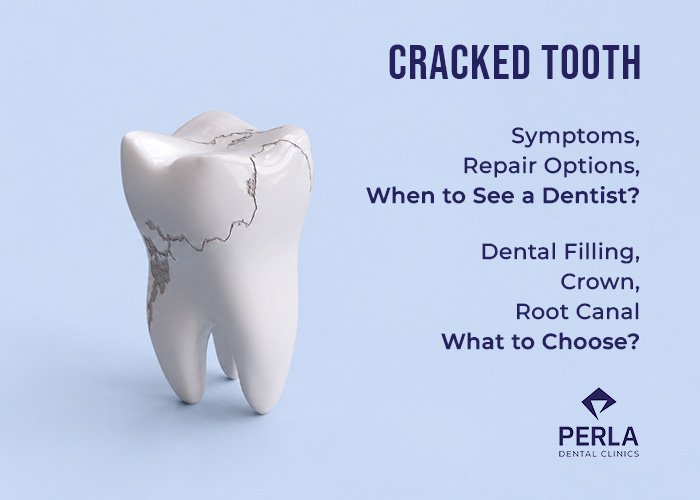
Table of Contents
What Is a Cracked Tooth?
A cracked tooth is a tooth with a crack in its structure. The depth and location of the crack determine how serious this condition is and what treatment is used to address it.
A tooth with a crack may be called a fractured tooth. However, the term “fractured teeth” is broader and can cover other types of damage, not only cracked teeth.
| Cracked tooth | Chipped tooth | Broken tooth |
|---|---|---|
| A tooth with a crack in it. Most commonly refers to teeth with craze lines or hairline cracks. | A tooth with a piece of outer enamel broken off, usually without exposing its inner layers. | A large piece of the tooth is broken off, or split, possibly exposing its inner layers. |
The scope of damage can only be determined after a dentist’s assessment.
Cracked Tooth Symptoms: When Should You See a Dentist?
Typical symptoms of a cracked tooth are:
- Pain when chewing;
- Temperature sensitivity;
- Swelling.
Symptoms may come and go or be difficult to pinpoint. For example, you may experience pain only when releasing the biting pressure after you finish chewing. Book a dentist assessment if you suspect a cracked tooth or other type of damage.
What Can Cause a Tooth to Crack?
Common causes of cracked teeth include:
- Chewing hard objects or very hard foods;
- Teeth grinding or clenching, including during sleep (bruxism);
- Trauma;
- Large filling failure.
Only a dentist can precisely determine the cause of a cracked tooth. If you think you have a cracked tooth, it is best to have a dental examination for an accurate diagnosis.
How Dentists Diagnose a Cracked Tooth
A cracked tooth diagnosis can be established through visual examination, bite test, or X-Ray imaging. The dentist’s examination can take different routes depending on the patient’s symptoms and the estimated cause of the crack. For example, X-Ray imaging is not necessary for all cases, and it cannot detect thin hairline cracks. However, it may be preferred if the crack is suspected to be caused by trauma, when an externally invisible root fracture is likely.
The dentist may check:
- Patient’s symptoms;
- Bite response;
- Gum condition;
- Results of X-Ray or other dental imaging.
Can a Cracked Tooth Be Repaired?
Some cracked teeth can be repaired, as long as the crack has not reached below the gum line. Options for cracked tooth repair can include:
- Dental fillings;
- Dental crowns;
- Root canal treatment;
- Endodontic surgery.
A treatment is chosen based on the crack depth, location, symptoms, and the patient’s other needs.

Dental Filling for Minor Cracks
Dental fillings may be used for teeth with minor cracks after the dentist determines that such a treatment is suitable. In some cases, a tooth fragment may also be reattached using dental composite resin.
Crown or Root Canal for Deeper Damage
Crowns and root canals may be used to treat cracks that extend deeper into the tooth or expose its inner layers.
Root canals may be used when the pulp becomes damaged due to trauma or inflammation. The dentist can use a crown after a root canal to protect the tooth. Deeper cracks that do not damage the pulp may be treated with crowns only.
The actual choice of treatment depends on the patient’s case and can’t be predicted before an in-clinic dental examination.
Does a Cracked Tooth Need to Be Pulled?
The diagnosis can only be made after an in-clinic check-up. Tooth extraction is used only when a cracked tooth cannot be predictably repaired. Examples can include deep fractures that reach under the gum line or some cases of split teeth.
It is important to protect your tooth from damage before your dental appointment. Avoid hard or crunchy foods, and chew with the other side of the mouth. To clean the damaged tooth, rinse your mouth with salt water.
Repair may be discussed when:
- The crack is superficial or does not reach deep.
- The chosen repair method is expected to give a predictable result.
Extraction may be discussed when:
- The crack has spread under the gum line.
- Infection or other side effects are likely if a repair is attempted.
- Long-term tooth survival cannot be predicted after repair.
Types of Tooth Cracks and Fractures
Different terms can be used for tooth cracks and fractures depending on their location and depth. These include:
- Hairline crack;
- Cracked cusp;
- Vertical root fracture.
Hairline Crack, Cracked Cusp and Vertical Root Fracture
A hairline crack in a tooth is a thin crack that can occur at any part of its chewing surface or below. It may deepen and extend over time, so urgent treatment is preferred for better outcomes.
A cracked cusp is when a crack forms around the tooth cusp. Left untreated, it may lead to a piece of the cusp breaking off. Teeth that are weakened by large fillings are more prone to this type of damage.
A vertical root fracture forms at the root and may spread towards visible parts of the tooth. It is not visible externally and can occur without the patient noticing it. The affected tooth may sometimes be treated by removing the damaged part of the root via endodontic surgery and should be extracted if such treatment is not feasible.
Cracked Tooth vs Chipped, Broken or Split Tooth
Chipped, broken, and split teeth differ from cracked teeth in that the pieces of the damaged tooth can be separated. Untreated cracked teeth can become split or broken. Often, only a portion of a broken or split tooth may be preserved, while a cracked tooth may be repaired by filling or covering the crack.
Cracked Tooth Cost Factors and Planning for UK Patients
The cost of cracked tooth repair can vary. Fillings, crowns, root canals, and extractions may all be used for cracked teeth and have different costs. There are also significant cost differences within each treatment category, such as between different crown materials. You may learn more about treatment prices on our “Dental filling cost” and “Tooth extraction cost” pages.
International patients should confirm cost factors before travelling, which may include:
- Crack depth;
- Tooth location;
- Current symptoms;
- Likely treatment;
- Dental imaging;
- Travel timing;
- Aftercare needs.

Medically reviewed by:
Dr. Onur Ademhan
Oral and Maxillofacial Surgeon
Founder and CEO of Perla Dental Clinics. Graduated from Ankara University Faculty of Dentistry and specialized in Oral and Maxillofacial Surgery at Gazi University.
Cracked Tooth FAQs
Can I Leave a Cracked Tooth Untreated?
Do not leave a cracked tooth untreated. Treating a cracked tooth early can give better outcomes. Left untreated, the crack can worsen, making conservative treatments less effective or increasing the chances of complications, such as infections.
Can a Cracked Tooth Heal by Itself?
A cracked tooth will not heal on its own. This is because tooth structure cannot heal itself. Unlike bones, the crack in the tooth can only remain the same or worsen over time.
What Can I Eat with a Cracked Tooth?
While waiting for your dental appointment, you may eat soft or liquid foods that are neither too hot nor too cold. Avoid chewy or crunchy foods. Chew on the other side of the mouth from the damaged tooth.
Can I Fix a Cracked Tooth by Myself?
No, it is not possible to fix a cracked tooth at home. Furthermore, the depth and severity of the crack can only be determined accurately during a professional dental examination. A crack that appears superficial may be deeper than you expect and should be treated by a dentist as soon as possible.
What to Do Next if You Think You Have a Cracked Tooth
The safest next step for a cracked tooth is to receive a dentist’s assessment and a personal treatment plan based on the condition of the damaged tooth.
Note these before contacting the clinic:
- Your symptoms;
- When the pain started;
- Damaged tooth location;
- Whether there is a visible crack;
- Whether you experienced recent trauma;
- Whether the tooth has existing fillings/crowns;
- Preferred travel timing.
Our dental professionals will help determine a suitable treatment based on this information and a dental check-up.