+90 534 226 60 59
  Mon - Fri: 9:00-18:00; Sat: 9:00-17:30; Sunday: Closed

Composite and amalgam fillings are both used to fill cavities caused by decay, but differ in the materials they are made of. Composite fillings are tooth-coloured and made of resin, while amalgam fillings are silver-coloured and made of metal alloy.
A dentist confirms the choice of a dental filling after a dental assessment. Read more about tooth filling treatment options here. The choice between these restorations depends on the tooth position, size of the cavity, patient’s bite force, aesthetic and budget preferences.
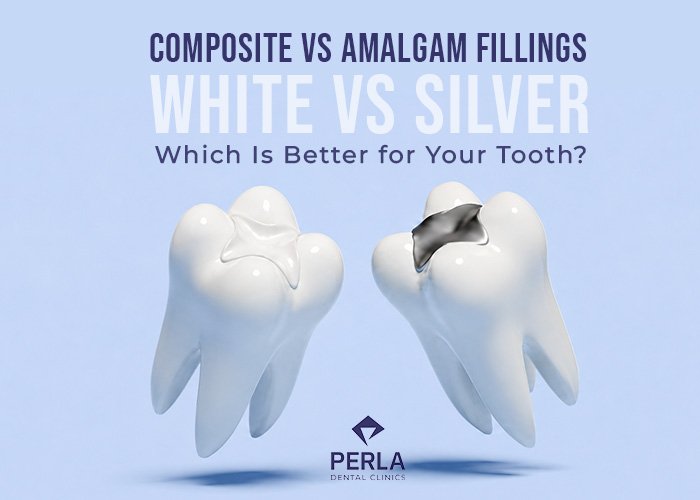
Table of Contents
What Is the Difference Between Composite and Amalgam Fillings?
Composite and amalgam fillings use different materials. Composite fillings are made of composite resin, which is similar in colour to natural teeth. Amalgam fillings are metal-based and use an alloy called amalgam. Both dental filling treatments are used to repair decayed teeth by filling the cavities. Which material is used depends on the tooth position and the patient’s oral and general health, needs, and budget preferences.
- Composite filling uses tooth-coloured resin material.
- Amalgam filling uses silver-coloured metal alloy.
What Are Composite (White) Fillings?
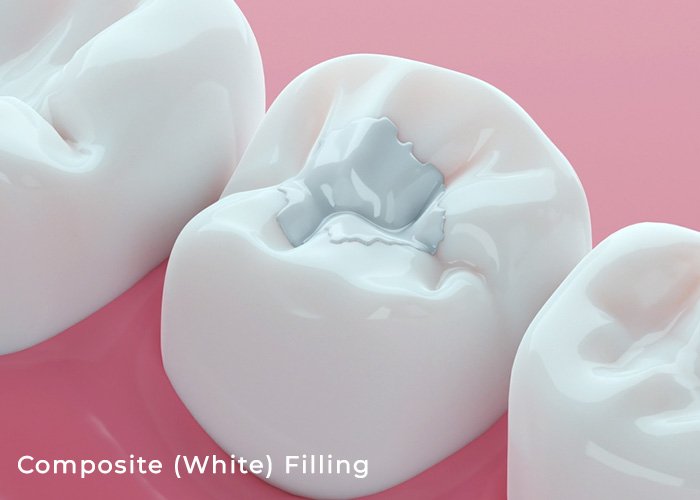
Composite fillings are restorations used to repair decayed teeth. They can be matched to the patient’s tooth shade, making them appear more like the patient’s own tooth material. Because of this, composite dental fillings are often used for teeth whose appearance is important, such as highly visible front teeth.
However, patient suitability for white fillings depends on the tooth, the size of the cavity, and biting forces, which may make them unsuitable for some patients who require a more durable restoration.
Composite fillings are:
- Tooth-coloured;
- Resin-based;
- Often used for visible areas;
- Suitable for the patient’s case only when confirmed by a dentist after a dental assessment.
What are Amalgam (Silver) Fillings?
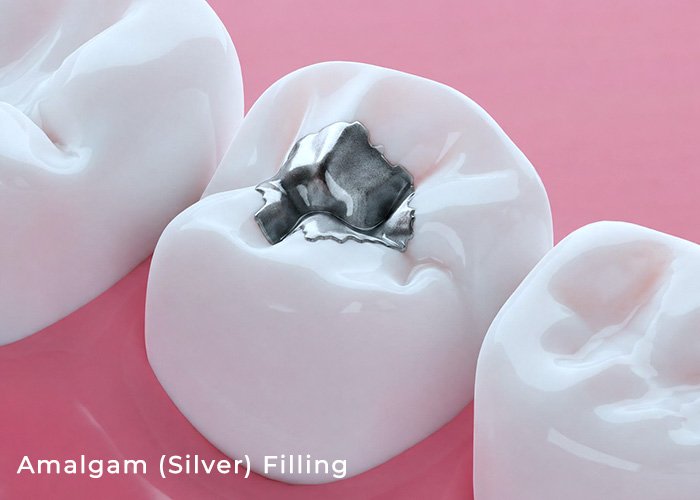
Amalgam fillings are made of an alloy called an amalgam. These are the traditional ‘silver’ fillings. They were commonly used to restore teeth under heavy chewing forces due to their durability. Read our dedicated article for more details about amalgam fillings.
Today, they are much less common, as patients tend to prefer more natural-looking restorations and want to avoid mercury-based alloys.
Amalgam fillings are:
- Silver-coloured;
- Made of metal alloy;
- Traditionally used for their durability;
- Visibly different from the natural tooth;
- Suitable for the patient’s case or replacement only when deemed necessary.
Composite vs Amalgam Fillings: Side-by-Side Comparison
There are more differences between amalgam and composite fillings apart from their colour. These include scale of tooth preparation, strength under chewing pressure, cost, and placement methods.
If the patient is eligible for either treatment, it is best to make a choice only after the dentist explains how each type of filling will affect the final durability and appearance of the restored tooth.
| Factor | Composite fillings | Amalgam fillings | What it means for the patient |
|---|---|---|---|
| Appearance | Shade-matched to the patient’s tooth, making them more similar to enamel in appearance. | A silvery metal alloy that does not look like tooth enamel. | Composite fillings are preferred when aesthetics are a priority. |
| Durability | Tend to have lower compressive strength. | Have higher compressive strength. | Amalgam may bear chewing forces better. |
| Tooth preparation | Chemically bond to the tooth, potentially requiring less preparation. | Do not bond to the tooth, potentially requiring more preparation | Composite fillings may preserve more of the tooth. |
| Cost | Tend to be more expensive. | Tend to be more affordable. | Amalgam fillings may be more cost-effective. |
Appearance: Tooth-Coloured vs Silver Fillings
The visual differences between composite and amalgam fillings are immediately noticeable. While a composite filling can be shade-matched to the patient’s teeth, an amalgam filling looks metallic and does not blend in with the tooth. As such, composite fillings are preferred for teeth that may be visible when the patient speaks or smiles.
Strength and Durability by Tooth Location
The durability of the filling depends on the tooth location and the size of the cavity. Molars, which are under higher chewing loads, require fillings with higher compressive strength. Amalgam fillings tend to withstand such pressures better, but the actual results depend on the case. The choice of filling should be made only after a dentist’s assessment, accounting for the actual bite forces and the condition of the treated tooth.
Tooth Preparation and Placement Differences
The amount of tooth preparation depends on the cavity size and the filling material. Composite fillings may require less preparation because they can bond to the tooth on a microscopic level. Amalgam fillings are retained mechanically. This may require the dentist to remove more of the healthy tooth material to create a shape that will better lock an amalgam filling in place. The final decision depends on assessment results.
Which Filling Material Is Better for Your Tooth?
Choosing a composite or amalgam filling is only possible after determining what material is suitable for the patient’s tooth. Various clinical and patient concerns can influence this decision, from cavity size to whether a new filling is a replacement for an older restoration.
The choice between dental fillings may depend on:
- If the tooth is normally visible;
- How large the cavity is;
- If the patient needs to replace an older filling;
- If the patient has bruxism;
- Patient’s aesthetic and budget concerns.
Are Composite and Amalgam Fillings Safe?
Both composite and amalgam fillings are generally regarded as safe. However, different patients may require care when choosing a filling due to fears of allergic reactions to filling materials and mercury content in amalgam.
The choice of a dental filling should be made after a dental check-up. Placing new amalgam fillings may not be suitable for pregnant or breastfeeding women, or those planning to become pregnant.
Talk to your dentist about what dental fillings are suitable for you if:
- You want to replace an older cracked filling;
- You want to replace an amalgam filling;
- You are concerned about allergic reactions to metal or resin;
- You notice visible wear on an older filling;
- You are pregnant and need to have a decayed tooth repaired.
White vs Silver Fillings Cost
The cost of dental fillings depends on the cavity size and the type of filling. For UK patients receiving treatment in the UK, the cost also depends on whether the filling is provided by the NHS or at a private clinic.
White fillings are available on the NHS only when deemed clinically necessary. This may mean that damaged front teeth will be treated with a white filling, but not molars. Prices at private clinics are usually higher, as they cover the full cost of their operations.
Note that Perla Dental Clinics is not an NHS provider.
Cost of dental fillings at private dental practices depends on:
- Tooth location;
- Cavity size;
- Material used for a filling;
- Whether the filling replaces an older one or is new;
- Clinic’s price policy;
- Patient’s need for additional procedures found during consultation.
Patients can learn more about dental filling costs on our dedicated page.
Can You Replace Amalgam Fillings with Composite?
Some patients may want to replace their amalgam fillings with composite. You may replace amalgam with composite in some cases. However, it is recommended to do so only if the amalgam filling is damaged, worn, or clinically unsuitable. This should be determined after the dentist checks the filling.
You can ask the dentist these questions:
- Is my current filling sound?
- Is there decay under the filling?
- How much tooth will remain if the filling is removed?
- What filling material is suitable for my case?
- Is replacing my dental filling risky?
Replacing a dental filling requires the dentist to prepare the tooth more, removing some of the healthy material. Amalgam fillings may also release some mercury vapour during replacement, which can be harmful to patients in risk groups.
Planning Dental Fillings in Turkey: What to Ask Before Treatment
Thorough treatment planning is very important if you want to get dental fillings in Turkey. The first step towards dental treatment in Turkey is a remote consultation. When contacting Perla Dental Clinics, remember to:
- Prepare Relevant dental photos, X-rays, and recent dental notes;
- Mention the position of the tooth to be treated;
- Ask which filling material better suits your tooth;
- Confirm treatment costs and choice of filling material via itemised quote;
- Ask about treatment aftercare recommendations;
- Ask about risks of replacing an old filling.

Medically reviewed by:
Dr. Onur Ademhan
Oral and Maxillofacial Surgeon
Founder and CEO of Perla Dental Clinics. Graduated from Ankara University Faculty of Dentistry and specialized in Oral and Maxillofacial Surgery at Gazi University.
Composite vs Amalgam Fillings FAQs
Are Composite Fillings Better Than Amalgam Fillings?
Composite fillings are not always better. The choice of filling material depends on tooth location, cavity size, patient bite forces, and budget preferences. It should also be confirmed by a dentist.
Do Composite Fillings Last as Long as Amalgam Fillings?
While filling longevity may vary by material, factors such as cavity size, bite forces, and oral hygiene make broad predictions difficult. The dentist may recommend a dental filling after an examination. A dental check-up can provide more information about the patient’s clinical case, making a prediction about the restoration’s lifespan more accurate.
Are Amalgam Fillings Still Used?
Amalgam fillings may still be placed at some clinics, especially in cases where a durable restoration for back teeth is preferred. However, patient suitability should be confirmed by the dentist. Amalgam fillings are not recommended for some patients, such as children, and pregnant or nursing women.
Can You Get White Fillings on The NHS?
NHS claims that white fillings are available when clinically necessary. Perla Dental Clinics is not an NHS provider. For more up-to-date information, refer to official NHS sources.
What Are White Tooth Fillings Made Of?
White fillings are made from tooth-coloured composite resin material. They are shade-matched to the patient’s teeth, making them more natural-looking than amalgam. For this reason, composite fillings are preferred when restoration’s aesthetic qualities are important.