+90 534 226 60 59
 Mon - Fri: 9:00-18:00; Sat: 9:00-17:30; Sunday: Closed

Bleeding gums are a common sign of gum inflammation and may appear after brushing or eating, but sometimes spontaneously. The underlying causes, however, can be different for each case and include physical trauma, hormonal changes, and more. Repeated bleeding requires a dentist’s evaluation. Treatment may require as little as an adjustment to your oral care routine or professional deep cleaning. However, it needs a long-term commitment to ensuring proper oral hygiene for your case to be effective.
Note that severe uncontrolled bleeding, swelling, or other signs of dangerous complications such as infection require urgent care and are not covered here. If you experience any of these symptoms, contact your dentist immediately.
Table of Contents
Why Are My Gums Bleeding?
The most common reasons for bleeding gums are physical trauma and inflammation. While one-off mild bleeding is usually harmless, recurring bleeding can be a sign of an underlying issue or disease.
Inflammation is one common cause of recurrent gum bleeding. Bacteria on the tooth surface and gingival margin can form a biofilm unless removed. These bacterial biofilms can contribute to gum inflammation, which may make the gums appear red and swollen, and bleed during tooth brushing or eating.
There are different types of gum disease, depending on its scale. Such inflammation may be called gingivitis (affects gums only) or periodontitis (deeper inflammation affecting bone and connective tissue).
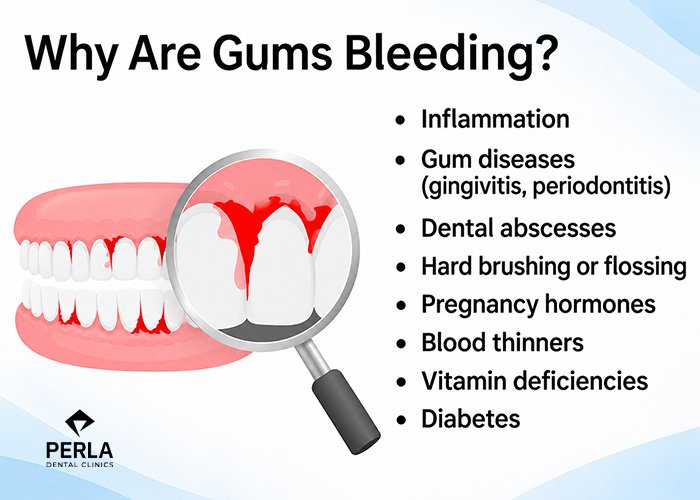
However, bleeding is not a necessary or sufficient symptom of gum disease, and the severity of bleeding does not indicate gum disease progression. For example, smokers are more likely to have severe gum disease without exhibiting bleeding.
Gum bleeding can also have other causes, explained further below. Because causes of gum bleeding vary, discuss even minor recurring bleeding with your dentist to establish the underlying cause and, if necessary, treat it early.
Why Do Gums Bleed When You Brush or Floss?
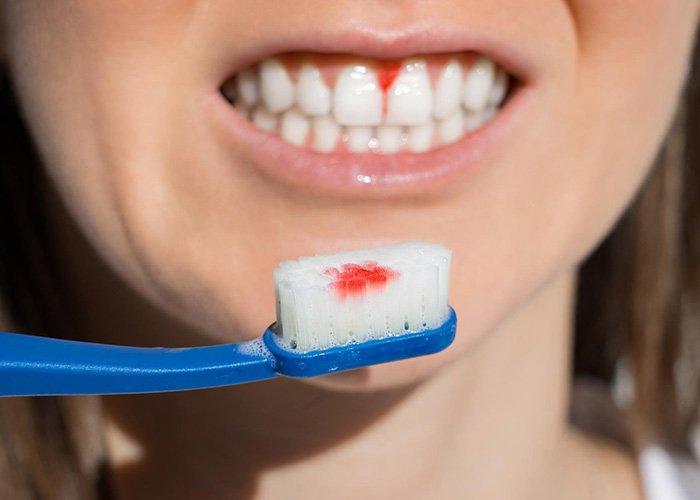
When you brush your teeth or floss interdental spaces, you may notice bleeding directly or in the sink. However, this does not provide enough information to determine the underlying cause.
Gums may bleed due to incorrect brushing or flossing techniques, but this does not rule out gum inflammation. Inflamed gums are more prone to bleeding on contact with a cleaning tool. Furthermore, soft tissues in the interdental spaces are not keratinised, and so are prone to bleeding. This means bleeding after brushing or flossing can be due to both trauma and inflammation.
Note that if you improve your oral hygiene routine following your dentist’s recommendations, bleeding may initially become more noticeable as you remove dental plaque from the gums and teeth. Discuss such a possibility with the dentist.
Why Might Your Gums Bleed Without Brushing?
If you notice blood in your mouth or on your pillow without brushing, it is important to find the source first. Unlike bleeding during tooth brushing, the source may not be obvious.
Schedule a consultation with your GP or dentist. Note the circumstances in which bleeding occurs, the amount of blood, and whether you notice any inflammation or swelling anywhere in the oral cavity or face. Note that if you do not feel any pain during or after a bleeding episode, it does not mean that the cause is resolved.
Periodontitis, dental abscesses, other health conditions or certain medications may cause spontaneous bleeding.
What Else Can Cause Bleeding Gums?
Other common causes for bleeding gums include hormonal changes during pregnancy, specific medicines, and local trauma.
Changes in hormone levels and immune response during pregnancy may play part in the development or worsening of gum inflammation. Symptom severity varies, and while they usually resolve after delivery, consult a dentist or your doctor about possible changes to oral hygiene or further professional care to address possible gingivitis and prevent its development.
Some medications, particularly anticoagulants, can cause bleeding gums as a side effect. Specifically for anticoagulants, bleeding may occur as a result of minor injuries when brushing your teeth, which would not otherwise cause such symptoms. This does not rule out gum disease. If you are taking medications with gum bleeding as a known side effect, do not adjust or stop the therapy without consulting the prescribing healthcare professional.
Bleeding gums can also be caused by local trauma or a range of health conditions. These may be unnoticed injuries from hard or crunchy food, ill-fitting dental restorations, burns, or picking teeth with toothpicks, biting nails, or other such habits. Hormonal fluctuations and diseases such as uncontrolled diabetes and severe vitamin deficiencies can also contribute.
When Should You Seek Help for Bleeding Gums?
While you should discuss any recurring bleeding episodes with your dentist, whether the case requires emergency care depends on the observed situation. The following recommendations can help guide your actions. Note that this is not a self-diagnosis guide, and any case of bleeding may have underlying causes that are impossible to determine by your observation alone.
| Observed situation | Recommended action |
|---|---|
| Repeated non-severe bleeding when brushing teeth or eating, without urgent care symptoms. | Contact the dentist to schedule an appointment to establish the cause and possible treatment. |
| Any of the following: gum bleeding that you can control with self-help measures, painful swelling, tooth mobility, a gum boil, or suspected dental abscess. | Contact the dentist for urgent unscheduled care; treatment urgency depends on the individual case and medical assessment. |
| Severe bleeding that cannot be controlled with local measures. | Go to A&E or call 999. Request emergency unscheduled care. |
| Severe swelling, especially with difficulty breathing, swallowing, speaking, or other worrying symptoms. | Go to A&E or call 999. Request emergency unscheduled care. |
How Does a Dentist Find the Cause of Bleeding Gums?
The clinical assessment pathway starts with the dentist considering the patient’s current symptoms and their history. To establish basic treatment needs and determine what other examinations are required, the dentist performs a Basic Periodontal Examination (BPE). The dentist assesses bleeding on probing and may perform a full periodontal assessment if required. This helps establish whether the bleeding is caused by gingivitis, periodontitis, or other factors. If the patient has an established periodontitis diagnosis, the dentist may take radiographs (X-rays) to determine whether bone loss has occurred and its extent.
The doctor creates the patient’s personal treatment plan based on these findings. It may involve modifications to the oral hygiene routine, control of modifiable risk factors (smoking, poorly controlled diabetes), or other measures.
What Should You Do If Your Gums Bleed?
Repeated gum bleeding requires following the dentist-recommended long-term care based on your case. Unless instructed by your doctor, do not stop brushing or make major adjustments to your dental care routine.
If you notice minor bleeding from your gums, you should:
- Continue your regular tooth brushing routine with a fluoride-containing toothpaste, but avoid putting too much pressure on your gums.
- Pay extra attention to cleaning the gum margins and interdental spaces with appropriate tools. If you suspect an underlying infection or another cause, consult with your dentist on how to manage cleaning these areas.
- If the bleeding persists, schedule an appointment with your dentist to evaluate the gums and discuss the correct technique for your case.
- Avoid using mouthwash right after brushing your teeth. Even if you are using an antibacterial mouthwash, it alone should not replace brushing your teeth.
- If you have had a tooth removed or had other dental surgery to treat an underlying issue, follow your dentist’s recommendations for caring for the affected area. If the extraction or surgery site bleeds, consult your dentist; don’t treat it as general gum bleeding.
How Are Bleeding Gums Treated?
Bleeding gums are primarily a symptom of an underlying cause, and treating that cause is what eliminates further bleeding. As such, no single treatment for every case of bleeding gums exists. The approach depends on the cause and its severity. For example, professional deep cleaning is not required in every case.
| Cause | General first step of the treatment process |
|---|---|
| Dental plaque-induced gum inflammation (gingivitis) | Individual oral care adjustment or professional treatment, based on severity |
| Established periodontitis | Creation of an individual treatment plan and subsequent treatment of periodontitis |
| Suspected other disease or medication-related bleeding | Diagnostics, evaluation of the condition, treatment, or adjustment as required |
Frequently Asked Questions
Can bleeding from gums stop on its own?
Yes, it can. However, don’t assume the underlying cause has been resolved just because the gum bleeding has stopped without consulting a dentist. Inflammation can persist beneath the gum line and reoccur later. Schedule a consultation to establish and resolve the underlying cause.
Why is deep cleaning necessary to resolve some cases of gum bleeding?
Deep cleaning is required to remove tartar, which forms when a bacterial biofilm isn’t removed by toothbrushing. Unlike a biofilm, a toothbrush cannot remove tartar, but it hosts the same bacteria that contribute to gum inflammation. This means dental tartar can cause gum inflammation and bleeding.
Click below to share this page

Medically reviewed by:
Dr. Onur Ademhan
Oral and Maxillofacial Surgeon
Founder and CEO of Perla Dental Clinics. Graduated from Ankara University Faculty of Dentistry and specialized in Oral and Maxillofacial Surgery at Gazi University.