+90 534 226 60 59
  Mon - Fri: 9:00-18:00; Sat: 9:00-17:30; Sunday: Closed

A dental abscess is an infection that can be accompanied by swelling, a build-up of pus, and severe pain. It can form around the tooth or gums. Many dental abscesses are localised, but can progress to more severe forms. Diagnosis from a dentist and removal of the source of infection are critical for successful treatment.
This article will help you learn more about dental abscess symptoms, potential warning signs, and the treatment procedure to aid in identifying its telling signs and resolving the problem.
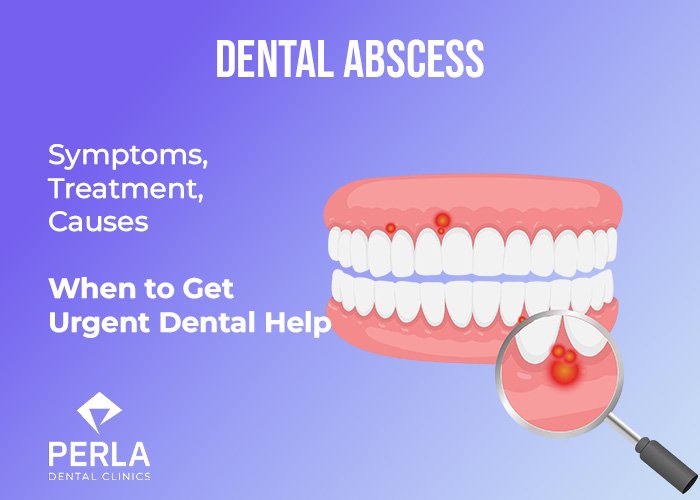
Table of Contents
What Is a Dental Abscess?
A dental abscess is an accumulation of pus around a tooth or gum. It forms as a result of infection and requires a dentist’s examination and help. This condition should not be ignored.
The infection site can be within the tooth or in the gums along the tooth. The exact treatment procedure can vary. It may require drainage, a root canal treatment, or the extraction of the abscessed tooth.
Quick signs to watch for:
- Swelling or redness.
- Intense toothache.
- Bad taste or breath in your mouth.
- Fever.
- Sensitivity to hot or cold foods.

The extent of pain, swelling, and pus formation can vary between abscesses. Many are localised infections, but some can spread to surrounding tissues and are a serious general health concern.
Dental Abscess Symptoms and Warning Signs
Symptoms of a dental abscess include pain, swelling, pus, fever, and bad taste in the mouth.
Symptoms can exhibit themselves in different locations, depending on the location of infection. For example, a tooth abscess that forms near the root is more likely to cause facial swelling than a localised gum boil.
Call a dentist if you get these symptoms:
- Severe, throbbing pain that can appear suddenly and make the tooth sensitive.
- Tenderness and sensitivity in tissues surrounding the infection site.
- Bad breath or unpleasant taste.
- Sudden temperature sensitivity when eating.
- General unwellness.
When Is a Dental Abscess Urgent?
A dental abscess may require urgent help if you have severe swelling, fever, or difficulty opening your mouth or swallowing.
Seek urgent help if you have:
- Swelling that affects your face.
- You experience problems with your eyesight, or the area around your eye becomes swollen or painful.
- Difficulty breathing, opening your mouth or swallowing.
- Severe pain that does not respond to painkillers.
- High fever of 38°C (100.4°F) or above.
Note that the absence of pain does not indicate that swelling is not related to an abscess. Depending on the location of the abscess, swelling can precede pain.
What Causes Tooth and Gum Abscesses?
Tooth and gum abscesses can develop when bacteria enter the tooth pulp, gum tissues, or spaces around the tooth. This can cause inflammation and pus formation at the site of infection, commonly in the gums near the tooth or at the tooth root.
Some conditions may make it easier for bacteria to cause inflammation and abscesses. These include impacted teeth, tooth decay, gum disease, trauma, radiotherapy or chemotherapy.
Gum Abscess vs Tooth Abscess
Gum and tooth abscesses differ in the location of the site of infection.
The infection causing the gum abscess forms in the gums. It may be caused by gum trauma or enlarged periodontal pockets after gum disease. For gum abscesses, swelling usually appears before pain.
A tooth abscess forms within the tooth. Bacteria can reach inside through a failing filling, a crack, or an unnoticed cavity. It may spread beneath the tooth and lead to a build-up of pus near the roots of the tooth. Since the infection is located deep beneath the tooth, pain usually precedes swelling in tooth abscesses.
| Comparison criteria | Tooth abscess | Gum abscess |
|---|---|---|
| Infection site | Inside or beneath the tooth | The gums |
| Visible features | Swelling under the tooth or wider facial swelling | A boil or swelling in the gums |
| Pain | Deep within the tooth, typically precedes swelling | Usually localised in the gum area and follows swelling |
| Typical treatment | Root canal treatment or extraction | Incision, drainage, and cleaning |
How Do Dentists Treat a Dental Abscess?
Treatment of a dental abscess depends on its cause and extent. It may involve drainage, antibiotic therapy, root canal treatment, or tooth extraction.
Eliminating the source of infection is the most important part of treating a dental abscess. Simply draining the abscess is not enough to prevent further bacterial spread and damage. The precise approach is chosen after dental examination, imaging, and diagnosis.
Antibiotics, Drainage, Root Canal or Extraction
Possible dentist-led treatment options for treating dental abscesses include:
- Incision and dental abscess drainage: Draining pus relieves pressure and helps reduce swelling and pain.
- Root canal therapy: Infection within the tooth may require accessing the dental pulp to clean the infected tissues.
- Tooth extraction: Severe deep infection or extensive tooth damage may require removing the tooth outright to drain the abscess.
Oral antibiotic therapy can be used simultaneously with the procedures above when deemed necessary, such as for more severe, non-localised infections.
What Not to Do at Home
Dental abscesses can cause severe pain. In such cases, it is understandable that many people may consider popping or draining it at home. However, this is dangerous and does not address the cause of infection. Do not consider gum abscess home remedies that involve manipulating the site of infection.
You can take painkillers before a dentist’s appointment to help reduce pain. Eat soft foods and use a soft toothbrush during this time.
Do:
- Seek dental advice.
- Follow professional guidance.
- Ask for an urgent dental appointment.
Do not:
- Attempt to drain the pus,
- Wait for the abscess to resolve on its own.
- Ignore the abscess if the pain suddenly ceases.
Can You Drain or Pop a Tooth Abscess Yourself?
No, you should not pop or drain a dental abscess yourself. This can promote further spread of infection and increase the risks of complications. Contact a dentist if you suspect having a dental abscess.
Will a Dental Abscess Go Away on Its Own?
A dental abscess should not be ignored. Even if the pain goes away or the abscess drains, the underlying infection can remain. Addressing the source of infection requires professional dental care.
Why waiting is risky:
- Infection can affect other tissues and lead to complications and life-threatening conditions.
- Severe swelling can cause breathing difficulties.
- Infection damages the soft tissues and jawbone and can lead to tooth loss.
Wisdom Tooth and Post-Extraction Abscess Signs
Some symptoms after wisdom tooth extraction can overlap with general symptoms of a dental abscess. They do not necessarily indicate a wisdom tooth abscess, but are still a cause for concern and should be reported to the dentist. For example, symptoms such as bad breath or taste in the mouth can indicate a dry socket.
This article focuses on treatments targeting abscesses and bacterial infections. Similar symptoms that can occur after wisdom tooth removal, but are not infections, are not the focus of this page. You can learn more about recovery and possible complications after wisdom teeth extraction in our article.
Dental Abscess Treatment Planning for International Patients
International dental patients with possible abscess symptoms may require urgent local dental examination before travelling to Turkey for any further dental treatments. Delaying treatment of the abscess can be unsafe, and travel can further exacerbate symptoms such as pain and swelling.
If you can proceed with treatment in Turkey, getting a written dentist-led plan should be your next step. It should include the preliminary diagnosis, interpreted quote, and treatment aftercare instructions. This will help clarify questions about the treatment and help avoid hidden costs.
Before travelling to Turkey for a dental treatment:
- Prepare dental X-rays or photos, if requested.
- Mention relevant symptoms
Dental Abscess FAQs
How Long Does a Dental Abscess Last?
How long a dental abscess lasts depends on its cause and treatment. Do not wait it out. The underlying cause of a dental abscess needs to be addressed to prevent further symptoms. Allowing it to progress can result in a dental abscess emergency.
Can a Dental Abscess Cause Sepsis?
A dental infection that causes an abscess can lead to serious complications if allowed to progress. Contact a dentist if you experience warning signs of an abscess. Delaying treatment makes complications more likely.
Can Salt Water Cure a Tooth Abscess?
Salt water cannot cure a tooth abscess. Salt water rinses, if used and recommended by the dentist, do not treat the actual infection. In some cases, a dentist may recommend it as a temporary measure to keep the abscess area clean before treatment.

Medically reviewed by:
Dr. Onur Ademhan
Oral and Maxillofacial Surgeon
Founder and CEO of Perla Dental Clinics. Graduated from Ankara University Faculty of Dentistry and specialized in Oral and Maxillofacial Surgery at Gazi University.