+90 534 226 60 59
  Mon - Fri: 9:00-18:00; Sat: 9:00-17:30; Sunday: Closed

A tooth shade guide is a tool that helps dentists and patients choose a tooth colour for dental treatments such as dental veneers or tooth whitening.
Here we explain the most common shade systems and popular colours suitable for many patients, to help you learn about available shades of teeth.
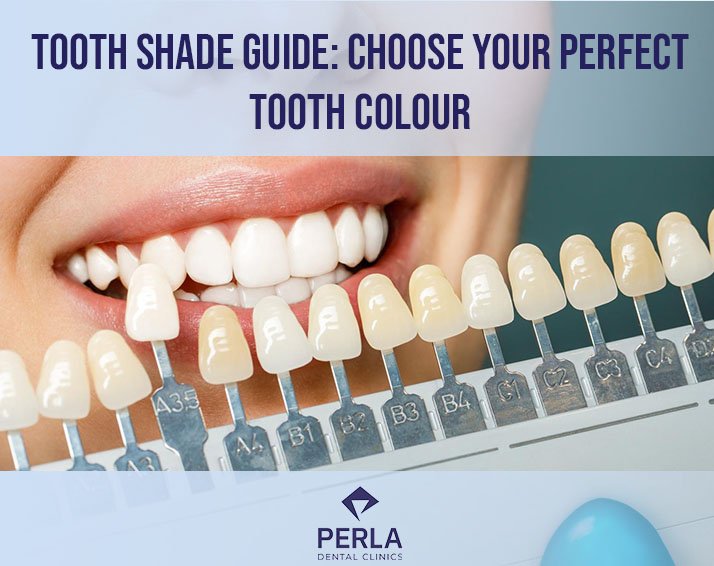
Table of Contents
What Is a Tooth Shade Guide?
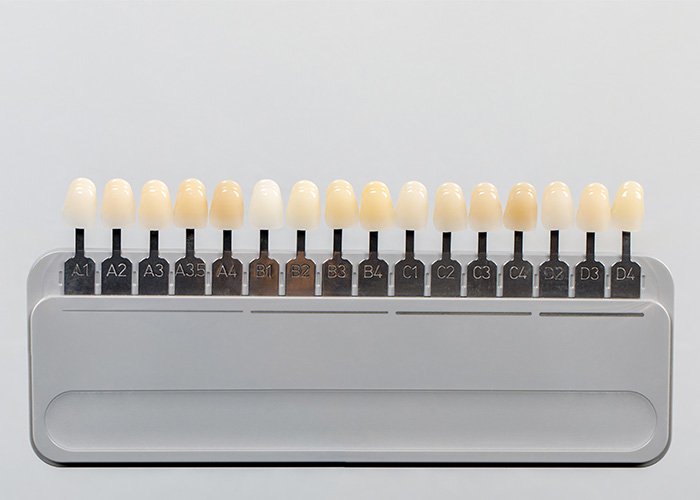
A tooth shade guide is a tool that helps match a patient’s present and desired tooth colour by comparing it to a series of samples. The samples are arranged in colour groups.
These guides help dentists create dental restorations that match the colour of the patient’s untreated dentition or establish a baseline colour and track its changes for teeth whitening procedures.
Tooth Shade Systems and Colour Groups Explained
Tooth shade systems define how colour samples are organised in a guide. Several companies, such as VITA and Ivoclar, manufacture tooth colour guides, which use different grouping systems.
For example, the VITA Classical shade guide lays out four basic sample groups defined by a base colour denoted by a letter. Samples within each group are graded by brightness, shown by a number. For example, in the A group of shades, A1 is brighter than A3.
Dental Colour Charts Used by Dentists
The two main dental colour guides used by dentists today are VITA Classical and VITA 3D-Master. These guides describe natural tooth colours.
VITA Classical is a range of 16 shades, separated into four basic natural tooth shade groups (A, B, C, D). Each group has its own base colour, and samples within a group differ in intensity. The shade comparison is done in one step.
VITA 3D-Master shade guide is a more modern system that groups 26 samples by three parameters: value, hue and chroma. This allows for a more precise colour matching in three steps, though not all restorations support this system.
Additional bleached tooth scales are made for both systems. These are the colours of whitened teeth, which are whiter than any natural shade.
The colour groups of VITA Classical, the most commonly used system, are listed below.
Group A
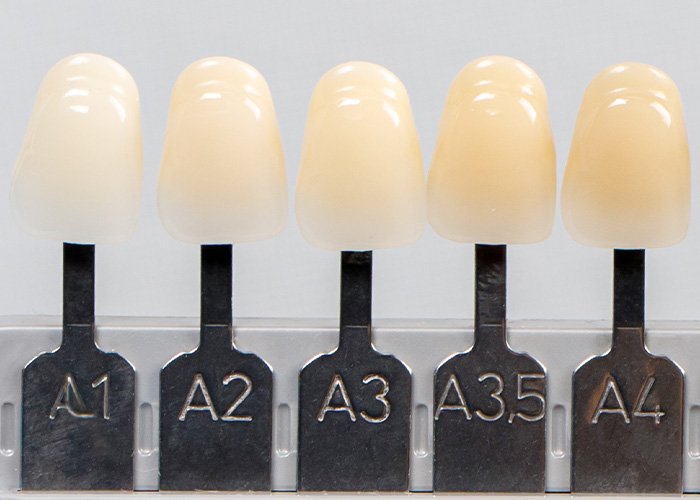
These are reddish-brown hues. They are warm and natural-looking.
Group B
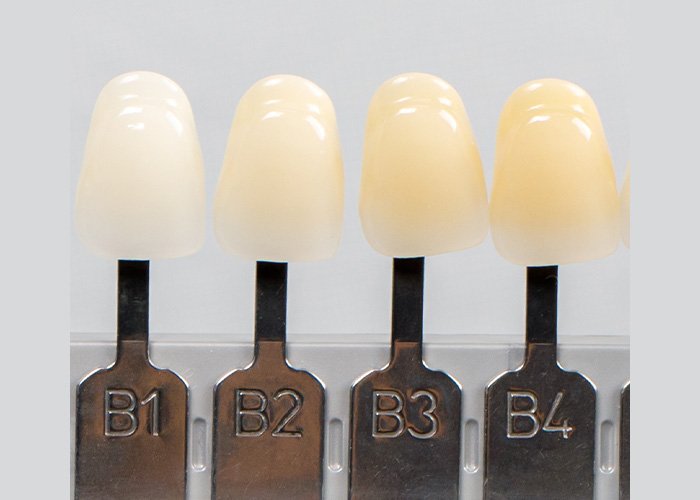
These are reddish-yellow hues. They look slightly brighter than the A group, but still natural.
Group C
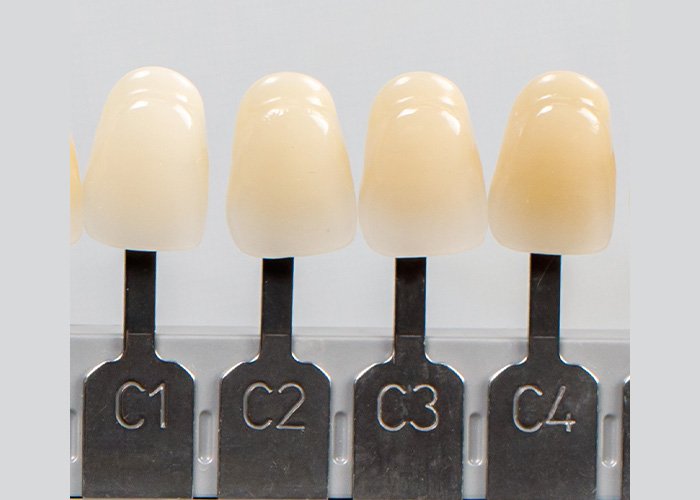
These are greyish hues. The grey undertone creates a cooler range of shades.
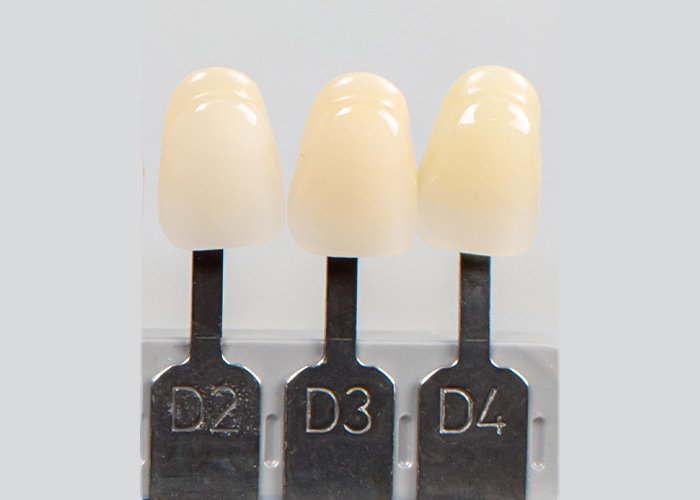
Group D
These are reddish-grey hues. This group is similar to group C, but is slightly warmer.
Most Popular Tooth Shades
The three most popular dental shades used in dentistry are A1, A2, and B1.
A1 is a bright, youthful shade with a slight ivory undertone. It blends well with many gum and skin colours, and looks natural, like bright, healthy teeth.
A2 is a slightly deeper shade, representing a more mature, yet bright, natural shade. The colour is close to the most common tooth shade among younger patients.
B1 is the brightest natural tooth shade. It lacks some of the ivory tones of the A1 and is closer to the bleached shades. This is the preferred choice for natural Hollywood-style smiles and is often used for veneers and crowns.
What Determines Natural Tooth Shade?
The natural tooth shade is determined by the colour of the patient’s dentin and enamel. Since enamel is translucent, the colour of dentin, which is the inner layer, can show through, influencing overall tooth colour.
With age, the natural tooth colour tends to deepen. Since the colour of dentin depends on genetics and age, shade matching is an important part of creating natural-looking dental restorations that suit the patient.
How to Choose the Ideal Tooth Shade for You
To choose a tooth shade that suits your smile, consider several factors, such as your skin tone, age, and even diet. This will help ensure that your restored or whitened teeth do not look out of place and will stay looking good for a long time.
Match The Shade to Your Skin Tone
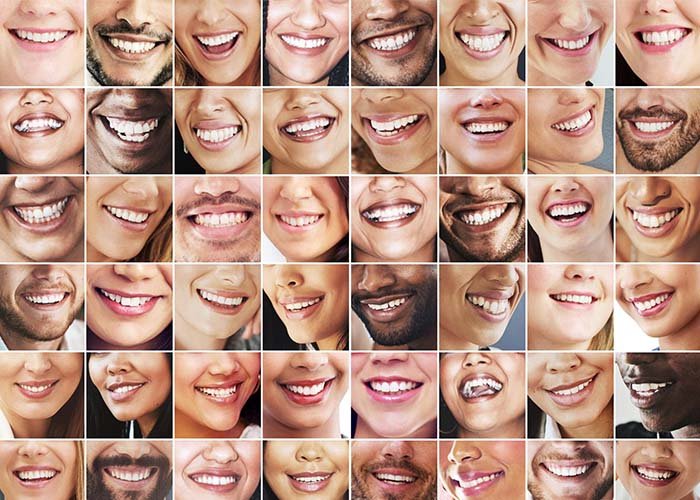
Tooth colour selection should account for the contrast between your skin and your teeth. Patients with light skin benefit more from brighter shades. Conversely, a shade like B1 may look artificial for dark skin, and softer, creamier colours may be more suitable. It is important to balance contrast to avoid making the smile look monochromatic, for example, using a C1 shade in patients with very pale skin.
Choose Between Natural and Bright Shades
If you do not want your smile to have a very Hollywood-style appearance, choose among the natural bright colours, such as A1, A2, and B1. They can improve the shade of your teeth without putting too much attention to it.
Consider Your Age and Facial Features
The natural colour of teeth changes as we age. Choosing a shade that is common among much younger or older people can make your smile look unnatural. A1, A2, and B2 are the most common shades among people ages 18-45. People over 45 tend to have shades B3 and A4.
It is also important that your teeth do not look brighter than the whites of your eyes, or they can look blinding in comparison with the rest of your face.
Test the Shade in Different Lighting
Consider the impact of lighting on the colours. A shade that looks good under artificial lighting may look quite different under natural daylight. It is important to test the colour under warm, neutral, and cool light. In general, the true colour is best rendered by natural light around noon.
Avoid Choosing the Whitest Shade Too Quickly
Carefully consider how you want your smile to look before settling on a particular colour. While bleached shades can give you a Hollywood-like smile, they may not be the best choice if the shade of white is too bright and disrupts your facial harmony.
Think About Long-Term Appearance
Dental treatment does not stop changes in tooth colour. For example, if you drink a lot of tea and coffee, it will affect your tooth colour over time, whereas dental restorations are more stain-resistant. In these cases, a warmer hue is more likely to be the best shade. It will look better for longer and won’t cause a mismatch between natural and treated teeth.
Natural vs Hollywood White Teeth
Natural and Hollywood White tooth hues are different. Even the brightest natural shade is not as white as bleached (whitened) Hollywood-style hues. These bleached shades are grouped separately.
Natural white shades lean more towards ivory-white, whereas Hollywood colours are more pure. The choice between them depends on your preferences.
Choosing the Right Shade for Veneers, Crowns and Whitening
The right tooth colour heavily depends on the type of restoration you require.
Shade Selection for Veneers
Dental veneers are primarily cosmetic treatments for front teeth and, especially when used in sets, can be made in brighter shades, since they cover all externally visible teeth.
Shade Selection for Crowns and Bridges
Dental crowns and bridges are restorative treatments. Because of this, matching the shade of the neighbouring untreated teeth is more important. A very bright crown or bridge will stand out as artificial, so the restoration’s hue is chosen to balance the smile.
Shade Expectations for Teeth Whitening
Teeth whitening procedures can brighten the patient’s teeth by several shades when performed in a dental clinic. A typical conservative whitening can make your teeth 2-3 shades lighter, which is noticeable, but not dramatic. More intensive whitening can brighten your teeth by 4-8 shades, depending on their condition.
How Dentists Match Tooth Shades Professionally
Dentists use two methods to match tooth shades: visually with shade charts and digitally with intraoral scanners. The digital method produces objective measurements, but they do not always match the manual visual estimation. Digital matching is supplemented by a manual visual method for the best aesthetic results.

Medically reviewed by:
Dr. Onur Ademhan
Oral and Maxillofacial Surgeon
Founder and CEO of Perla Dental Clinics. Graduated from Ankara University Faculty of Dentistry and specialized in Oral and Maxillofacial Surgery at Gazi University.
FAQ About Tooth Shades
What Tooth Shade Looks Most Natural?
All unbleached shades are based on natural tooth colours. The most natural teeth colour for each patient depends on their genetics, age, and other factors.
Can You Get Different Shades of Turkey Teeth?
Yes, you can get any natural and bleached tooth shades in Turkey. Clinics in Turkey use the same professional dental shade guides as clinics in the UK, the EU, and the USA.
Which Tooth Shade Is Whiter, A1 or B1?
B1 tooth shade looks whiter than A1, because it is the lightest hue within the reddish-yellow group. The A group tends towards reddish-brown and is warmer.
Is B1 the Whitest Natural Tooth Shade?
Yes, it is widely considered the whitest shade of teeth in the natural group. Up to 6% of people aged 18-30 have this shade naturally, so it is not common.
Is A1 Too White?
While this shade is bright, it is a balanced, youthful colour. It does not look artificial or bleached and is suitable for patients who have naturally whiter teeth.
Is A2 or B2 Whiter?
B2 is whiter than A2. Due to different base hues, every colour in the B group is a lighter shade than the corresponding hue number in the A group.
How Do I Know Which Tooth Shade Is Suitable for Me?
A good way to choose the right tooth shade is to use a shade guide. The chosen colour should create a harmonious smile that matches your preferences, age, and face.