+90 534 226 60 59
  Mon - Fri: 9:00-18:00; Sat: 9:00-17:30; Sunday: Closed

Many patients consider palateless dentures as a less bulky alternative to conventional upper-jaw dentures. Patients who find that traditional dentures trigger their gag reflex or change the taste of foods can benefit from palateless denture design.
However, palateless dentures may require more planning and are not an automatic solution for every patient. This article explains their benefits and drawbacks to help make the choice easier.
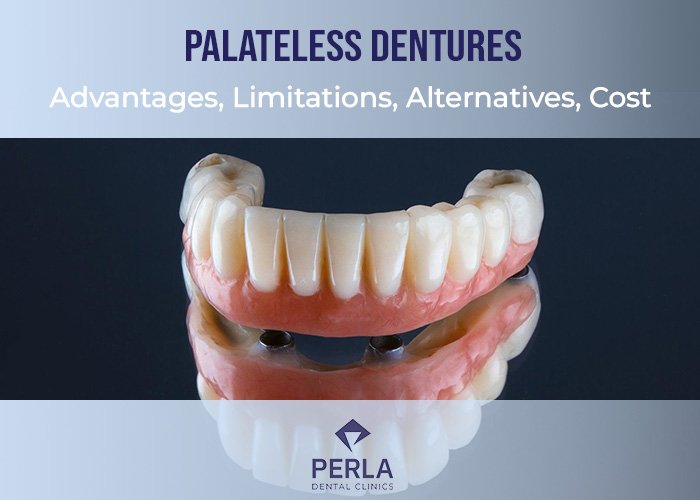
Table of Contents
What Are Palateless Dentures?
Palateless dentures are a type of denture that does not cover the patient’s palate. They can also be called no-palate, roofless, plateless or open-palate dentures.
Dentures without a palate are an alternative to conventional upper-jaw dentures. They can be held in place by various means, but are most commonly implant-retained. Suitability for the patient and how the denture is retained in the mouth depend on the patient’s case and needs.
Why Do Some Patients Want Dentures Without a Palate?
Traditional upper dentures feature a plate across the patient’s palate that helps retain the denture via suction. Some patients find that it can feel bulky, affect taste, and, in some cases, trigger gagging.
Some patients prefer to avoid traditional upper dentures because of:
- Bulk: Traditional dentures are larger, which can reduce comfort.
- Taste changes: covering the palate can alter how the food tastes.
- Gag reflex: Some patients find that traditional dentures trigger their gag reflex.
- Speech: Traditional dentures are bulky and can make speaking more difficult.
- Eating and chewing: Traditional dentures may require more care while eating.
- Slipping worry: Suction-retained dentures can feel less stable.
How Do Palateless Dentures Stay in Place?
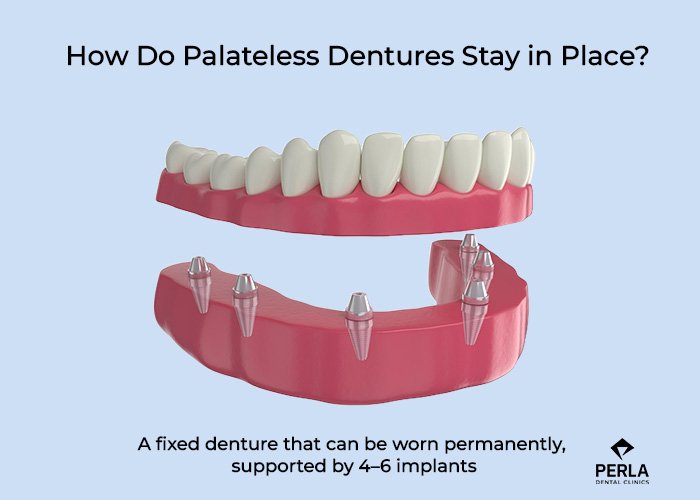
Palateless dentures can stay in place with implants or clasps. Implant-retained palateless dentures are by far the most common type. If the patient’s oral anatomy and remaining teeth allow, palateless dentures can be retained by clasps. The choice depends on which option provides sufficient stability in the patient’s case, while also meeting their goals and budget preferences. Retention can depend on:
- Fit
- Oral anatomy
- Remaining teeth
- Clasps
- Implants
Can You Have Palateless Dentures Without Implants?
Palateless dentures without implants may be used in patients whose oral anatomy and remaining teeth can support the restoration. An example is the use of clasps that retain palateless dentures by attaching to remaining teeth.
However, these options can be less stable than implant-retained and fixed implant-supported dentures.
When a non-implant denture may be discussed:
- The patient wants to avoid placing implants.
- Remaining teeth and oral anatomy provide sufficient support for the denture.
When an implant-retained denture may be discussed:
- The patient wants a more stable denture option.
- The patient prefers a removable restoration.
- The patient can have implants placed
When a fixed implant-supported denture may be discussed:
- The patient prefers a fixed, non-removable restoration.
- The patient can have implants placed.
Who May Be Suitable for Palateless Dentures?
Suitability for palateless dentures depends on the patient’s case, including current gum health, bone support, bite, and oral hygiene. Choosing a palateless denture or an alternative treatment should only be done after a dentist’s assessment. This will help ensure that the patient’s oral anatomy and health provide sufficient support for the restoration.
Suitability for palateless dentures is determined by:
- Oral examination.
- X-rays or other dental imaging, if required.
- Condition of remaining teeth.
- Gum health.
- Bite.
- Treatment goals.
Palateless Dentures vs Traditional Upper Dentures
The main difference between traditional dentures and palateless dentures is in palate coverage. This also influences the retention methods used by both types of restorations.
Traditional upper dentures use palate coverage for stability via suction. Palateless alternatives are not reliant on suction but require additional planning for implants or clasps for support.
Not every patient is suitable for both types of upper dentures. The choice between these options should depend on the patient’s needs and condition.
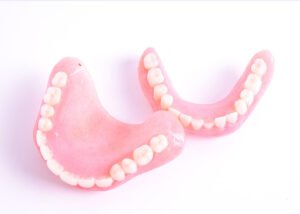
Palate-covering upper denture
- Usually suction-retained.
- Covers the palate
- Can feel bulky and affect taste
- Simpler to plan
- Tend to be less expensive
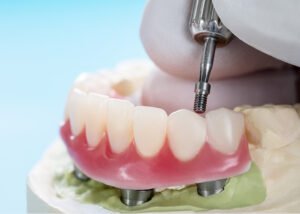
Palateless denture
- Usually implant-retained.
- Avoids covering most or all of the palate
- Less bulky and does not influence taste
- More difficult to plan
- May be more expensive, especially if implant placement is involved
Main Benefits of Palateless Dentures
Palateless dentures are usually smaller and offer more tongue space. As such, they do not interfere with the perception of food temperature and texture, which may reduce changes in food flavour while wearing the restoration. These dentures can be more suitable for patients who find conventional options uncomfortable or those who would feel more confident with an implant or clasp-retained restoration.
Main Limitations of Palateless Dentures
Palateless dentures require more complex planning for good retention. Many palateless denture designs use implants, which are more expensive than other restorations and may not be suitable for some patients without additional procedures, or not at all. In cases where implants cannot be used, palateless denture treatments can face challenges with creating suitable support from remaining healthy teeth and the patient’s oral anatomy.
How Much Do Palateless Dentures Cost?
The cost of palateless dentures can vary depending on design, retention method, number of appointments, lab work, and aftercare.
Because of the many variables in palateless denture treatment, a written treatment plan and an itemised quote obtained after a remote consultation with a clinic are better than relying on online estimates.
- What influences the cost of palateless dentures:
- Diagnostics.
- Material.
- Removable/fixed design
- Use of implants
- Lab work.
- Appointments.
- Aftercare.
Patients from the UK should clarify these points and ensure that they are included in the itemised quote before travelling for cosmetic dentures in Turkey.
Alternatives to Palateless Dentures
Palateless dentures are not the only solution for missing teeth in the upper jaw. Traditional dentures, flexible and cobalt-chrome partial dentures, implant-supported bridges, and full-arch implant systems can be viable alternatives for some patients.
| Alternative | What it is | When it may be discussed |
|---|---|---|
| Traditional dentures | A traditional upper denture covering the palate | When a patient has lost all teeth in the upper jaw, prefers a cost-effective option, and wants to avoid implants. |
| Flexible partial denture | A soft nylon denture that fits the gums tightly | When a patient has lost several teeth and wants to avoid metal frameworks or clasps |
| Cobalt-chrome partial denture | A partial denture with a metal framework | When a patient has lost several teeth and wants a restoration that is thinner than a traditional full-arch denture |
| Implant-supported bridge | A fixed implant-supported restoration that replaces several teeth | When a patient prefers a fixed restoration for several consecutive missing teeth. |
| Full-arch implant system | A fixed implant-supported restoration that replaces all teeth in the jaw, such as All-on-4 | When a patient is missing all teeth in the jaw and wants a stable implant-supported solution |
Planning Palateless Dentures in Turkey
UK patients considering palateless dentures in Turkey require more robust treatment planning and should get a written treatment plan, an itemised quote, and aftercare guidance before they travel for their treatment.
Before travelling for palateless dentures:
- Share required dental photos/scans.
- Mention relevant medical history.
- Get a written treatment plan and itemised quote.
- Clarify appointment timing and aftercare contact details.
At Perla Dental Clinics, patients can get palateless dentures in 3 appointments. Our palateless dentures come with a 3-year warranty in case of damage and remote consultations via WhatsApp for when the patient returns home.
Frequently Asked Questions About Palateless Dentures
Are Palateless Dentures Any Good?
Palateless dentures can be a good option if you find traditional upper dentures uncomfortable. They can help avoid issues with taste perception, fit, and a sensitive gag reflex. Suitability depends on the patient’s case, and they are not a universal solution.
Do Upper Dentures Have to Cover the Full Palate?
Not every upper denture has to cover the palate. Upper dentures cover the palate to create suction. This helps keep them in place. Not every denture design covers a full palate, and true palateless dentures can avoid covering it at all by using implants or clasps.
Can You Eat with Palateless Dentures?
Yes. Some patients can eat comfortably with palateless dentures. A patient’s comfort depends on denture fit and stability. These vary from patient to patient and between retention methods.
Are Roofless Dentures and Horseshoe Dentures the Same Thing?
These terms can refer to the same type of dentures, but the exact use varies by clinic and location. Some clinics use these terms to differentiate between dentures with different retention methods. Others use both for the same type of denture. You should confirm the exact denture design with the clinic before treatment.
Are Palateless Dentures Permanent?
Palateless dentures can refer to implant-retained and implant-supported dentures. Implant-retained dentures are removable and are thus not permanent. Implant-supported dentures cannot be removed by the patient and are considered permanent.
What Should I Ask Before Travelling for Dentures?
Ask for a suitability review, a written treatment plan, and an itemised quote before travelling for dentures. The treatment plant should include appointment timing and aftercare guidance. This will help confirm treatment details and avoid hidden costs.

Medically reviewed by:
Dr. Onur Ademhan
Oral and Maxillofacial Surgeon
Founder and CEO of Perla Dental Clinics. Graduated from Ankara University Faculty of Dentistry and specialized in Oral and Maxillofacial Surgery at Gazi University.