+90 534 226 60 59
  Mon - Fri: 9:00-18:00; Sat: 9:00-17:30; Sunday: Closed

Screwless dental implants can attach to a dental crown or bridge without an external screw. There is no need for a screw access hole, allowing for a more aesthetic and natural-looking restoration.
While potentially more aesthetic, non-screw implant systems are more difficult to maintain, making them a complementary treatment to traditional dental implants, rather than a replacement, and are suitable for different cases. This article explains screwless system components, use cases, and benefits, and can help you determine when to choose screwless dental implants.
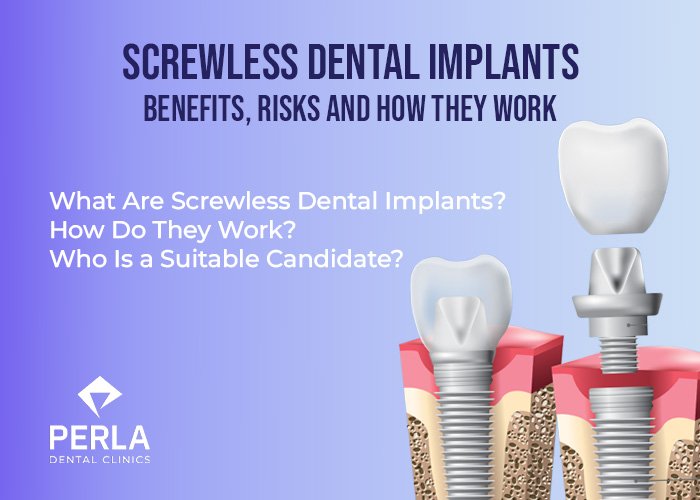
Table of Contents
What Are Screwless Dental Implants?
Screwless implants are a type of dental implant that can replace missing teeth and do not require a screw to retain a prosthesis, such as a dental crown.
Modern screwless dental implants use a press-fit connection. Another screwless approach is known as cement-retained dental implants (bonded implants), in which the crown or bridge is connected to the implant using special dental cement.
How Do Screwless Implants Differ from Traditional Implants?
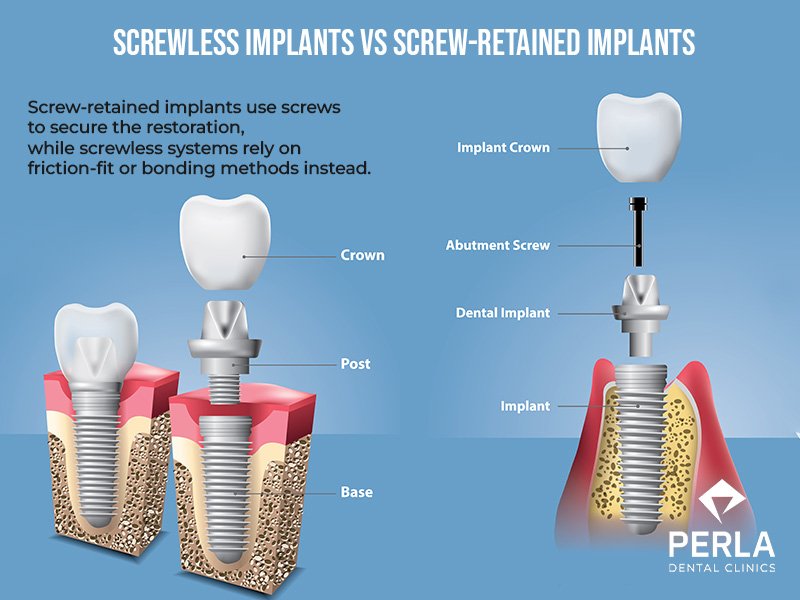
Screwless and traditional screw-retained implants differ in how the prosthesis, such as a crown (false tooth), bridge, or denture, connects to other implant components. Screw-retained dental implants use small screws inserted through the dental crown to secure the restoration.
Screwless systems use a friction-fit design or a bonding agent to retain the prosthesis without screws. This makes the crowns more similar to natural teeth, since they don’t require an access hole through which a screw can be inserted.
Types of Implant Retention Systems
| Type | Uses Screws | Uses Cement | Retrievability | Typical Use |
|---|---|---|---|---|
| Screw-retained | Yes | No | Easy | Multi-unit restorations |
| Cement-retained | No | Yes | More difficult | Aesthetic restorations |
| Screwless (Press-fit crowns) | No | No | More difficult | Modern aesthetic restorations |
Main Components of a Screwless Implant System
Like traditional implants, a screwless system consists of three components: the fixture, abutment, and prosthesis.
A titanium implant fixture is inserted into the jaw to replace a missing tooth root. An abutment connects the fixture to the prosthesis. In screwless systems, the abutment has a special tapered design to lock with the fixture.
The prosthesis is the component replacing the visible part of the tooth, most often a crown. In press-fit screwless implants, the fixture and abutment are connected due to friction. The crown and abutment can be made as a single piece to eliminate the need for using a dental adhesive.
In cemented implants, the abutment and the fixture are connected with a small screw, while the crown is fixed to the abutment with dental cement. This is considered a screwless connection because the crown entirely covers the internal screw, and there is no access hole in the prosthesis.
How Do Screwless Dental Implants Work?
Screwless implants work by creating a stable connection between all parts of the system using a Morse taper or another type of connection.
In a Morse taper system, the fixture and the abutment lock mechanically. The abutment cone and fixture cavity are slightly tapered and, once connected, become fixed together due to friction.
Screwless dental implants are designed to have smaller gaps between components of the implant system and minimise micro-movements through a tighter connection due to the wedge effect.
Screwless vs Screw-Retained Implants: Key Differences
Screw-retained and screwless implants differ in connection methods, maintenance needs, aesthetic considerations, and retrievability. This makes them suitable for different cases.
Screwless vs Screw-Retained Implants: Key Differences
| Feature | Screwless Implants | Screw-Retained Implants |
|---|---|---|
| Risk of connection loosening | Low | Higher |
| Aesthetic Considerations | High | Moderate |
| Maintenance difficulty | Harder | Easy |
| Repairability | Limited | Easy |
Stability and Strength
Screw-retained implants have a longer history of use, and their long-term stability is well-understood. They are considered stronger for most cases than bonded implants.
Well-prepared friction-fit implants are as stable as screw-retained ones. One advantage of a friction-fit connection is that there is no risk of implants loosening over time due to vibrations unscrewing the connection.
Aesthetic Outcomes
The access hole of screw-retained implants is covered with composite material to conceal it. This can present several aesthetic challenges when the implant replaces front teeth, such as uneven colour between the crown and composite filling due to staining. Screwless dental implants offer better aesthetic outcomes since they don’t have an access hole in the crown.
Maintenance and Repair
Screw-retained implants offer easier maintenance and repairability than both bonded and friction-fit implants. The dental prosthesis and abutment can be easily disconnected by removing the screw.
Modern dental implants that use bonded and friction-fit systems are rigidly connected and require special decrowning or decementation approaches, making them harder to repair or retrieve.
Risk of Complications
Friction-fit implants have fewer mechanical complications compared to screw implants. There is no risk of screw loosening, and the close fit of the Morse taper connection inhibits bacterial infiltration.
Cement-retained implants have a higher risk of peri-implantitis because excess residual bonding material can get under the gums during prosthesis placement.
Benefits of Screwless Dental Implants
Screwless implants have several disadvantages arising from their rigid connection:
- They are more difficult to retrieve when necessary and require special tools and training.
- It is more difficult to replace a crown or a bridge in a screwless implant system.
- Cemented implants have a higher risk of peri-implantitis.
Risks and Disadvantages of Screwless Implants
Friction-fit screwless implants have aesthetic and mechanical advantages, which include:
- No external access hole required for the prosthesis.
- No mechanical complications due to screw
- More natural occlusal anatomy for the crowns allows a better match for the patient’s bite.
Who Is a Suitable Candidate for Screwless Dental Implants?
Candidacy for screwless implant procedure depends on the exact patient’s case, but it may be recommended when:
- The patient’s bite benefits more from a Morse taper implant system, such as those with a stronger bite.
- Implants are placed in the aesthetic zone, where a screw access hole can be more conspicuous.
When Are Screwless Implants Not Recommended?
Screwless implants can be unsuitable for cases when:
- Implant placement location does not allow for easy excess cement clean-up (for cemented implants).
- The patient’s jawbone density or volume does not allow for a precise implant placement.
- Frequent implant maintenance or adjustments are expected.
Step-by-Step Procedure for Screwless Implants
The dental procedure for screwless implants consists of three main stages: implant placement, healing, and crown placement. Depending on the number of implants, placing implant fixtures and crowns can take up to a week each, while healing requires up to half a year.
Consultation and Diagnostics
The pre-treatment consultation and diagnostics are required to create detailed dental scans of the patient’s jaw and determine whether screwless implants are a suitable choice for the case.
Implant Placement and Healing
Implant fixtures are placed under anaesthesia using a surgical procedure. The dentist makes incisions in the gums to create a hole in the jawbone dental tissue for the implant or uses a special punch. Once placed, the fixtures need several months to fuse with the jawbone.
Crown Placement
After the healing is complete, the patient can receive permanent crowns. The crowns are manufactured according to dental impressions or scans. They are connected to the fixtures and abutments with a bonding agent or carefully seated into place when using a press-fit connection.
How Long Do Screwless Dental Implants Last?
Survival rates of Morse taper implants range from 96.5% over 10 years when placed in grafted sinuses to 97.2% over 20 years for all cases. With good maintenance and high-quality dental care, a screwless implant system can serve you for over 20 years.
Cost of Screwless Dental Implants in the UK, EU and Turkey
The cost of screwless implants varies with the type of connection used, the number of teeth restored, and whether the implants are used for retaining crowns or bridges. There are also significant price differences between countries for this dental treatment.
The screwless dental implants cost (per tooth) is listed below:
| Type of Implant | Price in Turkey | Price in the UK | Price in the EU |
|---|---|---|---|
| Cement-retained implants | £350-£900 | £1500-£3500 | €1200-€4000 |
| Press-fit screwless implants | £350-£900 | £2800-£5000 | €1400-€4500 |
The prices are current as of 2026.
Want to know which implant type is right for you? Book a consultation to explore your options and get a personalized treatment plan.
Frequently Asked Questions About Screwless Implants
Are Screwless Dental Implants Safe?
Yes, these dental implant treatments are safe. Depending on the type of connection, they can exhibit fewer mechanical risks than screw-retained systems.
How Do Screwless Implants Stay in Place?
The prostheses are anchored to the implant abutments using bonding agents or by friction between different implant components. While cemented implants have a screw joining the fixture and abutment, it lies beneath the crown.
Are Screwless Implants Suitable for Full-Mouth Restoration?
Screwless implants are generally not recommended for full-mouth restorations due to maintenance challenges and precise requirements for placement.
Do Bonded Implants Last as Long as Screw Implants?
Survival rates of Morse taper implants, including those with bonded crowns, exceed 97% over 20 years, which is comparable to screw implants.
Are Screwless Implants More Expensive Than Traditional Implants?
Non-screw implants can cost slightly more than traditional implant systems. Higher costs are due to more modern technology behind screwless dental implants and advanced design.

Medically reviewed by:
Dr. Onur Ademhan
Oral and Maxillofacial Surgeon
Founder and CEO of Perla Dental Clinics. Graduated from Ankara University Faculty of Dentistry and specialized in Oral and Maxillofacial Surgery at Gazi University.