+90 534 226 60 59
  Mon - Fri: 9:00-18:00; Sat: 9:00-17:30; Sunday: Closed

When comparing root canal vs tooth extraction, remember that neither treatment is universally better. They solve different clinical conditions.
A root canal is preferred when a tooth can be saved, while extraction removes the entire tooth. The main consideration the dentist makes when choosing among these treatments is whether the patient’s tooth can be predictably restored and maintained. This article will help you understand these cases and why extraction or a root canal may be preferred.
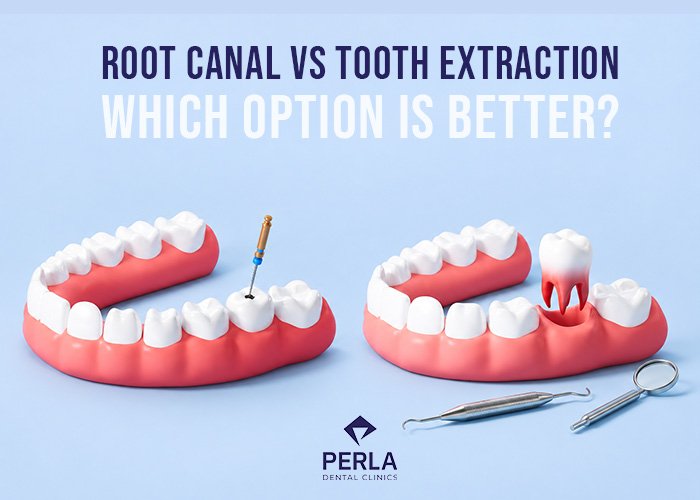
Table of Contents
Root Canal vs Tooth Extraction: How Do They Differ?
Although root canal treatment and tooth extraction can sometimes treat similar dental issues, they approach the problem very differently. Root canal treatment cleans infected pulp tissue while preserving the tooth. Tooth extraction is used to remove the tooth entirely.
What Is Root Canal Treatment?
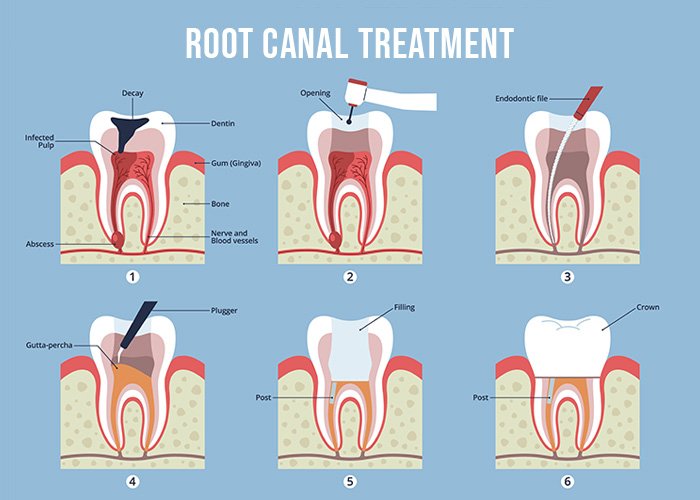
Root canal treatment is an endodontic treatment used to access and remove infected tissue inside a tooth. The dentist cleans and disinfects the canal before sealing it. This can help save the natural tooth while removing the origin of infection. The tooth may require a filling or a crown to protect it.
What Is Tooth Extraction?
Tooth extraction results in the removal of a tooth by a dentist and can be done in several ways. The main types of extraction are simple extraction, where the dentist removes the tooth intact, without making any incisions in the gum, and surgical extraction, where the tooth may be accessed by making gum incisions, sectioned, and removed in pieces. The extracted tooth leaves a missing-tooth space. A tooth replacement may be considered after the treatment.
Can the Tooth Be Saved?
An infected tooth can be saved if the extent of infection, current state of the tooth and gums, and long-term prognosis are favourable. A dentist can establish whether a tooth is restorable after an in-clinic assessment.
How Much Healthy Dental Structure Remains
After a root canal procedure, the tooth may become structurally weaker. A dental crown or another restoration may provide structural integrity in such cases. A tooth that has lost most of its structure to damage may be ineligible for crowns or fillings, making long-term prognosis poor after a root canal.

Can an Infected or Abscessed Tooth Still Be Saved?
Whether an abscessed tooth needs a root canal or extraction depends on its condition. A tooth that is otherwise restorable may be saved by using root canal treatment. However, in some cases, severe infection or preexisting damage may make tooth survival unlikely.
Cracks, Root Fractures and Severe Tooth Damage
When determining whether a cracked or fractured tooth can be saved, the dentist considers the damage, its location, and extent. If the damage is severe enough to make tooth structure unrestorable, the tooth may need to be extracted.
When Is a Tooth Considered Non-Restorable?
A non-restorable tooth cannot support a restoration because it lacks structural integrity or has a very poor long-term prognosis after proposed treatment. The damage that may make the tooth non-restorable can be in the tooth, supporting bone, or surrounding soft tissues.
Root Canal vs Extraction: Side-by-Side Comparison
The primary difference between a root canal treatment and tooth extraction is whether the damaged tooth is preserved. Root canal procedures may not be possible in every case, and tooth restorability depends on the extent of tooth damage or infection, its location, response to initial treatment, if any, and other factors.
| Factor | Root Canal | Tooth Extraction |
|---|---|---|
| Main goal | Removal of infected pulp | Removal of the entire tooth or its remains |
| Natural tooth retained | Yes | Yes |
| Basic procedure | Accessing, cleaning, disinfecting, and sealing the root canal | Removing the tooth in one piece or sectioning and removing it piece-by-piece |
| Anaesthesia | Yes | Yes |
| Pain | May be lower during initial recovery | May be higher during initial recovery |
| Recovery | May be faster | May be slower |
| Number of visits | Typically one to three | Usually one |
| Further treatment | May require crowns or fillings | May require tooth replacement |
| Initial cost | Tend to be higher | Tend to be lower |
| Possible future costs | Tend to be lower | Tend to be higher |
| Long-term considerations | Preserving structural integrity | Replacing the tooth to prevent tooth drift or bone shrinkage |
Which Procedure Is More Involved?
Root canal treatments tend to be more involved than tooth extraction, though this may depend on tooth condition. A root canal treatment requires the dentist to create an access hole, remove infected tissue, disinfect, and seal the cavity, and often fit a permanent restoration over the tooth. In contrast, many tooth extractions are relatively straightforward, unless the tooth is fractured or impacted.
Which Treatment Usually Requires More Dental Visits?
The number of visits depends on how difficult the patient’s case is and what final restoration is required. Root canal treatment itself may take one to three visits. Tooth extraction can usually be done in one visit, but if the patient wants to replace the extracted tooth, more visits are needed to place a bridge or an implant.
How Do They Affect Long-Term Oral Health?
Long-term considerations are different for extractions and root canals: a tooth extraction removes the natural tooth, leaving a missing-tooth space. For better long-term oral health, the patient may use a suitable dental restoration to replace the tooth.
What Further Treatment May Be Needed?
After a root canal, the patient may need a permanent filling or crown. The preferred restoration depends on the tooth’s structural integrity.
After a tooth is extracted, the patient may place a dental restoration. Possible options include bridges, implants, or dentures. Alternatively, the patient may prefer to leave a missing-tooth gap without replacement.
In What Cases Is a Root Canal Usually the Better Option?
A root canal is usually the better option for long-term oral health if the patient’s tooth is deemed restorable and an urgent extraction is not required.
Can a Root Canal Treat Deep Decay or Pulp Infection?
Treating infected pulp with a root canal is usually possible, as this is the main indication for this treatment. However, treatment possibility depends on the patient’s case.
Can a Dental Abscess Be Managed Without Tooth Extraction?
A dental abscess may be managed without extracting the tooth if enough tooth structure and bone support remain. Choosing between a root canal or extraction for an abscessed tooth is possible only after an in-clinic examination.
Can a Root Canal Save a Cracked Tooth?
Some cracked teeth may be treatable with a root canal, but the possibility and prognosis depend heavily on the type and location of the damage. Vertical root fractures, in particular, may require tooth extraction.
When Is Tooth Extraction Usually Necessary?
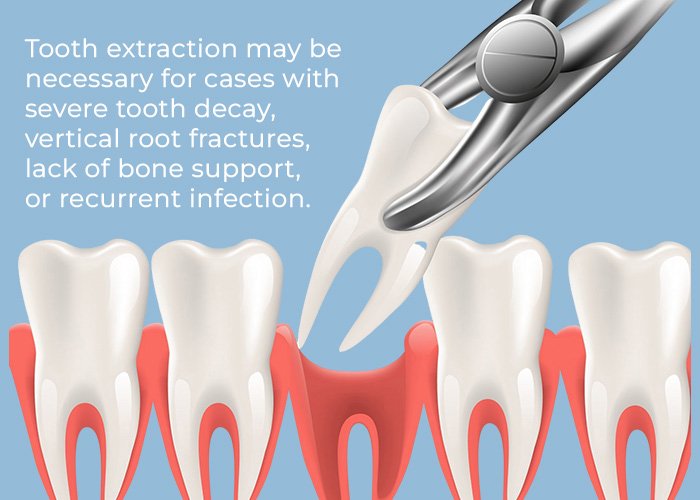
Tooth extraction may be necessary for cases with severe tooth decay, vertical root fractures, lack of bone support, or recurrent infection.
Severe Decay That Cannot Be Restored
Severe decay that compromises the tooth’s structural integrity may indicate tooth extraction. A tooth that cannot be saved may be considered unsalvageable because it lacks enough natural structure to support a crown or another restoration.
Vertical Root Fracture or Extensive Structural Damage
A vertical root fracture that reaches under the gum line may create an irreparable pathway for bacteria, making any restoration unsustainable in the long term. This and other extensive damage may require tooth extraction.
When Poor Gum or Bone Support Makes Extraction More Likely
Periodontal disease may affect too much jawbone material around the tooth, damaging the support necessary for proper dental function. If this happens, the tooth is likely to be extracted.
Persistent Infection When the Tooth Cannot Be Predictably Saved
Teeth that become infected again after initial treatment may require extraction if the dentist determines that a more conservative procedure, such as retreatment or root end surgery, cannot ensure long-term tooth survival.
Root Canal vs Tooth Extraction: What Is More Painful?
Both root canals and tooth extractions are performed under anaesthesia, but patients can expect some pain during initial recovery, once anaesthesia wears off. Most patients consider tooth extractions more painful during recovery, as soft tissues and underlying bone suffer more damage during extraction. Post-surgery discomfort can be addressed with painkillers.
Which Has the Easier Recovery: Root Canal or Extraction?
Recovery after a root canal and extraction may take different amounts of time, depending on the patient’s case, but recovery after most extractions is generally more complex.
Recovery After a Root Canal
Recovery after a root canal treatment is usually uncomplicated. Because the procedure removes the inner tooth nerve, a toothache is generally not present, but the patient may feel some soreness from the inflamed surrounding tissues as the infection recedes.
Healing After Tooth Extraction
Healing after tooth extraction is generally longer and less comfortable. Extraction results in trauma to the soft tissues and the supporting bone, and requires careful management to avoid painful complications such as a dry socket. The dentist usually prescribes or recommends a painkiller and other medication for the recovery period after tooth extraction.
Root Canal vs Tooth Extraction Cost
When comparing the costs of a tooth extraction and a root canal, consider total treatment costs, not just the upfront cost. The procedures differ in initial and potential future costs, and a less expensive tooth extraction may lead to further expenses when the patient wants to replace the missing tooth.
Why Tooth Extraction May Cost Less Initially
Simple tooth extraction is a more straightforward procedure and does not require special biocompatible filling material, drilling, or cleaning and disinfecting the pulp chamber, as a root canal does. As a result, it tends to be less expensive, even though it affects the patient’s dentition more.
The Cost of a Root Canal and Final Restoration
For a patient, the total cost of root canal treatment includes the procedure itself and the cost of a permanent filling or dental crown, necessary to protect the treated tooth. The patient should confirm whether the treatment cost includes the restoration. In most cases, the clinic’s listed prices apply only to the root canal procedure, as restoration options depend on patient preferences and the specifics of each case.
The Cost of Replacing an Extracted Tooth
The patient may want to replace an extracted tooth to preserve smile aesthetics and dental function. The price of tooth replacement depends on its type. Possible restorations include implants, bridges, and dentures. Some patients may require a bone graft or socket preservation procedure, which may be billed separately.
What Are the Risks of Root Canal Treatment?
Root canal treatment risks include missed canals, reinfection, instrument separation, and tooth perforation. The chance of complications depends on case complexity. Some complications may be solved through retreatment or other methods.
What Are the Immediate Risks of Tooth Extraction?
Immediate risks of tooth extraction include damage to adjacent teeth, nerve injury, dry socket, bleeding, swelling, and infection. Following your dentist’s post-treatment recommendations is crucial for minimising these risks.
What Can Happen When an Extracted Tooth is Not Replaced?
Long-term consequences of leaving the missing-tooth gap without a replacement include localised jawbone shrinkage, tooth movement, and bite changes. This may negatively impact the patient’s dental function, but the severity depends on the missing tooth’s location.
What Are the Options After Tooth Extraction?
After tooth extraction, a patient can opt to replace a tooth with an implant, bridge, or partial denture, depending on the clinical case and personal preference.
Replacing an Extracted Tooth With a Dental Implant
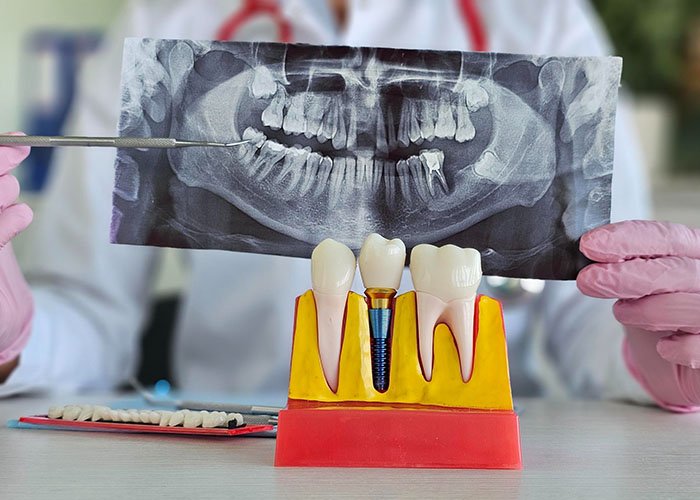
An implant replaces the missing tooth completely. It is placed into the jawbone and functions like a tooth root. When replacing a single tooth, a dental implant is fitted with a crown, which replaces the parts of the tooth above the gum. A patient may require a bone graft or socket preservation procedure before placing an implant if the jawbone density or volume is insufficient for strong primary support. Implant and crown material may differ depending on the location of the replaced tooth.
Replacing an Extracted Tooth With a Dental Bridge
A dental bridge can replace a visible portion of the tooth without replacing the root. Placing a bridge requires the dentist to prepare the neighbouring healthy teeth. This allows the dentist to replace the tooth without surgery. However, bridges do not stop localised bone loss. Bridges are often made from the same materials as dental crowns. Their durability and aesthetic value depend on their material and manufacturing process.
Using a Partial Denture After Tooth Extraction
A partial denture is a removable restoration that uses neighbouring teeth and gums for retention. The dentist may need to prepare the teeth around the gap so the denture’s clasps can connect with them.
When Tooth Replacement Can Be Delayed or May Not Be Necessary
If the extracted tooth isn’t critical for dental function or smile aesthetics, the patient can often delay replacing it. Third molars, or wisdom teeth, in particular, may not require replacement. Delaying replacement of non-wisdom teeth may cause the teeth to drift into the missing space.
What If a Root Canal Fails?
A root canal failure does not mean you must extract the tooth in every case. The dentist may be able to redo the root canal, removing missed infected tissue or disinfecting the canal again. Whether this is possible depends on the tooth condition after reinfection and the underlying cause for root canal failure.
What Are the Long-Term Outcomes of Root Canal vs Extraction?
Long-term outcomes of dental treatments depend on the initial tooth condition, type of restoration fitted, patient’s oral health, maintenance, and individual factors.
How Long Can a Tooth Treated With a Root Canal Remain Functional?
How long a tooth will last after a root canal depends on remaining tooth structure after treatment, final restoration, periodontal health, recurrent oral disease, and maintenance. Because some of these factors can change after treatment, lifetime survival cannot be guaranteed.
Why the Final Restoration Matters
The final restoration after a root canal procedure, such as a crown, restores the tooth’s structural integrity and protects it from bacteria. An insufficiently strong restoration may leave the tooth more prone to cracking or splitting.
What Determines the Long-Term Outcome After Tooth Extraction?
Long-term outcomes after tooth extraction depend on how well the gums and bone heal, whether the tooth is replaced, the type of replacement, the patient’s oral health, and maintenance. The impact of each of these criteria may differ depending on the location of the extracted tooth and jawbone volume and density.
How Long Do Tooth-Replacement Options Last?
How long a restored tooth lasts depends on factors discussed above. A 2010 study estimated tooth survival rates of 86-93% after a non-surgical root canal treatment. These numbers do not necessarily indicate a guaranteed root canal lifespan or success rate. Each restoration type used after tooth extraction has a different average lifespan. Read more about these options on our tooth extraction page.
Root Canal or Extraction for Common Dental Problems?
Root Canal or Extraction for an Infected Tooth?
If the infection is not severe, you can often treat an infected tooth with a root canal. This lets you preserve the tooth. Extraction may be considered in an emergency due to severe infection.
Root Canal or Extraction for a Dental Abscess?
Whether a dental abscess requires a root canal or extraction depends on the extent of jawbone damage. A severe abscess can compromise the bone around the tooth. A tooth with compromised support may need extraction.
Root Canal or Extraction for a Cracked Tooth?
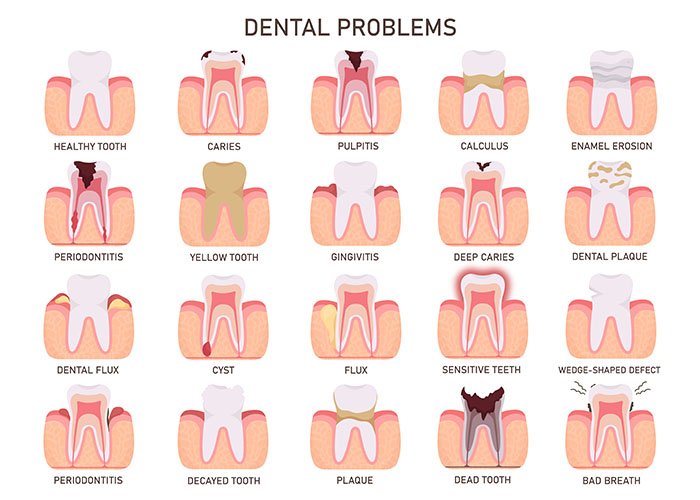
If bacteria enter a cracked tooth, it may need a root canal to prevent an infection. Extraction may be required if the crack is deep and reaches under the gum line. Small cracks can often be treated without resorting to a root canal or extraction.
Root Canal or Extraction for a Severely Decayed Tooth?
A severely decayed tooth may need a root canal if no viable method exists to protect the pulp from bacterial ingress. Extraction may be required if insufficient structure is left to support a filling or another restoration. In other cases, the tooth may be treated without resorting to either procedure, such as with a simple filling.
Retreatment or Extraction for a Previously Root Canal-Treated Tooth?
Whether a reinfected tooth can be treated with retreatment or needs extraction depends on the cause of infection, its structural integrity, and prognosis.
Root Canal or Extraction When Travelling to Turkey for Dental Treatment?
Choosing between a root canal and an extraction when planning a dental treatment in Turkey depends on your symptoms and clinical case. A treatment plan may be developed before travel if it is not an emergency. A dentist can request relevant X-rays or dental scans for a more precise preliminary diagnosis.
When planning dental treatment in Turkey, discuss the treatment process and initial recovery. It may not be recommended to fly home immediately after dental surgery, or your treatment may require several visits to the clinic. When selecting a clinic, pay attention to the dentist’s qualifications and experience. You can learn more about our doctors here.
How Does a Doctor Choose Between Root Canal and Extraction?
When choosing between a root canal and extraction, the dentist considers the patient’s symptoms, general dental health, and treatment prognosis. Because saving the natural tooth is preferable to extraction in most cases, a root canal is often the first choice, unless the tooth is too damaged or the underlying bone has lost too much volume and density.
What Does the Dentist Check During the Clinical Examination?
The dentist may consider the following:
- Remaining tooth structure;
- Tooth mobility;
- Gum condition;
- Tooth fractures and chips and their location.

Medically reviewed by:
Dr. Onur Ademhan
Oral and Maxillofacial Surgeon
Founder and CEO of Perla Dental Clinics. Graduated from Ankara University Faculty of Dentistry and specialized in Oral and Maxillofacial Surgery at Gazi University.
Frequently Asked Questions
Is It Better to Have a Root Canal or Extract the Tooth?
A root canal treatment is often preferred when feasible, because it preserves the tooth. Pulling the tooth requires the patient to consider replacement options. The choice between treatments depends on the long-term prognosis, and a root canal may not be recommended when it is not possible to restore the tooth’s structural integrity.
Is Tooth Extraction Less Expensive Than a Root Canal?
A simple tooth extraction can be cheaper than a root canal, but precise costs depend on the patient’s case. Remember that replacing an extracted tooth may cost more than a root canal. Because of this, it is best to include the possible post-treatment prices when comparing extraction and root canal costs.
Can an Infected Tooth Always Be Saved with a Root Canal?
No, it may not be possible to save a tooth if the infection has damaged the tooth or jawbone too much. In some cases, the tooth may also be removed as part of emergency treatment if the infection endangers the patient’s general health. However, many infected teeth respond to treatment and may be saved after a root canal.
Can I Choose To Extract a Tooth Instead of a Root Canal?
In some cases, patients may choose extraction instead of a root canal. Reasons include planning for an implant replacement or saving money on a tooth that is less important for function, such as a third molar. However, extraction without tooth replacement often leads to worse outcomes than a successful root canal treatment.
What Happens If I Leave the Gap After Extraction?
The effect of a missing-tooth gap on the overall dental health depends on its location. A gap in anterior teeth negatively affects the patient’s bite and smile. A gap in posterior teeth may make chewing more difficult. Teeth may also move into the gap.
Is a Crown Always Required After a Root Canal?
Crowns are often preferred after a root canal, but whether they are necessary depends on the tooth condition. In most cases, a crown protects the tooth better than a filling, but is more expensive and requires more tooth preparation. Long-term survival of teeth that were fitted with a crown after a root canal is also higher on average.
How Soon Can I Get an Implant After Tooth Extraction?
How soon you can get an implant after extraction depends on the implant treatment protocol and your oral health. Some implant treatments are planned so the implant is placed immediately or shortly after extraction. If you have lost a lot of bone volume, you may require a bone graft, which may delay implant placement.
Does an Abscess Always Mean the Tooth Needs to Be Removed?
No, an abscess does not require tooth extraction in every case. If clinically possible, the dentist may perform root canal treatment to drain the abscess, clean the tooth, and reseal it. Tooth extraction may be indicated if the abscess has caused significant loss of supporting bone structure.